About Me

- Satima Flavell
- Perth, Western Australia, Australia
- I am based in Perth, Western Australia. You might enjoy my books - The Dagger of Dresnia, the first book of the Talismans Trilogy, is available at all good online book shops as is Book two, The Cloak of Challiver. Book three, The Seer of Syland, is in preparation. I trained in piano and singing at the NSW Conservatorium of Music. I also trained in dance (Scully-Borovansky, WAAPA) and drama (NIDA). Since 1987 I have been writing reviews of performances in all genres for a variety of publications, including Music Maker, ArtsWest, Dance Australia, The Australian and others. Now semi-retired, I still write occasionally for the ArtsHub website.
The Dagger of Dresnia

The Cloak of Challiver, Book two of The Talismans

Available as an e-book on Amazon and other online booksellers.
Mythic Resonance

Mythic Resonance
Mythic Resonance is an excellent anthology that includes my short story 'La Belle Dame', together with great stories from Alan Baxter, Donna Maree Hanson, Sue Burstynski, Nike Sulway and nine more fantastic authors! Just $US3.99 from Amazon.
Got a Kindle? Check out Mythic Resonance. 
My Blog List
-
Rewind post – Liane Moriarty books… - I’m back to reading Australian authors. ‘Truly Madly Guilty’ fell out of my To-Be-Read book case today. It’s what I’m reading next. I’m getting away from d...1 hour ago
-
Lost Medieval Farmstead Discovered in Southern England - Archaeologists from Bournemouth University believe they have identified a lost medieval farmstead in southern England, matching a site recorded on a 15th-c...2 hours ago
-
The Heiress of Northanger Abbey by Nancy Bilyeau - This guest review comes from Lisa! A longtime romance aficionado and frequent commenter to SBTB, Lisa is a queer Latine critic with a sharp tongue and lots...6 hours ago
-
Suddenly: Hugo! - Tonight (well, since I’m posting this after midnight, technically last night) I was given the Hugo Award for Best Series, for “Old Man’s War.” It’s late an...7 hours ago
-
Slot Online Tanpa Kode Bonus Deposit - slot gacor online tanpa kode bonus setoran adalah cara terbaik untuk mendapatkan uang gratis dan putaran gratis tanpa harus melakukan setoran. Namun, pen...11 hours ago
-
Lara Stokes - Lara Stokes grew up in Northern Ontario and now lives and writes in Kawartha Lakes, Ontario. Her work has appeared in The Danforth Review, The Ottawa Arts ...
 20 hours ago
 -
Theme Me Up: How to Develop Your Novel's Theme - *By Janice Hardy* *Theme is an often overlooked tool in a writer's toolbox. Here's another look at finding the greater meaning in your story. * Severa...
 2 days ago
 -
Wibbly-Wobbly, Timey-Wimey Stuff Ian Likes: Doctor Who And The Abominable Snowmen by Terrance Dicks - Doctor Who And The Abominable Snowmen First Broadcast: 30th September 1967 – 4th November 1967 First Published: 21st November 1974 The Abominable Snowmen s...2 days ago
-
Story is in the Details - Two well-known sayings from two different creative fields have been rattling around in my head for awhile now, and I think they wouldn’t leave me alone b...3 days ago
-
Translation, not imitation: what legal educators can learn from schools - Translation, not imitation: what legal educators can learn from schools Teaching is something of a family profession in our household. My dad was a prima...3 days ago
-
Veronica Franco and the Courtesans of Renaissance Venice by Kristin Gleeson - *Renaissance Venice *Travellers who visited in Venice in the 15th, 16th and 17th century never failed to marvel at the number of courtesans in the city....
 3 days ago
 -
It’s me again - My last day in Singapore. I reached 30,000 words on Amethyst Way, Cry Havoc Book 5, which is not too shabby. I’m very excited about this. With Gentleman Ma...4 days ago
-
It’s me again - My last day in Singapore. I reached 30,000 words on Amethyst Way, Cry Havoc Book 5, which is not too shabby. I’m very excited about this. With Gentleman Ma...4 days ago
-
A Summer Cruise to Iceland and the Faroes, Part 1: Faroe Islands - A cruise to Iceland had been my dream for years (I don't like the idea of driving on gravel roads in a rented car; and lodging/food in Iceland won't be muc...
 6 days ago
 -
Latest story: 'Departures' in Penumbric August 2k26 Issue 2 Journeys - My latest story 'Departures' is out in *Penumbric August 2k26 Issue 2,* aptly titled *Journeys. * Jeff Georgeson, the editor of *Penumbric, *has arranged...2 weeks ago
-
Oz Comic-Con Sydney September 12 and 13 - Sydney friends! I’m honoured to be a guest again at Oz Comic-Con in your fine city in September. I hope to see you there. All the details at ozcomiccon.c...3 weeks ago
-
How Intercut Can Help Tell Your Story In Just 8 pictures - All About Intercut Whether you’re writing a screenplay or a novel, intercut can help you tell your story. An intercut is a storytelling technique used to...5 weeks ago
-
Just Been To See…The Odyssey - I’ve just come home from my local cinema, where I have seen the new Christopher Nolan film, The Odyssey. Just saying, I read the poem when I was fifte...1 month ago
-
Showcase Your Gymnastics Club with Professional Photography - Every gymnastics club has athletes whose dedication, skill, and passion deserve to be celebrated. Whether you’re looking to attract new members, acknowledg...1 month ago
-
Staerstone Book Launch - Staerstone was launched at an amazing event hosted by Core Climbing, with the main launch nestled in a whole-day climbing competition sponsored by Open Pro...3 months ago
-
The Sociopathic Origins of Religion - You’ve all seen variations on this: how ‘Prehistoric Man’ looked up at the stars, asking: “What are they? What causes them to move?” Then a bit later: “Why...4 months ago
-
AI and Creative Professions - I've been wrestling with this for a while, and I am aware that the ambiguity in this post is palpable. AI isn't going anywhere, and I find it amazingly use...5 months ago
-
Thank you - It’s been a while since I've posted anything anywhere, but I didn't want to let any more time go by without thanking everyone for all your kind messages ...6 months ago
-
Bhante Rahula travels to India and Sri Lanka in January 2026 - Hi Friends, Bhante Rahula will lead a Year End Retreat at the Lion of Wisdom Meditation Center near Damascus Maryland from December 26th, 2025 through J...8 months ago
-
A Very Small Essay (1) - One of the lifeguards at our community centre pool, who I’d estimate to be in his mid-twenties, sometimes joins in with our aquafit class from the pool dec...9 months ago
-
Guy finally receives his PhD… - I finally got to wear a silly outfit and receive my PhD on Thursday 4th September 2025 at Curtin University. This wouldn’t have happened without the effort...11 months ago
-
Joon, Big Red and the Unicorn – a picture book - Joon is a keeper in the Timeless Forest… Joon is a keeper in the Timeless Forest, tending to all the trees and plants. When a fire threatens everything t...1 year ago
-
This feed has moved and will be deleted soon. Please update your subscription now. - The publisher is using a new address for their RSS feed. Please update your feed reader to use this new URL: *https://problogger.com/feed/*1 year ago
-
A Little Piece of Alternative History - Elizabeth, Duchess of Norfolk, is a good height for a woman, but not tall – only her headdress make her seem so. As a recent widow, she is clad entir...1 year ago
-
-
Happy Public Domain Day 2025, the end of copyright for 1929 works - This is my annual reminder that January 1st is Public Domain Day, and this year copyright has ended for books, movies, and music first published in the U.S...1 year ago
-
Titles - This is a bit of a technical post, provoked by reading a certain novel. In England, pre-Tudors, there was only ever one Prince. The Prince of Wales, when...1 year ago
-
About Holly - There is no way to soften the blow of this and Mom never liked euphemisms, so I’m just going to speak plainly. Mom died due to complications from cancer on...1 year ago
-
WRAP UP OF HORRORFEST POST, OCTOBER. - Hi all! Thank you so much for posting to WEP's Horrorfest in October. I'm sure everyone enjoyed reading the entries. So good to see so many of the 'oldi...
 1 year ago
 -
A personal thought on the passing of publishing legend Tom McCormack - The passing of publishing giant Tom McCormack makes me recall the interaction he had with my father, Leonard Shatzkin, from the very beginning of Tom’s p...2 years ago
-
Henry of Lancaster and His Children - The close bonds which Edward II's cousin Henry of Lancaster, earl of Lancaster and Leicester, forged with his children have fascinated me for a long time...2 years ago
-
Questions from year 9 students - Recently – actually, not very recently but I somehow forgot to write this sooner – I did what has become an annual online Q&A with the Year 9 girls at Bedf...2 years ago
-
Flogometer 1180 for Christian—will you be moved to turn the page? - Submissions sought. Get fresh eyes on your opening page. Submission directions below. The Flogometer challenge: can you craft a first page that compels me ...3 years ago
-
Storny Weather - I've just been out fixing up the damage from last night's storm. This is pretty much the first time I've been able to spend much time outside and do any...3 years ago
-
another review for the Christmas Maze - *The Christmas Maze by Danny Fahey – a Review by David Collis* Why do we seek to be good, to make the world a better place? Why do we seek to be ethi...3 years ago
-
Publishing Contracts 101: Beware Internal Contradications - It should probably go without saying that you don't want your publishing contract to include clauses that contradict one another. Beyond any potential l...
 4 years ago
 -
Non-Binary Authors To Read: July 2021 - Non-Binary Authors To Read is a regular column from A.C. Wise highlighting non-binary authors of speculative fiction and recommending a starting place fo...5 years ago
-
-
Grants for Writers Masterclass Online - Grants For Writers Masterclass Online Winner of 6 grants, author Karen Tyrrell shares her secrets to Grant Writing for Australian writers and authors. ...6 years ago
-
UPDATE ON WORK IN PROGRESS... - *THE FUGITIVE QUEEN * *(title may change!)* The initial draft of this novel has been finished at slightly under 150,000 words, so not quite as long as the...6 years ago
-
Productivity - If you're looking for a post on how to be more productive in your writing, this is not it. However, if you're looking for a discussion of how we conceptual...
 6 years ago
 -
HOW TO UPGRADE YOUR LIFE - Stories end. New stories begin. It's fascinating -- the great and small adventures of every day. Honor the place where you're rooted. What stories are f...
 6 years ago
 -
Geoffrey Chaucer - [image: Geoffrey Chaucer] Geoffrey Chaucer *Geoffrey Chaucer* turned into born in 1343, the son of John and Agnes (de Copton) Chaucer. Chaucer was descen...
 6 years ago
 -
#332 - Question: I wrote LOST IN LA as a retelling of Pretty Woman with “modern” social issues, but I don’t know whether to focus on the characters, the fake rel...6 years ago
-
Travelin' Man: a new Song & Music-Video from me - There's also a bit of my tongue-in-cheek, philosophy for living in the lyrics - *life should be about the journey, never about arriving. * It's also on Y...6 years ago
-
NaNoWriMo 2019 - November 1, or the start of NaNoWriMo or National Novel Writing Month is just around the corner. Basically, NaNoWriMo is about writing a 50K work novel i...6 years ago
-
Day 1: Harlequin Presentation - Sue Brockton – Publishing director Jo Mackay – head of local fiction, HQ, Mira, Escape Kita Kemp – Publisher Mills and Boon (ANZ) Nicola Caws – Editor...6 years ago
-
#Mayflower400: They that in Ships unto the Sea down go - *Music for the Mayflower* *A guest post by Tamsin Lewis * I direct the early music group Passamezzo [www.passamezzo.co.uk], an established ensemble kno...
 6 years ago
 -
Book review: The Heat, by Sean O’Leary - Jake works nights as a security guard / receptionist at a budget Darwin motel. The job suits him: he has an aptitude for smelling out potential trouble, an...6 years ago
-
Portrait of a first generation freed African American family - Sanford Huggins (c.1844–1889) and Mary Ellen Pryor (c.1851–1889), his wife, passed the early years of their lives in Woodford County, Kentucky, and later...7 years ago
-
Review of Bell's Much Ado about Nothing - Bell Shakespeare's *Much Ado About Nothing* 2019-07-07 reviewed by Frances, our president. A group from the Shakespeare Club went last week to see the B...7 years ago
-
The Girl from the Sea launches: 31 July 2019 - Some of you will already know that my new novella, The Girl from the Sea, is launching on July 31. This book is the prequel to Children of the Shaman an...
 7 years ago
 -
Story Goal, Story Question, and the Protagonist’s Inner Need (Story Structure Part 1) - This is the first article in a series exploring the elements of story structure. Part 1 looks beyond the topics of three-act and mythic structure to a revi...7 years ago
-
Assassin’s Apprentice Read Along - This month, in preparation for the October release of the Illustrated 25th Anniversary edition of Assassin’s Apprentice, with interior art by Magali Villan...7 years ago
-
The Scarred King by Rose Foreman - "From the moment he could walk, Bowmark has trained for a fight to the death. The Disc awaits him: a giant bronze platform suspended over a river of l...
 7 years ago
 -
Gratitude, therefore God? - I recently saw a video where a prominent TV personality was interviewing another TV personality who is a self-proclaimed atheist. The interviewer explained...7 years ago
-
It's the End of the (Fringe) World As We Know It... - I didn't get to the Fringe World Awards because I was volunteering at another venue at the time, which is also the reason I saw almost none of the shows th...7 years ago
-
A Movie That No Writer Should See Alone - Really. REALLY. Trust me on this. particularly since this film, ‘Can you ever forgive me?’, is based on a ‘True story’ – and too many writers will see too...7 years ago
-
Catching up on books I've read - Recently I've been looking at some of the books I've enjoyed over the past year or so – and in the process, it's made me realise just how many I've read! M...
 7 years ago
 -
The November Tour Press Release - *Peter Grant is coming to a bookshop near you. * Meet Ben Aaronovitch on his epic tour of Great Britain to celebrate the publication of his upcoming, new ...8 years ago
-
Review: Red Harvest - [image: Red Harvest] Red Harvest by Dashiell Hammett My rating: 5 of 5 stars An absolute classic featuring the most literate and technically clever of the...8 years ago
-
New story at Giganotosaurus - “The Wanderers” – the furry fantasy I wrote for my kids about a couple of fox people who go off in search of the end of the earth (and then have to find th...9 years ago
-
First comes painting, Then comes sketching - While enjoying my new acrylics hobby, I started a painting and decided I wanted to include a dragon statue in one of them. There was, though, a hurdle I ha...
 9 years ago
 -
More Cabinet of Oddities News - Back in 2015, I was lucky enough to be part of an amazing collaborative event put together by the talented Dr. Laura E. Goodin. The Cabinet of Oddities, a ...9 years ago
-
The One and the Many – every Sunday - My first serious girlfriend came from good Roman Catholic stock. Having tried (and failed) to be raised as a Christian child and finding nothing but lifele...9 years ago
-
A Shameless Plug Ian Likes: Bibliorati.com - A little-known fact is that I once had a gig reviewing books for five years. It was for a now-defunct website known as The Specusphere. It was awesome fun:...9 years ago
-
10 New Youtube Videos for Medieval Lovers - Volume 2 - We found 10 more new videos on Youtube about the Middle Ages. *Rediscovered: Medieval Books at Birkbeck * This video introduces University of London - Birk...
 9 years ago
 -
2016 Wildflower Calendar – Long List - This is the ‘long list’ for a potential 2017 Wildflower Calendar. They are pictures from suburban Perth, in conservation areas, parks and verge gardens. ...9 years ago
-
And Father Dragon said "let there be a planet...." - *Lo and behold, Dragon made a planet!!* Oh, I'm so very proud of myself so forgive me if I brag a little bit - way too much. I'm in the process of learn...
 9 years ago
 -
The Stars Askew - release imminent - Pre-order at Booktopia Just a short post to let you know that I am still alive and writing poetry over at the poetry blog. I also wanted to mention that...
 10 years ago
 -
Open Data Barometer 3rd edition results - The World Wide Web Foundation has issued the results of the third edition of its Open Data Barometer report. The report surveys open data preparedness acro...10 years ago
-
The Tame Animals of Saturn - It's done. It's in the world! Often, the journey to publication is itself worthy of a book - though it'd be a tiresome book indeed. Still, I'm happy. I co...
 10 years ago
 -
Children learning English as a second language with dyslexia. Lese-rechtschreibeschwache Schüler/innen und Englisch in der Schule. - *"Legasthenie/LRS und Englisch als Fremdsprache* Lese-rechtschreibschwache Schülerinnen und Schüler bekommen in der Regel auch Schwierigkeiten in Englis...10 years ago
-
Prompts, Anyone? - I'm a great fan of writing to triggers or prompts so when I was delighted came across something useful on poet Katy Evans-Bush's blog, *Baroque in Hackney....12 years ago
-
Cherries In The Snow - This recipe is delicious and can also be made as a diet dessert by using fat and/or sugar free ingredients. It’s delicious and guests will think it took ...13 years ago
-
Al Milgrom’s connection to “Iron Man” - Via the Ann Arbor online newspaper - I felt it was worth repeating as a great example of Marvel doing the right thing by a former employee and without the ...
 16 years ago


Places I've lived: Manchester, UK

Places I've lived: Gippsland, Australia

Places I've lived: Geelong, Australia

Places I've lived: Tamworth, NSW

Places I've Lived - Sydney
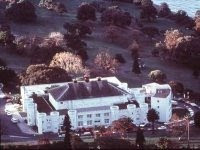
Sydney Conservatorium - my old school
Places I've lived: Auckland, NZ

Places I've Lived: Mount Gambier
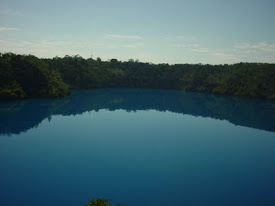
Blue Lake
Places I've lived: Adelaide, SA

Places I've Lived: Perth by Day

From Kings Park
Places I've lived: High View, WV

Places I've lived: Lynton, Devon, UK

Places I've lived: Braemar, Scotland

Places I've lived: Barre, MA, USA

Places I've Lived: Perth by Night

From Kings Park
Inner Peace Blog

Awarded by Joanna Fay. Click on the image to visit her lovely website!
Versatile Blogger Award

Awarded by Kim Falconer. Click on the pic to check out her Quantum Astrology blog!
Fabulous Blog Award

Awarded by Kathryn Warner. Click on the pic to check out her Edward II blog!
Saturday, 23 June 2007
Progress on the WIP
 Saturday, June 23, 2007 |
  Posted by
Satima Flavell
Posted by
Satima Flavell
Since being at my friend Ashlea's house I've had lots of time to write. I have the computer to myself a lot of the time and Ash has unlimited broadband - whee-ee! Kaya, the house's Elder Daughter, is just back from India and catching up with all her friends, so there are young people in and out at all hours. It's nice. It reminds me of my student days, or the time I was running a dance group in Enzed and always had dancers sleeping over in the studio and sometimes on the floor of my flat as well.
I caught up with most of my Perth friends within a fortnight of touchdown, so the social pressure is off. (Mind you, I hope to see them all at least once more before I head back to South Oz on 11 July!) I'm back into writing mode, therefore, and it feels good.
With the help of my Face-to-Face group, I actually drafted a plot outline for The Trilogy before I went to England early this year. Having struggled with the monster for nearly four years it's about time I got all those characters and their shenanigans into some kind of order. Now I've actually started writing, I find the storyline changing a bit under my fingers, but not so much that I lose sight of the plot. I thought that planning might make the actual writing tedious (what's the point in a story if you already know the ending?) but actually I'm finding it just as exciting as "flimmering" my way through. Now the excitement is in things like little details of setting and nuances of character rather than "what happens next".
The first thirteen chapters are in first draft and already it reads far better than anything else I've written. (That's not just MHO, BTW - my critters all say the same, which is encouraging.) Part of the improvement lies in a better grasp of the way readers like POV presented these days. Having grown up with Enid Blyton, Arthur Ransom and Rudyard Kipling and later graduating to writers of the sixties and seventies, I was used to the omniscient author style, in which it's fine to foreshadow events or to comment on the character's predicament. ("Little did he know that this would be their last meeting...") Intellectually, I could see that these techniques were out of favour, but I still didn't manage to get myself right out of the story and let the characters get on with it. I think I'm managing to do that much better now.
Not that the "tight third" POV is anything new. Jane Austen used it somewhat. In fact, Austen never strays very far from her character's thoughts and feelings, even if she doesn't always express them quite as intimately as a modern genre writer would. My friend and teacher Michèle Drouart assures me that Flaubert was actually the first writer to use this style. Being academically trained (she has a double major in French and English lit!) Michèle calls it "FID", which stands for Free Indirect Discourse. If you live in Perth and aspire to write, BTW, you could do worse than to enrol in Michèle’s writing classes. They are not only instructive, but great fun as well. And if you haven’t already read her autobiographical novel “Into the Wadi”, please get hold of a copy. It’s a great read.
Ok, Ok, I hear you. (Or is that my conscience speaking?) Blogging is displacement activity. I shall get back to the monster now.
I caught up with most of my Perth friends within a fortnight of touchdown, so the social pressure is off. (Mind you, I hope to see them all at least once more before I head back to South Oz on 11 July!) I'm back into writing mode, therefore, and it feels good.
With the help of my Face-to-Face group, I actually drafted a plot outline for The Trilogy before I went to England early this year. Having struggled with the monster for nearly four years it's about time I got all those characters and their shenanigans into some kind of order. Now I've actually started writing, I find the storyline changing a bit under my fingers, but not so much that I lose sight of the plot. I thought that planning might make the actual writing tedious (what's the point in a story if you already know the ending?) but actually I'm finding it just as exciting as "flimmering" my way through. Now the excitement is in things like little details of setting and nuances of character rather than "what happens next".
The first thirteen chapters are in first draft and already it reads far better than anything else I've written. (That's not just MHO, BTW - my critters all say the same, which is encouraging.) Part of the improvement lies in a better grasp of the way readers like POV presented these days. Having grown up with Enid Blyton, Arthur Ransom and Rudyard Kipling and later graduating to writers of the sixties and seventies, I was used to the omniscient author style, in which it's fine to foreshadow events or to comment on the character's predicament. ("Little did he know that this would be their last meeting...") Intellectually, I could see that these techniques were out of favour, but I still didn't manage to get myself right out of the story and let the characters get on with it. I think I'm managing to do that much better now.
Not that the "tight third" POV is anything new. Jane Austen used it somewhat. In fact, Austen never strays very far from her character's thoughts and feelings, even if she doesn't always express them quite as intimately as a modern genre writer would. My friend and teacher Michèle Drouart assures me that Flaubert was actually the first writer to use this style. Being academically trained (she has a double major in French and English lit!) Michèle calls it "FID", which stands for Free Indirect Discourse. If you live in Perth and aspire to write, BTW, you could do worse than to enrol in Michèle’s writing classes. They are not only instructive, but great fun as well. And if you haven’t already read her autobiographical novel “Into the Wadi”, please get hold of a copy. It’s a great read.
Ok, Ok, I hear you. (Or is that my conscience speaking?) Blogging is displacement activity. I shall get back to the monster now.

Monday, 11 June 2007
England in Retrospect
Monday, June 11, 2007 |
Posted by
Satima Flavell
Dear bloggie, did you think I'd forgotten you? Once again I've had only limited internet access so blogging has taken second place to checking e-mails and looking after mailing lists. However, I've now settled into a very comfortable house-sit in Mount Claremont, Perth, where I expect to stay for another week or two. I've caught up with most of my friends and have had some wonderfully warm welcomes. Good old Carol put on a BBQ for KSP members to get together and once we'd finished scoffing all the delicious tucker Carol and her mum had prepared for us we talked writing until we were hoarse. I've also had one meeting with my lovely Face-to-Face crit group, with super feedback on the opening chapters of my WIP - a whole fresh start on The Trilogy. Note upper case. The Trilogy has taken over so much head space that it really should be called The Encyclopedia Satimica.
Who in their right minds decides to start their writing career with a trilogy? Well, I did write one novel beforehand but that was very much a praccie run and no one likes it except me:-) I've had a few goes at short stories but they don't seem to be my thing. Casts of thousands and complicated plots are what I like best. (Read George RR Martin if you don't know the kind of thing I mean.) However, it was probably a bit greedy to try and write a trilogy in that style right off, and for three or four years I've been bogged down in a superfluity of characters and situations that don't go anywhere. What's more, all my characters seem to have loads of friends and siblings who want to be in the story too, so it's been very much a learning process for all of us:-)
I'm back in the writing fray now, however, and I'm sure my recent travels will continue to simmer in the stockpot of my mind and eventually become entries in the aforementioned Enclyopedia Satimica. All that history: the wonderful old buildings; the graves of ancestors; Canterbury Tales; the house where Jane Austen spent the last weeks of her life; the Sedgley Beacon, the amazing C18 house A la Ronde in Devon; sites of ancient battles; Roman and Saxon artefacts - all that and more, especially the glorious English countryside, will be fuel for the creative flames. (Although in my case perhaps 'the creative flimmer' would be a better description.) But much as I love the land of my birth, I would not want to live there.
Why? Well, basically, the place is overpopulated. The most obvious consequence of this (apart from the overcrowded roads) is the style of housing. So many rows of red brick terraces with no focal point eventually made me want to scream out for some open space with individually designed houses set on their own plots of land, like the ones we have traditionally preferred in Australia. English houses tend to be dark and stuffy inside, too, with poky little rooms. Add the almost sunless climate and you have a recipe for severe depression. Mind you, when they do have a genuinely fine day in England it is idyllic, but you can expect to see, at best, half a dozen such in any given year. And there are some truly beautiful houses, but the cost would be way out reach of the average person. We think housing is expensive in Oz, but it's twice as dear in England, whether you are renting or buying.
Which brings me to my other major gripe: the cost of living in the UK. It is positively scary, especially if you're on a pension. There was so much more I wanted to see and couldn't because even a short bus ride set me back the equivalent of $AUS10! For the price of a round trip coach ride from Exeter to York I could travel halfway from Perth to Bali. Not that I'd want to do that, of course, since I'd be in the briney, but the fact is you can travel three times the distance in Oz for the same price. And the trains are even dearer.
It is very expensive to eat out, too - here in Perth I am used to meeting friends for coffee once or twice a week and it doesn't break even my pension-based budget, but in England, with a badly made capuccino costing the equivalent of $AUS5, that just wouldn't be a goer. And if you like to dine out, forget it. Clare took me to a carvery one day and it cost £11 each - and that was on special. Eleven pounds, dear reader, is about $AUS27, for which we could have as much meat as we liked (fine of you're not a vegetarian!) and a serve of baked spud and overcooked cabbage. No salad. No dessert. No coffee. Eleven quid. I truly don't know how pensioners keep their heads above water in England, let alone have any quality of life.
The banking system is way behind that of Oz, too. ATMs in England generally only cater for credit cards, so you can't take money from your savings account and nor can you make a deposit. And there are charming ideosyncracies in the transport system as well - you can book the same train fare, for instance, in six different parts of the country and pay six different - and widely varying - prices.
The funniest thing though, transport-wise, happened when I tried to find a timetable of buses between Winchester and Salisbury at a bus company's office in Winchester. "You'll have to go to Salisbury for that, love," said the woman at the desk.
"But how can I get to Salisbury to get a timetable if I don't know when the buses go?" I asked.
The woman shook her head impatiently, "Different bus company, love. They don't have an office in Winchester." It obviously hadn't occurred to the bus companies concerned that they could stock each other's timetables. No wonder tourism in England is such a hit and miss affair.
Oh, and if you're into hostelling, be warned - the YHA's prices can actually be anything up to twice the advertised rate.
So I'm glad to be back in Oz, and I'm glad I went to England too, even though my credit card is maxed out, my cheque account's in overdraft and my savings account contains $50. I am deeply grateful to my sister Clare and all the other kind people who not only made the trip possible but opened their homes and hearts to me as well. I wish you all lived in Australia:-)
Who in their right minds decides to start their writing career with a trilogy? Well, I did write one novel beforehand but that was very much a praccie run and no one likes it except me:-) I've had a few goes at short stories but they don't seem to be my thing. Casts of thousands and complicated plots are what I like best. (Read George RR Martin if you don't know the kind of thing I mean.) However, it was probably a bit greedy to try and write a trilogy in that style right off, and for three or four years I've been bogged down in a superfluity of characters and situations that don't go anywhere. What's more, all my characters seem to have loads of friends and siblings who want to be in the story too, so it's been very much a learning process for all of us:-)
I'm back in the writing fray now, however, and I'm sure my recent travels will continue to simmer in the stockpot of my mind and eventually become entries in the aforementioned Enclyopedia Satimica. All that history: the wonderful old buildings; the graves of ancestors; Canterbury Tales; the house where Jane Austen spent the last weeks of her life; the Sedgley Beacon, the amazing C18 house A la Ronde in Devon; sites of ancient battles; Roman and Saxon artefacts - all that and more, especially the glorious English countryside, will be fuel for the creative flames. (Although in my case perhaps 'the creative flimmer' would be a better description.) But much as I love the land of my birth, I would not want to live there.
Why? Well, basically, the place is overpopulated. The most obvious consequence of this (apart from the overcrowded roads) is the style of housing. So many rows of red brick terraces with no focal point eventually made me want to scream out for some open space with individually designed houses set on their own plots of land, like the ones we have traditionally preferred in Australia. English houses tend to be dark and stuffy inside, too, with poky little rooms. Add the almost sunless climate and you have a recipe for severe depression. Mind you, when they do have a genuinely fine day in England it is idyllic, but you can expect to see, at best, half a dozen such in any given year. And there are some truly beautiful houses, but the cost would be way out reach of the average person. We think housing is expensive in Oz, but it's twice as dear in England, whether you are renting or buying.
Which brings me to my other major gripe: the cost of living in the UK. It is positively scary, especially if you're on a pension. There was so much more I wanted to see and couldn't because even a short bus ride set me back the equivalent of $AUS10! For the price of a round trip coach ride from Exeter to York I could travel halfway from Perth to Bali. Not that I'd want to do that, of course, since I'd be in the briney, but the fact is you can travel three times the distance in Oz for the same price. And the trains are even dearer.
It is very expensive to eat out, too - here in Perth I am used to meeting friends for coffee once or twice a week and it doesn't break even my pension-based budget, but in England, with a badly made capuccino costing the equivalent of $AUS5, that just wouldn't be a goer. And if you like to dine out, forget it. Clare took me to a carvery one day and it cost £11 each - and that was on special. Eleven pounds, dear reader, is about $AUS27, for which we could have as much meat as we liked (fine of you're not a vegetarian!) and a serve of baked spud and overcooked cabbage. No salad. No dessert. No coffee. Eleven quid. I truly don't know how pensioners keep their heads above water in England, let alone have any quality of life.
The banking system is way behind that of Oz, too. ATMs in England generally only cater for credit cards, so you can't take money from your savings account and nor can you make a deposit. And there are charming ideosyncracies in the transport system as well - you can book the same train fare, for instance, in six different parts of the country and pay six different - and widely varying - prices.
The funniest thing though, transport-wise, happened when I tried to find a timetable of buses between Winchester and Salisbury at a bus company's office in Winchester. "You'll have to go to Salisbury for that, love," said the woman at the desk.
"But how can I get to Salisbury to get a timetable if I don't know when the buses go?" I asked.
The woman shook her head impatiently, "Different bus company, love. They don't have an office in Winchester." It obviously hadn't occurred to the bus companies concerned that they could stock each other's timetables. No wonder tourism in England is such a hit and miss affair.
Oh, and if you're into hostelling, be warned - the YHA's prices can actually be anything up to twice the advertised rate.
So I'm glad to be back in Oz, and I'm glad I went to England too, even though my credit card is maxed out, my cheque account's in overdraft and my savings account contains $50. I am deeply grateful to my sister Clare and all the other kind people who not only made the trip possible but opened their homes and hearts to me as well. I wish you all lived in Australia:-)
Thursday, 24 May 2007
Fast Forward
Thursday, May 24, 2007 |
Posted by
Satima Flavell
The last ten days have been so full that I suspect I've ceased to take in details. Those I have assimilated have already run into each other like water colours on porous paper but I'll try to remember as much as I can so that the precious memories don't vanish altogether.
On Wednesday, 16 May, Clare saw me and my very overweight suitcase off on the coach to London from Exeter. We were sad in our goodbyes, for it seems unlikely that we will ever meet again - but who knows? Back in the Land of Oz, I shall resume my regular purchase of Lotto tickets. They've never brought me more than about $20 and that very rarely, but I remain the eternal optimist.
On arrival in London I reported to Diana's place and the pair of us caught up on gossip as I repacked my bags in readiness for a few days' meandering. It was 10.00pm before I arrived at my first destination, St Neots in Cambridgeshire, where I was met by e-cousins Dennis and Sheila, who provided me with a cosy room and a welcoming bed. Sheila had to go out the next day but at her suggestion, Dennis drove me to the neighbouring village of St Ives - the real one, of seven wives and multitudinous sacks, cats and rats fame. A very pretty place it is too, with a tiny medieval chapel on a bridge and an excellent local museum. Dennis and I talked family history non-stop, for we have two names in common - FLAVELL in Staffordshire and HINCHCLIFFE in Yorkshire, although the latter has so far failed to provide a link between our two branches. Mid-afternoon soon rolled around and it was time for me to catch the first of three buses that would stage me to Canterbury.
What can I say about Canterbury that hasn't been said already? Nothing, I suspect, since Chaucer's characters are all alive and well there, albeit in modern guise. Today's "pilgrims" come from much further afield than Bath and northern France: visitors of many shapes, sizes and colours stroll the streets. Even veiled Islamic ladies can be seen touring the famous cathedral alongside parties of students from mainland Europe and eager tourists from America, Asia and the Antipodes. No doubt each one would have a tale to tell if time permitted them all to be collected.
Touring Canterbury Cathedral is no mean undertaking. Like its sister in Winchester, it is enormous, and like all British cathedrals it is full-laden with history. I paid my respects at the tombs of a dozen or more direct and indirect ancestors, several of whom were of the priestly persuasion. (They were among the indirect ones, of course - or so one hopes!) On the tomb of Edward, the Black Prince, his effigy reclines in gilded armour and a nearby wall cabinet houses his orginal "funerary achievements", comprising an enormous helm, a tunic, a shield and sword. On the other side of the quire repose his nephew Henry IV and his second wife, Joan of Navarre. The tomb of Henry's daughter-in-law, Margaret HOLLAND, dominates the side chapel of St Michael, which Margaret herself had founded. She lies buried with her two husbands, John BEAUFORT (half-brother to Edward, the Black Prince) and Thomas PLANTAGENET (son of Henry IV and his first wife, Mary de BOHUN). I wonder if medieval tomb effigies were good likenesses? Certainly the ones in Canterbury Cathedral all look like real individuals, not just idealised role-representatives.
In any case, the ancestral images were just the icing on the Canterbury cake. The cathedral is, of course, the site of Thomas Becket's martyrdom and a chapel now graces the vestry where he was slaughtered. I winced to see several people sitting on side benches, chatting on their mobile phones. However, I should imagine Thomas is big enough to encompass C21 behavioural peculiarities.
The brevity of my visit meant that I couldn't attend any services; however, it was a bonus that the marvellous choir was practising for part of the time (three hours!) I was there. Footsore, I wound up in a nearby Starbuck's to recover before waddling down to the ancient chapel of St Mildred and the very impressive ruins of the town's Norman castle, by which time I'd had enough of journeying and headed back to the Youth Hostel and the closing chapters of George RR Martin's Steel and Snow part one. (I have only recently started reading Martin and I'm already a born-again devotee. His characters are clearly delineated and his stories superb.)
On Saturday I humped my bluey down to the bus station in the hope that they had a left luggage facility. They didn't ("because of security", a booking clerk explained) but a further query at the Tourist Information Office resulted in my grateful dumping of a large bag (I don't do small ones) at the nearby Kings Inn B&B.
They kept it for several hours for only 1GBP, which freed me to wander unencumbered to the C12 Eastgate Pilgrims' Hospice, a picturesque and atmospheric place with a vaulted roof and Norman arches which even today provides accommodation for several elderly people. An early C12 tempera mural of Christ in Majesty still graces a wall in the old refectory.
 Then I hied me down to the delightful Greyfriars Gardens where I consumed my packed lunch beside a stream bordered with lupins, ivy, periwinkles and peonies before making for Canterbury's wonderful Roman Museum.
What a treat! A partially excavated Roman villa with a hypercaust that would have heated the bath-house and its hot pool. There are remnants of a mosaic tiled floor; not as complete as the one in Luxembourg, but lovely, nonetheless. Numerous items excavated from this and other local sites demonstrated some of the minutiae of Romano-British life in a very realistic "shop window" type of display. Armour, hairpins, pottery, jewelery and tradesmen's tools all help build a picture of an era that ended less than a century before the Saxons began moving in.
There are many other sites worth visiting in Canterbury: had I had cash enough and time I would have stayed longer. St Augustine's Abbey and the nearby church of St Martin, which has stood for over 1600 years and is the oldest parish church still in use in the UK, would have been a fitting finale to my visit to Cantebury. However, London was calling, for I had never seen Buckingham Palace and Diana had promised to take me there on the Sunday.
 Sunday was a lovely day. We had plenty of sunlight for our photos outside the palace gates, after which a number eleven bus carried us to St Pauls. Nearby, we found a handy pizzaria wherein we fortified ourselves for evensong.
Evensong at St Pauls is
an experience not to be missed if you're in London on a Sunday. The sound of those exquisite voices reverberating around the dome is passing indescribable.
Monday dawned gloomy, reflecting my mood as Diana and I set off for Heathrow, where the kind check-in clerk made no comment on my overweight luggage. (How did I acquire nine kilos of books and souvenirs?) A long chat over coffee then I bade Diana a teary farewell before heading up to the departure lounge to board my flight to Dubai.
At Dubai airport, inspectors deprived me of a tube of toothpaste as it was over the acceptable weight. The Aussie immigration authorities are very thorough, which is consoling in regard to terrorism, but not toothpaste. After no fewer than four baggage inspections, a dreary flight home to Perth, and here I am, two days later, very jetlagged but looking forward to seeing my many friends here as I housesit for the next two weeks before returning to Mount Gambier.
On Wednesday, 16 May, Clare saw me and my very overweight suitcase off on the coach to London from Exeter. We were sad in our goodbyes, for it seems unlikely that we will ever meet again - but who knows? Back in the Land of Oz, I shall resume my regular purchase of Lotto tickets. They've never brought me more than about $20 and that very rarely, but I remain the eternal optimist.
On arrival in London I reported to Diana's place and the pair of us caught up on gossip as I repacked my bags in readiness for a few days' meandering. It was 10.00pm before I arrived at my first destination, St Neots in Cambridgeshire, where I was met by e-cousins Dennis and Sheila, who provided me with a cosy room and a welcoming bed. Sheila had to go out the next day but at her suggestion, Dennis drove me to the neighbouring village of St Ives - the real one, of seven wives and multitudinous sacks, cats and rats fame. A very pretty place it is too, with a tiny medieval chapel on a bridge and an excellent local museum. Dennis and I talked family history non-stop, for we have two names in common - FLAVELL in Staffordshire and HINCHCLIFFE in Yorkshire, although the latter has so far failed to provide a link between our two branches. Mid-afternoon soon rolled around and it was time for me to catch the first of three buses that would stage me to Canterbury.
What can I say about Canterbury that hasn't been said already? Nothing, I suspect, since Chaucer's characters are all alive and well there, albeit in modern guise. Today's "pilgrims" come from much further afield than Bath and northern France: visitors of many shapes, sizes and colours stroll the streets. Even veiled Islamic ladies can be seen touring the famous cathedral alongside parties of students from mainland Europe and eager tourists from America, Asia and the Antipodes. No doubt each one would have a tale to tell if time permitted them all to be collected.
Touring Canterbury Cathedral is no mean undertaking. Like its sister in Winchester, it is enormous, and like all British cathedrals it is full-laden with history. I paid my respects at the tombs of a dozen or more direct and indirect ancestors, several of whom were of the priestly persuasion. (They were among the indirect ones, of course - or so one hopes!) On the tomb of Edward, the Black Prince, his effigy reclines in gilded armour and a nearby wall cabinet houses his orginal "funerary achievements", comprising an enormous helm, a tunic, a shield and sword. On the other side of the quire repose his nephew Henry IV and his second wife, Joan of Navarre. The tomb of Henry's daughter-in-law, Margaret HOLLAND, dominates the side chapel of St Michael, which Margaret herself had founded. She lies buried with her two husbands, John BEAUFORT (half-brother to Edward, the Black Prince) and Thomas PLANTAGENET (son of Henry IV and his first wife, Mary de BOHUN). I wonder if medieval tomb effigies were good likenesses? Certainly the ones in Canterbury Cathedral all look like real individuals, not just idealised role-representatives.
In any case, the ancestral images were just the icing on the Canterbury cake. The cathedral is, of course, the site of Thomas Becket's martyrdom and a chapel now graces the vestry where he was slaughtered. I winced to see several people sitting on side benches, chatting on their mobile phones. However, I should imagine Thomas is big enough to encompass C21 behavioural peculiarities.
The brevity of my visit meant that I couldn't attend any services; however, it was a bonus that the marvellous choir was practising for part of the time (three hours!) I was there. Footsore, I wound up in a nearby Starbuck's to recover before waddling down to the ancient chapel of St Mildred and the very impressive ruins of the town's Norman castle, by which time I'd had enough of journeying and headed back to the Youth Hostel and the closing chapters of George RR Martin's Steel and Snow part one. (I have only recently started reading Martin and I'm already a born-again devotee. His characters are clearly delineated and his stories superb.)
On Saturday I humped my bluey down to the bus station in the hope that they had a left luggage facility. They didn't ("because of security", a booking clerk explained) but a further query at the Tourist Information Office resulted in my grateful dumping of a large bag (I don't do small ones) at the nearby Kings Inn B&B.
They kept it for several hours for only 1GBP, which freed me to wander unencumbered to the C12 Eastgate Pilgrims' Hospice, a picturesque and atmospheric place with a vaulted roof and Norman arches which even today provides accommodation for several elderly people. An early C12 tempera mural of Christ in Majesty still graces a wall in the old refectory.
 Then I hied me down to the delightful Greyfriars Gardens where I consumed my packed lunch beside a stream bordered with lupins, ivy, periwinkles and peonies before making for Canterbury's wonderful Roman Museum.
What a treat! A partially excavated Roman villa with a hypercaust that would have heated the bath-house and its hot pool. There are remnants of a mosaic tiled floor; not as complete as the one in Luxembourg, but lovely, nonetheless. Numerous items excavated from this and other local sites demonstrated some of the minutiae of Romano-British life in a very realistic "shop window" type of display. Armour, hairpins, pottery, jewelery and tradesmen's tools all help build a picture of an era that ended less than a century before the Saxons began moving in.
There are many other sites worth visiting in Canterbury: had I had cash enough and time I would have stayed longer. St Augustine's Abbey and the nearby church of St Martin, which has stood for over 1600 years and is the oldest parish church still in use in the UK, would have been a fitting finale to my visit to Cantebury. However, London was calling, for I had never seen Buckingham Palace and Diana had promised to take me there on the Sunday.
 Sunday was a lovely day. We had plenty of sunlight for our photos outside the palace gates, after which a number eleven bus carried us to St Pauls. Nearby, we found a handy pizzaria wherein we fortified ourselves for evensong.
 Evensong at St Pauls is

an experience not to be missed if you're in London on a Sunday. The sound of those exquisite voices reverberating around the dome is passing indescribable.
Monday dawned gloomy, reflecting my mood as Diana and I set off for Heathrow, where the kind check-in clerk made no comment on my overweight luggage. (How did I acquire nine kilos of books and souvenirs?) A long chat over coffee then I bade Diana a teary farewell before heading up to the departure lounge to board my flight to Dubai.
At Dubai airport, inspectors deprived me of a tube of toothpaste as it was over the acceptable weight. The Aussie immigration authorities are very thorough, which is consoling in regard to terrorism, but not toothpaste. After no fewer than four baggage inspections, a dreary flight home to Perth, and here I am, two days later, very jetlagged but looking forward to seeing my many friends here as I housesit for the next two weeks before returning to Mount Gambier.
Tuesday, 15 May 2007
A visit to Sedgley
Tuesday, May 15, 2007 |
Posted by
Satima Flavell
Another long silence, mainly due to lack of internet access. I can have a free half-hour at Topsham library each day but today that was wasted by a system failure. I'd paid for an extra hour and half and it's nearly all used up with e-mails, so I hope I can get this post up before the machine boots me off!
I spent three days last week in the town of Sedgley, Staffordshire. Like Dewsbury in Yorkshire, this is one of my ancestral home towns - my father's family lived there for generation after generation until they moved to Yorkshire in the late C19. For the most part, they were coal miners and nail makers, and as the region is known as part of what's called the Black Country, I was expecting a desolate old industrial town that had lost its way, like so many others in the Midlands since the death of the mining industry.
Not so. I found a delightful collection of villages, separated by rolling green fields and woodland, interlaced with lovely parks and quiet lanes. Rhododendrons and peonies are in full bloom, and even the roses are putting on a beautiful show - all at least three weeks early! Well, I came intending to enjoy an English spring and I've certainly had that, albeit a highly compressed one because of the early warm weather. Now the trees are wearing summer green and it's nearly time for me to go. I return to Perth next Monday, but I hope to have at least one or two more adventures in the interim!
I met several e-cousins in Sedgley - Jean and Keith, together with Christine and her husband Stephen, made me feel very welcome. Christine should have a medal for her help - she spent a whole day with me at the local archives, where we uncovered a few more details about my KEELING, HODGETTS, PERSHOUSE and DUDLEY ancestors. Christine and I have a lot in common - like me, she is an editor and a Shakespeare enthusiast and she has managed to combine these skills because she actually edits editions of the plays! One she was involved in recently is the OUP's new Othello under the leadership of Michael Neill - a handsome book and all the better, I'm sure, for having Christine on the editorial team.

On Friday Christine and Stephen took me to Dudley Castle, residence of a long line of my DUDLEY ancestors but now a zoo. (Sic transit!) The building was largely destroyed in the Civil War, but it is still possible to see the layout and to go into the undercroft, which boasts an excellent historical and archeological display. The zoo is home to several endangered species and is doing its bit for conservation. Like all such establishments, it is short on funding. I wish I had pots of money to donate.

Having walked the stones where my DUDLEY ancestors walked, I brought myself back down to earth with a decent feed of fish and chips in the castle's restaurant, where I met another DUDLEY descendant; Lucy from the States. Christine took a photo of us together and commented on our resemblance. No doubt Lucy and I are cousins twenty times over, as are many folk of British descent, especially those from the Black Country, it seems:-)
Having fortified ourselves with fish'n'chips, Christine, Stephen and I headed for the nearby Black Country Museum, a wonderfuly recreated village set on 25 acres, complete with shops, houses, a school house, a church and workshops of various industries including a working glassmakers' where souvenirs can be purchased. The main industries of the area - coal mining, iron smelting, brickmaking and the metal trades - were also represented.
 Many cottages in the Black Country had small workshops attached for the manufacture of nails and chains. I tried to envisage my great-great-grandmothers and their older children forging nails on the sturdy little anvils while the younger children, even toddlers, worked the bellows. The menfolk, of course, would have spent long hours "down the pit", hewing coal. These people were poor - sometimes desperately so - but they had a toughness and resilience that enabled them to maintain an optimistic outlook despite the back-breaking labour and poor conditions that left them open to outbreaks of cholera and other deadly diseases. Even so, many survived to a great age: my four great-great grandparents on my father's side lived to an average age of 83.
How, you might ask, did I come to have some ancestors at the castle and some in tiny cottages? Well, that's life, eh? A few generations can make a huge difference to the fortunes of a bloodline, going from high to low due to illegitimate births, girls "marrying down" and the inability of most families to provide an inheritance for any children other than the eldest son. The reverse journey, from low to high, is much less easily achieved, fairy tales and fantasy novels not withstanding:-) I love my miners and nailers no less than my lords and ladies, and I wish I could visit the little cottages and workshops of the former. The closest I can get is to visit places like the Black Country Museum as well as the churches where they married, had their children baptised, and were buried.

In All Saints Church, Sedgley, Christine showed me the pew paid for by my 10xgreat-grandfather, Richard PERSHOUSE. He preferred the variant PARKSHOUSE, so the carved letters over which I ran my fingers read Ricardus Parkhousus, 1626. I'm sure Richard and his wife Jane would also have run their fingers over the letters with great pride when they first inspected this symbol of their status in the Sedgely community. Richard had done well for himself - the scion of an old yeoman family, he had risen to become attorney and estate manager for Edward, the fifth SUTTON lord Dudley, and had married Jane DUDLEY, milord's illegitimate daughter. Edward and Richard, it seems from some accounts, sometimes exhibited behaviour that was far from gentlemanly, dispossessing tenants with threats and violence. But might not my poor miners and nailers, or even I myself, have done the same, given the power? Who knows? That Edward loved his mistress, my 11x great-grandmother Elizabeth TOMLINSON, there can be little doubt, and there is no reason to believe that Richard was anything other than a kind husband and father. What a strange mixture we humans are, with our kindness and cruelty, generosity and selfishness. Lords or miners, we are all capable of the lot, aren't we?

Saturday brought a long walk up to Sedgley Beacon, a vantage point more than 700 feet above sea level and the highest point for miles around, affording magnificent views of three counties - Staffordshire, Worcestershire and Shropshire. The Black Country is no longer black, and the view of the Welsh border must be much as it was in medieval times when some of my ancestors made their way from Wales into the Midlands. The walks Christine and I took around Sedgley enabled me to appreciate the local styles of architecture, which are much more varied than those of other places I've seen in the UK. True, the ubiquitous red brick still dominates the streetscapes, but there are far fewer dreary rows of terraces and semi-detached houses. Instead, there is a charming mix of single and double storied designs and individual facades. The Black Country bred tough, individualistic folk and this is reflected in their architecture.
I am deeply grateful to Stephen and Christine for giving up hours of their time to show me around this very special part of the world. Now I'm getting ready for London, Cambridge, Canterbury - and home!
I'm about to get booted off the computer - no time to check for typos!
I spent three days last week in the town of Sedgley, Staffordshire. Like Dewsbury in Yorkshire, this is one of my ancestral home towns - my father's family lived there for generation after generation until they moved to Yorkshire in the late C19. For the most part, they were coal miners and nail makers, and as the region is known as part of what's called the Black Country, I was expecting a desolate old industrial town that had lost its way, like so many others in the Midlands since the death of the mining industry.
Not so. I found a delightful collection of villages, separated by rolling green fields and woodland, interlaced with lovely parks and quiet lanes. Rhododendrons and peonies are in full bloom, and even the roses are putting on a beautiful show - all at least three weeks early! Well, I came intending to enjoy an English spring and I've certainly had that, albeit a highly compressed one because of the early warm weather. Now the trees are wearing summer green and it's nearly time for me to go. I return to Perth next Monday, but I hope to have at least one or two more adventures in the interim!
I met several e-cousins in Sedgley - Jean and Keith, together with Christine and her husband Stephen, made me feel very welcome. Christine should have a medal for her help - she spent a whole day with me at the local archives, where we uncovered a few more details about my KEELING, HODGETTS, PERSHOUSE and DUDLEY ancestors. Christine and I have a lot in common - like me, she is an editor and a Shakespeare enthusiast and she has managed to combine these skills because she actually edits editions of the plays! One she was involved in recently is the OUP's new Othello under the leadership of Michael Neill - a handsome book and all the better, I'm sure, for having Christine on the editorial team.

On Friday Christine and Stephen took me to Dudley Castle, residence of a long line of my DUDLEY ancestors but now a zoo. (Sic transit!) The building was largely destroyed in the Civil War, but it is still possible to see the layout and to go into the undercroft, which boasts an excellent historical and archeological display. The zoo is home to several endangered species and is doing its bit for conservation. Like all such establishments, it is short on funding. I wish I had pots of money to donate.

Having walked the stones where my DUDLEY ancestors walked, I brought myself back down to earth with a decent feed of fish and chips in the castle's restaurant, where I met another DUDLEY descendant; Lucy from the States. Christine took a photo of us together and commented on our resemblance. No doubt Lucy and I are cousins twenty times over, as are many folk of British descent, especially those from the Black Country, it seems:-)
Having fortified ourselves with fish'n'chips, Christine, Stephen and I headed for the nearby Black Country Museum, a wonderfuly recreated village set on 25 acres, complete with shops, houses, a school house, a church and workshops of various industries including a working glassmakers' where souvenirs can be purchased. The main industries of the area - coal mining, iron smelting, brickmaking and the metal trades - were also represented.
 Many cottages in the Black Country had small workshops attached for the manufacture of nails and chains. I tried to envisage my great-great-grandmothers and their older children forging nails on the sturdy little anvils while the younger children, even toddlers, worked the bellows. The menfolk, of course, would have spent long hours "down the pit", hewing coal. These people were poor - sometimes desperately so - but they had a toughness and resilience that enabled them to maintain an optimistic outlook despite the back-breaking labour and poor conditions that left them open to outbreaks of cholera and other deadly diseases. Even so, many survived to a great age: my four great-great grandparents on my father's side lived to an average age of 83.
How, you might ask, did I come to have some ancestors at the castle and some in tiny cottages? Well, that's life, eh? A few generations can make a huge difference to the fortunes of a bloodline, going from high to low due to illegitimate births, girls "marrying down" and the inability of most families to provide an inheritance for any children other than the eldest son. The reverse journey, from low to high, is much less easily achieved, fairy tales and fantasy novels not withstanding:-) I love my miners and nailers no less than my lords and ladies, and I wish I could visit the little cottages and workshops of the former. The closest I can get is to visit places like the Black Country Museum as well as the churches where they married, had their children baptised, and were buried.

In All Saints Church, Sedgley, Christine showed me the pew paid for by my 10xgreat-grandfather, Richard PERSHOUSE. He preferred the variant PARKSHOUSE, so the carved letters over which I ran my fingers read Ricardus Parkhousus, 1626. I'm sure Richard and his wife Jane would also have run their fingers over the letters with great pride when they first inspected this symbol of their status in the Sedgely community. Richard had done well for himself - the scion of an old yeoman family, he had risen to become attorney and estate manager for Edward, the fifth SUTTON lord Dudley, and had married Jane DUDLEY, milord's illegitimate daughter. Edward and Richard, it seems from some accounts, sometimes exhibited behaviour that was far from gentlemanly, dispossessing tenants with threats and violence. But might not my poor miners and nailers, or even I myself, have done the same, given the power? Who knows? That Edward loved his mistress, my 11x great-grandmother Elizabeth TOMLINSON, there can be little doubt, and there is no reason to believe that Richard was anything other than a kind husband and father. What a strange mixture we humans are, with our kindness and cruelty, generosity and selfishness. Lords or miners, we are all capable of the lot, aren't we?

Saturday brought a long walk up to Sedgley Beacon, a vantage point more than 700 feet above sea level and the highest point for miles around, affording magnificent views of three counties - Staffordshire, Worcestershire and Shropshire. The Black Country is no longer black, and the view of the Welsh border must be much as it was in medieval times when some of my ancestors made their way from Wales into the Midlands. The walks Christine and I took around Sedgley enabled me to appreciate the local styles of architecture, which are much more varied than those of other places I've seen in the UK. True, the ubiquitous red brick still dominates the streetscapes, but there are far fewer dreary rows of terraces and semi-detached houses. Instead, there is a charming mix of single and double storied designs and individual facades. The Black Country bred tough, individualistic folk and this is reflected in their architecture.
I am deeply grateful to Stephen and Christine for giving up hours of their time to show me around this very special part of the world. Now I'm getting ready for London, Cambridge, Canterbury - and home!
I'm about to get booted off the computer - no time to check for typos!
Friday, 4 May 2007
Day Trips
Friday, May 04, 2007 |
Posted by
Satima Flavell
My long silence has been due to inactivity. I've spent the last two weeks lazing about, for the most part, although I have had a couple of enjoyable day trips around Exeter. I've also spent a lot of money on summer clothes, having foolishly assumed that it would not get hot here until after I'd left in late May. In actual fact it has felt like summer for nearly four weeks, April having been the UK's hottest on record. (By "hot" of course, they mean it's over twenty degrees celsius. A trip to Perth, Western Australia, in the height of summer would show them what "hot" is!)
So I've been haunting the second hand shops picking up lightweight garments. Clothing, new or second hand, is no longer cheaper here than in Oz. In fact, I haven't found anything that's cheaper here except cheese and antiques. Yet wages here seem no higher than in Oz, so how low-income people survive I can't imagine.
Although antiques don't feature in my budget, cheese certainly does. The array of cheeses available in this country is amazing. I've been working my way through a few of them and found them all delicious so far. I'll carry on testing them in case there are any nasty ones:-)
The big expenses for me are internet access and transport. I'm hoping to take a bus trip next week to Sedgley, in the West Midlands, one of the ancestral villages, and it's going to cost me just over $AUS100 for bus fares! Even a local ride costs over $AUS5.00, so I haven't been taking as many day trips as I would have liked.
I'd love to see native British animals, but the parks and zoos that feature them are way out of town and inaccessible by public transport, even if I could afford it. I have, however, been to several local villages including Exmouth, Sidmouth and Ottery St Mary. The last named has what is said to be the best parish church in Devon, and indeed it is a lovely C14 building, much of it original. It is a miniature version of Exeter cathedral, and even though it is on a smaller scale the design still works beautifully.
Exmouth and Sidmouth are also delightful. The latter has a really excellent shopping centre with old establishments jostling new ones in a large pedestrian precinct. Exmouth is quite a big town. It reminds me a bit of Fremantle (minus the capuccino strip) with its winding streets and old buildings that must have once served as administration centres for the port. Like Fremantle, it was once the port for the region's main city, but those days of glory are gone. Now it is purely a holiday place and a dormer for people who work in Exeter. It does need someone to go and set up a good coffee shop, though. No one here seems to know how to make capuccinos properly. You know, the kind where the foam heaps high over the cup's rim and is crowned by a decent amount of chocolate...
Back in Perth in a couple of weeks. A cappucino will be my first purchase!
So I've been haunting the second hand shops picking up lightweight garments. Clothing, new or second hand, is no longer cheaper here than in Oz. In fact, I haven't found anything that's cheaper here except cheese and antiques. Yet wages here seem no higher than in Oz, so how low-income people survive I can't imagine.
Although antiques don't feature in my budget, cheese certainly does. The array of cheeses available in this country is amazing. I've been working my way through a few of them and found them all delicious so far. I'll carry on testing them in case there are any nasty ones:-)
The big expenses for me are internet access and transport. I'm hoping to take a bus trip next week to Sedgley, in the West Midlands, one of the ancestral villages, and it's going to cost me just over $AUS100 for bus fares! Even a local ride costs over $AUS5.00, so I haven't been taking as many day trips as I would have liked.
I'd love to see native British animals, but the parks and zoos that feature them are way out of town and inaccessible by public transport, even if I could afford it. I have, however, been to several local villages including Exmouth, Sidmouth and Ottery St Mary. The last named has what is said to be the best parish church in Devon, and indeed it is a lovely C14 building, much of it original. It is a miniature version of Exeter cathedral, and even though it is on a smaller scale the design still works beautifully.
Exmouth and Sidmouth are also delightful. The latter has a really excellent shopping centre with old establishments jostling new ones in a large pedestrian precinct. Exmouth is quite a big town. It reminds me a bit of Fremantle (minus the capuccino strip) with its winding streets and old buildings that must have once served as administration centres for the port. Like Fremantle, it was once the port for the region's main city, but those days of glory are gone. Now it is purely a holiday place and a dormer for people who work in Exeter. It does need someone to go and set up a good coffee shop, though. No one here seems to know how to make capuccinos properly. You know, the kind where the foam heaps high over the cup's rim and is crowned by a decent amount of chocolate...
Back in Perth in a couple of weeks. A cappucino will be my first purchase!
Subscribe to:
Posts (Atom)

