About Me

- Satima Flavell
- Perth, Western Australia, Australia
- I am based in Perth, Western Australia. You might enjoy my books - The Dagger of Dresnia, the first book of the Talismans Trilogy, is available at all good online book shops as is Book two, The Cloak of Challiver. Book three, The Seer of Syland, is in preparation. I trained in piano and singing at the NSW Conservatorium of Music. I also trained in dance (Scully-Borovansky, WAAPA) and drama (NIDA). Since 1987 I have been writing reviews of performances in all genres for a variety of publications, including Music Maker, ArtsWest, Dance Australia, The Australian and others. Now semi-retired, I still write occasionally for the ArtsHub website.
The Dagger of Dresnia

The Cloak of Challiver, Book two of The Talismans

Available as an e-book on Amazon and other online booksellers.
Mythic Resonance

Mythic Resonance
Mythic Resonance is an excellent anthology that includes my short story 'La Belle Dame', together with great stories from Alan Baxter, Donna Maree Hanson, Sue Burstynski, Nike Sulway and nine more fantastic authors! Just $US3.99 from Amazon.
Got a Kindle? Check out Mythic Resonance. 
My Blog List
-
Book Beat: Friends to Lovers, Beauty and the Beast, & More - Book Beat aims to highlight other books that we may hear about through friends, social media, or other sources. We could see a gorgeous ad! Or find a new-t...10 hours ago
-
Trying Out A New Recipe: Well Made By Kylie’s Brown Butter Banana Pudding Cupcakes - Hey everyone, are you like totally craving banana pudding right now? Well you’re in luck because today I’m bringing you a recipe for banana pudding cupcake...19 hours ago
-
D.W. Buffa - D.W. Buffa was born in San Francisco and raised in the Bay Area. After graduation from Michigan State University, he studied under Leo Strauss, Joseph Crop...
 21 hours ago
 -
Would you like to learn some Ancient Greek? by Caroline K. Mackenzie - Following the bumper box office success of Christopher Nolan’s *Odyssey* this summer, online searches for ‘Learn Ancient Greek’ have soared and students of...
 1 week ago
 -
Characterize on the Fly - When you set your characters in motion, you inspire the reader’s hope that your story will also go somewhere. Orienting us to those characters and their ...1 week ago
-
Chemical periodicity: why does the chemistry of some elements resemble the chemistry of others? - Chemical periodicity: why does the chemistry of some elements resemble the chemistry of others? Before attempting to answer the title question, we should...1 week ago
-
New Medieval Books: The Fifth Crusade - The Fifth Crusade is often overlooked, even by those who study the Crusades. This book shows why its story deserves greater attention, offering valuable in...1 week ago
-
Adding Memoirs to my to-be-read collection… - I attended a book launch for ‘Getting to Know Dad’ by Lorna Loveland, which led me to pick up these two memoirs to add to my bookshelf. copyright6Sep2026 N...1 week ago
-
Just Been To See…Hans Zimmer Vs John Williams Concert - I don’t know if I have mentioned this before, but I am a huge film music fan. At one time I could probably listen to a film tune and tell you who wrot...1 week ago
-
A Summer Cruise to Iceland and the Faroes, Part 2: Iceland - After a stopover at the Faroe Islands, the cruise continued with a tour around Iceland, including stops in various harbours and bus tours to interesting si...
 2 weeks ago
 -
Something New Is Coming: 12 Weeks of Creative Photo Sessions - Over the coming weeks, I’m opening up a whole new chapter of creative photography. With approximately 12 weeks of increased availability, I’m planning a se...2 weeks ago
-
Shh! It's a Secret: How to Raise Tension and Conflict in a Scene - *By Janice Hardy* *Tension is a valuable tool for getting readers to turn the page—no matter what genre you write in. * Conflict and tension are two thi...
 2 weeks ago
 -
The importance of maps - In today’s news, a new world map was endorsed by the UN and wow it really changes the perspective. I was really accustomed to the old map, the warped map t...2 weeks ago
-
The importance of maps - In today’s news, a new world map was endorsed by the UN and wow it really changes the perspective. I was really accustomed to the old map, the warped map t...2 weeks ago
-
Want Better Story Feedback? 7 Ways to Improve Your Screenplay Or Novel – Fast - Stop Wasting Money on Coverage! My job is quite literally giving story feedback. I spend a lot of time working with writers. This means giving my thought...2 weeks ago
-
Lokasi Slot Online - Lokasi slot online http://milamhealth.com/ adalah cara yang bagus untuk bersenang-senang dan memenangkan uang nyata tanpa meninggalkan kenyamanan rumah A...2 weeks ago
-
Wibbly-Wobbly, Timey-Wimey Stuff Ian Likes: Doctor Who And The Abominable Snowmen by Terrance Dicks - Doctor Who And The Abominable Snowmen First Broadcast: 30th September 1967 – 4th November 1967 First Published: 21st November 1974 The Abominable Snowmen s...3 weeks ago
-
Latest story: 'Departures' in Penumbric August 2k26 Issue 2 Journeys - My latest story 'Departures' is out in *Penumbric August 2k26 Issue 2,* aptly titled *Journeys. * Jeff Georgeson, the editor of *Penumbric, *has arranged...5 weeks ago
-
Oz Comic-Con Sydney September 12 and 13 - Sydney friends! I’m honoured to be a guest again at Oz Comic-Con in your fine city in September. I hope to see you there. All the details at ozcomiccon.c...1 month ago
-
Staerstone Book Launch - Staerstone was launched at an amazing event hosted by Core Climbing, with the main launch nestled in a whole-day climbing competition sponsored by Open Pro...3 months ago
-
The Sociopathic Origins of Religion - You’ve all seen variations on this: how ‘Prehistoric Man’ looked up at the stars, asking: “What are they? What causes them to move?” Then a bit later: “Why...5 months ago
-
AI and Creative Professions - I've been wrestling with this for a while, and I am aware that the ambiguity in this post is palpable. AI isn't going anywhere, and I find it amazingly use...6 months ago
-
Thank you - It’s been a while since I've posted anything anywhere, but I didn't want to let any more time go by without thanking everyone for all your kind messages ...7 months ago
-
Bhante Rahula travels to India and Sri Lanka in January 2026 - Hi Friends, Bhante Rahula will lead a Year End Retreat at the Lion of Wisdom Meditation Center near Damascus Maryland from December 26th, 2025 through J...9 months ago
-
A Very Small Essay (1) - One of the lifeguards at our community centre pool, who I’d estimate to be in his mid-twenties, sometimes joins in with our aquafit class from the pool dec...9 months ago
-
Guy finally receives his PhD… - I finally got to wear a silly outfit and receive my PhD on Thursday 4th September 2025 at Curtin University. This wouldn’t have happened without the effort...1 year ago
-
Joon, Big Red and the Unicorn – a picture book - Joon is a keeper in the Timeless Forest… Joon is a keeper in the Timeless Forest, tending to all the trees and plants. When a fire threatens everything t...1 year ago
-
This feed has moved and will be deleted soon. Please update your subscription now. - The publisher is using a new address for their RSS feed. Please update your feed reader to use this new URL: *https://problogger.com/feed/*1 year ago
-
A Little Piece of Alternative History - Elizabeth, Duchess of Norfolk, is a good height for a woman, but not tall – only her headdress make her seem so. As a recent widow, she is clad entir...1 year ago
-
-
Happy Public Domain Day 2025, the end of copyright for 1929 works - This is my annual reminder that January 1st is Public Domain Day, and this year copyright has ended for books, movies, and music first published in the U.S...1 year ago
-
Titles - This is a bit of a technical post, provoked by reading a certain novel. In England, pre-Tudors, there was only ever one Prince. The Prince of Wales, when...1 year ago
-
About Holly - There is no way to soften the blow of this and Mom never liked euphemisms, so I’m just going to speak plainly. Mom died due to complications from cancer on...1 year ago
-
WRAP UP OF HORRORFEST POST, OCTOBER. - Hi all! Thank you so much for posting to WEP's Horrorfest in October. I'm sure everyone enjoyed reading the entries. So good to see so many of the 'oldi...
 1 year ago
 -
A personal thought on the passing of publishing legend Tom McCormack - The passing of publishing giant Tom McCormack makes me recall the interaction he had with my father, Leonard Shatzkin, from the very beginning of Tom’s p...2 years ago
-
Henry of Lancaster and His Children - The close bonds which Edward II's cousin Henry of Lancaster, earl of Lancaster and Leicester, forged with his children have fascinated me for a long time...2 years ago
-
Questions from year 9 students - Recently – actually, not very recently but I somehow forgot to write this sooner – I did what has become an annual online Q&A with the Year 9 girls at Bedf...2 years ago
-
Flogometer 1180 for Christian—will you be moved to turn the page? - Submissions sought. Get fresh eyes on your opening page. Submission directions below. The Flogometer challenge: can you craft a first page that compels me ...3 years ago
-
Storny Weather - I've just been out fixing up the damage from last night's storm. This is pretty much the first time I've been able to spend much time outside and do any...3 years ago
-
another review for the Christmas Maze - *The Christmas Maze by Danny Fahey – a Review by David Collis* Why do we seek to be good, to make the world a better place? Why do we seek to be ethi...3 years ago
-
Publishing Contracts 101: Beware Internal Contradications - It should probably go without saying that you don't want your publishing contract to include clauses that contradict one another. Beyond any potential l...
 4 years ago
 -
Non-Binary Authors To Read: July 2021 - Non-Binary Authors To Read is a regular column from A.C. Wise highlighting non-binary authors of speculative fiction and recommending a starting place fo...5 years ago
-
-
Grants for Writers Masterclass Online - Grants For Writers Masterclass Online Winner of 6 grants, author Karen Tyrrell shares her secrets to Grant Writing for Australian writers and authors. ...6 years ago
-
UPDATE ON WORK IN PROGRESS... - *THE FUGITIVE QUEEN * *(title may change!)* The initial draft of this novel has been finished at slightly under 150,000 words, so not quite as long as the...6 years ago
-
Productivity - If you're looking for a post on how to be more productive in your writing, this is not it. However, if you're looking for a discussion of how we conceptual...
 6 years ago
 -
HOW TO UPGRADE YOUR LIFE - Stories end. New stories begin. It's fascinating -- the great and small adventures of every day. Honor the place where you're rooted. What stories are f...
 6 years ago
 -
Geoffrey Chaucer - [image: Geoffrey Chaucer] Geoffrey Chaucer *Geoffrey Chaucer* turned into born in 1343, the son of John and Agnes (de Copton) Chaucer. Chaucer was descen...
 6 years ago
 -
#332 - Question: I wrote LOST IN LA as a retelling of Pretty Woman with “modern” social issues, but I don’t know whether to focus on the characters, the fake rel...6 years ago
-
Travelin' Man: a new Song & Music-Video from me - There's also a bit of my tongue-in-cheek, philosophy for living in the lyrics - *life should be about the journey, never about arriving. * It's also on Y...6 years ago
-
NaNoWriMo 2019 - November 1, or the start of NaNoWriMo or National Novel Writing Month is just around the corner. Basically, NaNoWriMo is about writing a 50K work novel i...6 years ago
-
Day 1: Harlequin Presentation - Sue Brockton – Publishing director Jo Mackay – head of local fiction, HQ, Mira, Escape Kita Kemp – Publisher Mills and Boon (ANZ) Nicola Caws – Editor...6 years ago
-
#Mayflower400: They that in Ships unto the Sea down go - *Music for the Mayflower* *A guest post by Tamsin Lewis * I direct the early music group Passamezzo [www.passamezzo.co.uk], an established ensemble kno...
 6 years ago
 -
Book review: The Heat, by Sean O’Leary - Jake works nights as a security guard / receptionist at a budget Darwin motel. The job suits him: he has an aptitude for smelling out potential trouble, an...7 years ago
-
Portrait of a first generation freed African American family - Sanford Huggins (c.1844–1889) and Mary Ellen Pryor (c.1851–1889), his wife, passed the early years of their lives in Woodford County, Kentucky, and later...7 years ago
-
Review of Bell's Much Ado about Nothing - Bell Shakespeare's *Much Ado About Nothing* 2019-07-07 reviewed by Frances, our president. A group from the Shakespeare Club went last week to see the B...7 years ago
-
The Girl from the Sea launches: 31 July 2019 - Some of you will already know that my new novella, The Girl from the Sea, is launching on July 31. This book is the prequel to Children of the Shaman an...
 7 years ago
 -
Story Goal, Story Question, and the Protagonist’s Inner Need (Story Structure Part 1) - This is the first article in a series exploring the elements of story structure. Part 1 looks beyond the topics of three-act and mythic structure to a revi...7 years ago
-
Assassin’s Apprentice Read Along - This month, in preparation for the October release of the Illustrated 25th Anniversary edition of Assassin’s Apprentice, with interior art by Magali Villan...7 years ago
-
The Scarred King by Rose Foreman - "From the moment he could walk, Bowmark has trained for a fight to the death. The Disc awaits him: a giant bronze platform suspended over a river of l...
 7 years ago
 -
Gratitude, therefore God? - I recently saw a video where a prominent TV personality was interviewing another TV personality who is a self-proclaimed atheist. The interviewer explained...7 years ago
-
It's the End of the (Fringe) World As We Know It... - I didn't get to the Fringe World Awards because I was volunteering at another venue at the time, which is also the reason I saw almost none of the shows th...7 years ago
-
A Movie That No Writer Should See Alone - Really. REALLY. Trust me on this. particularly since this film, ‘Can you ever forgive me?’, is based on a ‘True story’ – and too many writers will see too...7 years ago
-
Catching up on books I've read - Recently I've been looking at some of the books I've enjoyed over the past year or so – and in the process, it's made me realise just how many I've read! M...
 7 years ago
 -
The November Tour Press Release - *Peter Grant is coming to a bookshop near you. * Meet Ben Aaronovitch on his epic tour of Great Britain to celebrate the publication of his upcoming, new ...8 years ago
-
Review: Red Harvest - [image: Red Harvest] Red Harvest by Dashiell Hammett My rating: 5 of 5 stars An absolute classic featuring the most literate and technically clever of the...8 years ago
-
New story at Giganotosaurus - “The Wanderers” – the furry fantasy I wrote for my kids about a couple of fox people who go off in search of the end of the earth (and then have to find th...9 years ago
-
First comes painting, Then comes sketching - While enjoying my new acrylics hobby, I started a painting and decided I wanted to include a dragon statue in one of them. There was, though, a hurdle I ha...
 9 years ago
 -
More Cabinet of Oddities News - Back in 2015, I was lucky enough to be part of an amazing collaborative event put together by the talented Dr. Laura E. Goodin. The Cabinet of Oddities, a ...9 years ago
-
The One and the Many – every Sunday - My first serious girlfriend came from good Roman Catholic stock. Having tried (and failed) to be raised as a Christian child and finding nothing but lifele...9 years ago
-
A Shameless Plug Ian Likes: Bibliorati.com - A little-known fact is that I once had a gig reviewing books for five years. It was for a now-defunct website known as The Specusphere. It was awesome fun:...9 years ago
-
10 New Youtube Videos for Medieval Lovers - Volume 2 - We found 10 more new videos on Youtube about the Middle Ages. *Rediscovered: Medieval Books at Birkbeck * This video introduces University of London - Birk...
 9 years ago
 -
2016 Wildflower Calendar – Long List - This is the ‘long list’ for a potential 2017 Wildflower Calendar. They are pictures from suburban Perth, in conservation areas, parks and verge gardens. ...9 years ago
-
And Father Dragon said "let there be a planet...." - *Lo and behold, Dragon made a planet!!* Oh, I'm so very proud of myself so forgive me if I brag a little bit - way too much. I'm in the process of learn...
 10 years ago
 -
The Stars Askew - release imminent - Pre-order at Booktopia Just a short post to let you know that I am still alive and writing poetry over at the poetry blog. I also wanted to mention that...
 10 years ago
 -
Open Data Barometer 3rd edition results - The World Wide Web Foundation has issued the results of the third edition of its Open Data Barometer report. The report surveys open data preparedness acro...10 years ago
-
The Tame Animals of Saturn - It's done. It's in the world! Often, the journey to publication is itself worthy of a book - though it'd be a tiresome book indeed. Still, I'm happy. I co...
 10 years ago
 -
Children learning English as a second language with dyslexia. Lese-rechtschreibeschwache Schüler/innen und Englisch in der Schule. - *"Legasthenie/LRS und Englisch als Fremdsprache* Lese-rechtschreibschwache Schülerinnen und Schüler bekommen in der Regel auch Schwierigkeiten in Englis...10 years ago
-
Prompts, Anyone? - I'm a great fan of writing to triggers or prompts so when I was delighted came across something useful on poet Katy Evans-Bush's blog, *Baroque in Hackney....12 years ago
-
Cherries In The Snow - This recipe is delicious and can also be made as a diet dessert by using fat and/or sugar free ingredients. It’s delicious and guests will think it took ...13 years ago
-
Al Milgrom’s connection to “Iron Man” - Via the Ann Arbor online newspaper - I felt it was worth repeating as a great example of Marvel doing the right thing by a former employee and without the ...
 16 years ago


Places I've lived: Manchester, UK

Places I've lived: Gippsland, Australia

Places I've lived: Geelong, Australia

Places I've lived: Tamworth, NSW

Places I've Lived - Sydney

Sydney Conservatorium - my old school
Places I've lived: Auckland, NZ

Places I've Lived: Mount Gambier
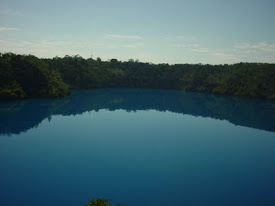
Blue Lake
Places I've lived: Adelaide, SA

Places I've Lived: Perth by Day

From Kings Park
Places I've lived: High View, WV

Places I've lived: Lynton, Devon, UK

Places I've lived: Braemar, Scotland

Places I've lived: Barre, MA, USA

Places I've Lived: Perth by Night

From Kings Park
Inner Peace Blog

Awarded by Joanna Fay. Click on the image to visit her lovely website!
Versatile Blogger Award

Awarded by Kim Falconer. Click on the pic to check out her Quantum Astrology blog!
Fabulous Blog Award

Awarded by Kathryn Warner. Click on the pic to check out her Edward II blog!
Friday, 5 April 2013
Book review: Rayessa and the Space Pirates by Donna Maree Hanson
 Friday, April 05, 2013 |
  Posted by
Satima Flavell
Posted by
Satima Flavell
 Rayessa and the Space Pirates by Donna Maree Hanson
My rating: 3 of 5 stars
A romp though space with a pair of adventurous teenagers. Ideal light romance for the 12+ age group. A version of the following review first appeared in the now defunct webzine, The Specusphere, in February 2013.
With this charming novella for young adults, Canberran author Donna Maree Hanson takes her first step into longer-length publishing. She already has a good handful or two of short stories under her belt, and she won respect and acclaim from fandom with her Australian Speculative Fiction: A Genre Overview.
Escape Publishing is a new imprint (should we call it an imprint when its product is entirely digital?) from Harlequin, purveyors of fine romances for many years. They are obviously keen to move with the times and to suss out exactly what readers want. Whether you’re after romantic suspense, historical romance, GLB romance, erotica, fantasy or sci-fi romance, you will be sure to find something to your taste at the Escape shop. What’s more, they are not frightened to publish e-books of any length from short stories to fat fantasies – and for all ages from 12 upwards! Search their website and you’re sure to find something to suit your taste.
Rayessa and the Space Pirates is light and frothy fare: an easy read and very suitable for the younger end of the target age group. Girls 12-15 will love this one, and older readers will find it entertaining, too, although they will question the credibility of some of the situations. It would be unfair to reveal these because they will inevitably result in spoilers, but I must say that I, as an adult reader, kept thinking, ‘Hey, wait a minute – that can’t be right!’ I don’t think the little solecisms will bother the younger readers, though.
This is one of the earliest books released by Escape, and it was done in something of a hurry. Unfortunately for Rayessa and the Space Pirates this shows up in an apparent dearth of copy-editing. I noticed several typos and even one or two misused words. This is a shame, and I hope Escape will lift their game now the rush of getting the imprint up and running is over.
Congratulations to Donna Maree Hanson. May Rayessa be the first of many romantic heroines to spring from Donna’s keyboard into publication!
View all my Goodreads reviews

Thursday, 4 April 2013
Book review - Sea Hearts by Margo Lanagan
Thursday, April 04, 2013 |
Posted by
Satima Flavell
 The Brides of Rollrock Island by Margo Lanagan
My rating: 4 of 5 stars
This lovely book (alternative title Sea Hearts if you live outside the USA) captures snapshots of well-drawn characters in typical Lanagan style. If you love selkies, mermaids and tales of the sea, this could well be a book for your shelves!
I did not love it quite as much as Tender Morsels (if we could give half stars on Goodreads this one would be three-and-a-half) as I felt the construction precluded any real denouement - the story follows several different protagonists through three generations, and their stories aren't really drawn together in a truly meaningful way. The plot is a slight one - sea people come, sea people stay awhile, sea people go. I am not a fan of several generations being crammed into one book, since no character is there throughout. I find that creates a feeling of something being out-of-joint. However, other readers may not mind that at all.
Nit-picks apart, Sea Hearts is an enjoyable read that arouses sympathy for the characters and the difficult situations they find themselves in due to the deliberate scheming of Misskaella, an unhappy woman with witchy powers. We can never quite like her, but we can see what misery made her into the person she became - and we can see the kind of ongoing disruption that can be caused in a small community by one bitter soul such as Misskaella.
This would make a great book-club read as it seems to arouse strong feelings in its readers. As many people are averse to it as are its devotees, so some interesting, if not heated, discussions are likely!
View all my Goodreads reviews
Tuesday, 2 April 2013
Another Easter, another Swancon
Tuesday, April 02, 2013 |
Posted by
Satima Flavell

It is ten years since I first attended a Swancon, and in that time I've been to some seven or eight of them, and I've never failed to enjoy myself immensely. However, they do vary greatly in focus, and therefore, to some extent, in content.
There is almost always at least one Guest of Honour from overseas. This year it was author Charles Stross from the UK. His books are numerous and varied, and only yesterday he revealed on his blog that he is expanding into film-making.
Stross is a man of unlimited imagination. His series The Laundry Files, for example, consists of science fiction spy thrillers about a field agent working for British government agency 'the Laundry', which deals with occult threats, while The Merchant Princes is an alternate history series in which some humans have an ability to travel between parallel Earths. However, his works can all be categorised as either hard SF or Space Opera that sometimes borders on Fantasy.
Australian author John Birmingham was also a Guest of Honour. Birmingham is best known, of course, for his first book, He Died with a Felafel in his Hand, which has since been turned into a play, film and a graphic novel. A sequel, The Tasmanian Babes Fiasco was turned into a play that went on to become the longest running stage play in Australian history.
For SF fans, however, Birmingham is best known for his Axis of Time Trilogy, an alternative history of WWII. More recently, he has produced another series, starting with Without Warning, set in an alternative world in which most of the population of America has disappeared on the eve of international war. There have been two follow-up books - After America and Angels of Vengeance. Further books in the series will be released electronically by Momentum.
Other works by John Birmingham include a crime novel The Search for Savage Henry, and How To Be A Man, a semi-humorous guide to contemporary Australian masculinity. Nothing if not versatile, Birmingham spent four years researching the history of Sydney for Leviathan: the unauthorised biography of Sydney which won Australia's National Prize for Non-Fiction in 2002.
Birmingham gave one of the most entertaining GOH speeches I have ever heard. In the persona of a street-wise journalist blended with an old hippie put out to grass (and I use that word deliberately) he had us in stitches for a good half hour, then in more stitches as he fielded questions from the floor. One thing's certain - if Birmingham tires of writing he has a future in stand-up comedy. I suspect the hippie journo is just one facet of a complex and fascinating personality, which explains the enormous variety of his oeuvre.
Other guests included comics writer Gail Simone (I missed her panels, unfortunately) and Melbourne based author, editor and critic Lucy Sussex, whom I heard in a most enjoyable panel on Urban Fantasy with Charles Stross, Helen Duffill and Katherine Mc Farlane. Fan GOH's were my friends John and Sarah Parker, who have been active in fandom for almost as long as anyone can remember!
I must admit that as one whose interests lie in reading, writing, editing and reviewing, I was a tad disappointed that there were no literary or academic streams in this Swancon. It was quite deliberately aimed at fandom, and while I and some other writerly types might have missed out, the convention brought in a younger crowd, some of whom, I suspect, might have come to fandom via the extremely popular commercial conventions run by Supernova. This can only be a good thing, since one of the big discussion points in SF circles in recent years has been the ageing of fandom generally. While there were few panels or talks of interest to writers, one that did impress me consisted of a group of young people discussing Young Adult spec-fic literature. They revealed themselves to be knowledgeable and discriminating (no Twilight fans here!) in the way they described how SF had helped them learn about the world and their places in it. I left the panel wondering if I had just heard the voices of tomorrow's writers.
I missed out on a Tin Duck, but was delighted that several of my friends were recipients. The winners included Adrian Bedford, Juliet Marillier, Sarah Lee Parker, Liz Grzyb, Talie Helene and Elaine Kemp. I was delighted, too, that my friend and fellow writer Sue Isle, who received a Tin Duck last year for her lovely YA book Nightsiders, gained her 33 years award for attendance at Swancon.
Congratulations to ringleaders Tom Eitelhuber, Andrew Sharp and their team for another fun-filled convention! Despite my aforementioned disappointment, I enjoyed the con a lot. As usual, it was a great opportunity to catch up with friends and colleagues. What's more, I left mollified by assurances from the convenors for 2014 and 2015 that the literary and academic streams would be reinstated at least for the next two Swancons!
PS. I should point out that the weekend did not entirely lack opportunities for professional development - time spent in the bar chatting with colleagues carries Brownie points, too! :-)
PPS. You can see the Tin Duck winners and shortlistees at
http://wiki.sf.org.au/Tin_Duck_Award#2013
I feel really chuffed to see my name up there alongside those of so many gifted and hard-working people!
Picture credit: By Donell w (Own work) [CC-BY-SA-3.0 (http://creativecommons.org/licenses/by-sa/3.0)], via Wikimedia Commons
Monday, 25 March 2013
Book review: Fearless by Rowan Hagen
Monday, March 25, 2013 |
Posted by
Satima Flavell
Fearless by Rowan Hagen
My rating: 4 of 5 stars
 This is a beautifully written book. It speaks of hankering after the past and of moving forward into the future. It points to the connection between love and service, and it examines the conflict that so often exists between between what we feel and how we act.
The worldbuilding (it's set on the central coast of eastern Australia) is wonderfully executed. Hagen has a way with words that often borders on the poetic, bringing to life both the boredom and the comfort to be found in a country town.
Told in the first person by Joss, Fearless is really two narratives in one. In her search for an old friend, Karmi, Joss reminisces to her new friend, Fletch, about her earlier life. This is cleverly done. The flashbacks are so neatly worked in that they add to the narrative flow rather than interrupting it. I did find that I knew the ending long before I got to it, but I never once wanted to stop reading. It was a case of the journey being more fascinating than the arrival! And that journey introduces us to some wonderfully well-drawn characters who play out events both terrible and sublime.
Fearless is a keeper. I shall no doubt read it again.
View all my Goodreads reviews
My rating: 4 of 5 stars

The worldbuilding (it's set on the central coast of eastern Australia) is wonderfully executed. Hagen has a way with words that often borders on the poetic, bringing to life both the boredom and the comfort to be found in a country town.
Told in the first person by Joss, Fearless is really two narratives in one. In her search for an old friend, Karmi, Joss reminisces to her new friend, Fletch, about her earlier life. This is cleverly done. The flashbacks are so neatly worked in that they add to the narrative flow rather than interrupting it. I did find that I knew the ending long before I got to it, but I never once wanted to stop reading. It was a case of the journey being more fascinating than the arrival! And that journey introduces us to some wonderfully well-drawn characters who play out events both terrible and sublime.
Fearless is a keeper. I shall no doubt read it again.
View all my Goodreads reviews
Wednesday, 20 March 2013
Write a decent synopsis
Wednesday, March 20, 2013 |
Posted by
Satima Flavell
 |
When an
agent or an editor at a publishing house asks for a sample of your work, s/he
will usually want to see a synopsis as well. Even if you’re self-publishing and
have done the right thing by engaging a freelance editor to help prepare your
manuscript, you will usually find that she’ll want a synopsis. In fact, when I
do a mini-assessment for you, it’s one of the things I’ll ask for, too.
Why?
Because from a decent synopsis, an agent or editor can see whether your story
will 'work'. Does it have interesting characters doing interesting things? Is
there an underlying conflict that holds the plot together? Can the climaxes be
made to occur in the right places? Is it original? Does it remind the reader of
another book? (This can be either a good thing or a bad thing – a good thing if
your book has an original take on an idea that has sold well before: a bad
thing if you’ve obviously written still another re-hash of Lord of the Rings,
Harry Potter or Twilight.)
The first
time you sit down to write a synopsis, you’ll probably tear your hair out when
you realise that it’s going to take a lot more than the standard one or two
pages to fit the whole story in. (It’s usually fine, BTW, to present your
synopsis with single spacing – but be sure to note the requirements, if any,
expressed by the person who will receive it.)
The very
idea of compressing a 120k story into 700ww or even less throws many people
into a tizzy as the task looks impossible! But relax! There’s trick to it – and
that trick is that you don’t need to tell the whole story.
The Four
Essentials
Any story
can be summed up by looking at four things:
1.
Who is the main character?
2.
What does s/he want?
3.
What's stopping him/her from getting it?
4.
How does the MC set about defeating this opposition?
As an
example, let’s take a look at Pride and Prejudice. (I’ve chosen this
rather than a spec-fic novel because almost everyone has read it, seen the
movie, seen the TV series — or all three!)
1.
Elizabeth Bennet, the second of five daughters in a family whose estate is
entailed to the nearest male heir, is a self-sufficient young woman who
disapproves of her mother’s determination to marry the girls off
advantageously.
2.
Elizabeth wants to marry for love.
3.
There is a dearth of even halfway-loveable men in her social circle, yet when
two new eligible bachelors arrive in the area, she soon becomes prejudiced
against Mr Darcy, a proud man of good family who looks down on those who don’t
meet his high expectations.
4.
Elizabeth must conquer her prejudice and convince Mr Darcy that he needs to
overcome his pride before they can find happiness together.
Ok,
that’s the bare bones of the story. Now, to put flesh on those bones we need to
add:
1.
Other important characters, their goals and motivations
2.
Important events in the story
3.
The eventual outcome, at least in general terms.
What you
need to do first is to meld those four things into what’s often called an 'elevator pitch' – a short resumé that you could use to interest someone in
your story in a very short space of time. It’s really just like a back cover
blurb.
So, a
blurb for Pride and Prejudice:
Elizabeth
Bennet longs to marry for love, but for financial reasons it has to be to a
wealthy man, and finding one who is both rich and loveable isn’t easy. When she
meets the proud Mr Darcy, she quickly becomes prejudiced against his snobbery
and his critical manner. Yet Mr Darcy is not all bad – and he is the one who
can save the reputation of Elizabeth’s admittedly embarrassing, socially inept
family. But can he overcome his pride, and she her prejudice, so they can learn
to love each other?
Once
you’ve done this, you have a handy tool for promoting your book – at the start
of a query letter, for example.
Now let’s
add more flesh to make our blurb into a real synopsis:
Elizabeth
Bennet is the second of five daughters. Their family’s estate is entailed to
the nearest male heir, the sisters’ obnoxious cousin, Mr Collins. Elizabeth
wants to marry for love, and resents her mother’s determination to marry the
girls off advantageously – but at least one of them must marry well to ensure
the welfare of all five, once their parents have died and the estate has passed
to Mr Collins.
The five
sisters are quite un-alike, varying in character from sweet (Jane, the eldest)
to sinful (Kitty and Lydia, the two youngest, whose main interests revolve
around shopping – and flirting with army officers from a nearby garrison.)
When a
wealthy bachelor, Mr Bingley, rents a nearby estate, Mrs Bennet’s hopes of
pairing off her daughters rise. Mr Bingley, with his two condescending sisters
and a well-born friend, Mr Darcy, attends a ball at the local assembly rooms,
and it is apparent that Jane and Mr Bingley are attracted to each other. But
Elizabeth overhears Mr Darcy criticising the company in general and her in
particular, and she immediately writes him off as proud and snobbish.
One of
the army officers, Mr Wickham, befriends Elizabeth. He tells her that he has
been cheated out of his true vocation — the church — by Darcy’s mean behaviour,
and Elizabeth, already prejudiced against Darcy, believes him.
Mr
Collins proposes to Elizabeth. She dislikes his obsequious yet conceited manner
and turns him down, much to her mother’s ire. The angry Mr Collins then
proposes to Elizabeth’s best friend, Charlotte. Being just as poor as Elizabeth
but more practical, Charlotte marries Collins at once.
On a
visit to the newly-weds, Elizabeth runs into Mr Darcy and his cousin Colonel
Fitzwilliam, who tells her that Darcy has separated Bingley from Jane. Then,
unprepared, Elizabeth receives a declaration of love from Darcy. She confronts
him about his ruin of the budding relationship between Jane and Bingley and
Wickham's account of Darcy's mistreatment of him. Darcy leaves, too shocked to
reply, but he sends Elizabeth a letter telling of his estrangement from
Wickham, who had tried to seduce Darcy’s young sister, Georgiana. Darcy also
confesses his repugnance for the behaviour of certain members of Elizabeth’s
family, which is why he persuaded Bingley to stop courting Jane. In this
Elizabeth has to admit he is right — her mother and younger sisters often
exhibit quite unseemly behaviour. Her opinion of Darcy softens.
Elizabeth,
with her aunt and uncle, visits Darcy's estate. He unexpectedly returns home.
To Elizabeth’s astonishment, once they have both overcome their embarrassment,
he makes an obvious effort to be friendly.
The
cautious new start to their relationship is interrupted by news that Lydia has
run away with Wickham, apparently with no intention of marriage. This will reflect
badly on the entire family, and Elizabeth is convinced that any chance of a
relationship between her and Darcy is in ruins.
However,
news comes that Lydia and Wickham are married. Elizabeth learns that this was
almost entirely due to Mr Darcy’s intervention – he paid Wickham to marry
Lydia. Bingley returns and proposes to Jane – and Darcy once again proposes to
Elizabeth!
Et Voilà!
That’s
just over 500 words – one single spaced A4 page. The bare bones of the story
are there — enough to give agents and publishers an idea of whether or not you
have a workable storyline, and whether or not it’s the kind of thing they are
looking for. You don't need to mention all the characters and you can leave
sub-plots out altogether unless they impinge on the main plot in a big way. You
will notice that I haven't mentioned Eliza's father or Lady de Vere at all, and
the story still hangs together.
If you
start with those four basic elements - the main character, what s/he wants,
what’s stopping him/her from getting it and how s/he sets about defeating the
opposition – and build up from there, you’ll come up with a decent synopsis
every time.
This article first appeared in the now-defunct webzine, The Specusphere, on 10 September 2011.
This article first appeared in the now-defunct webzine, The Specusphere, on 10 September 2011.
(Picture courtesy Wikimedia Commons: © 2007 Nuno Pinheiro & David Vignoni & David Miller & Johann
Ollivier Lapeyre & Kenneth Wimer & Riccardo Iaconelli / KDE / LGPL 3)
Subscribe to:
Posts (Atom)

