Twitter Updates

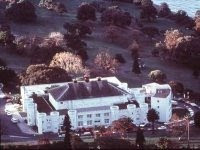
Places I Live: Mount Gambier

Places I Live: Mount Gambier
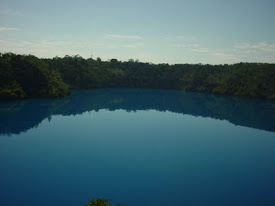
Blue Lake

About Me

I'm an experienced writer and editor of both non-fiction and fiction.

Editing - non-fiction

Much of my editing work comes from academics, especially PhD students, but I also research, write and edit other non-fiction work, especially reviews, biographies and family and local histories. I pride myself on having a broad general knowledge, and have edited in areas ranging from the arts (both performing and visual) through to Physiotherapy, Law, Business Studies, IT, Women’s Studies and even an occasional Engineering effort.

Editing - fiction

I am a well-practised beta-reader and critic of speculative fiction and am currently a sub-editor for The Specusphere, an e-zine for the Speculative Fiction community. Historical fiction and high fantasy are my specialist sub-genres, but I’m delighted to edit or proof-read books in most areas of fiction writing.

My experience

From a background in the performing arts, principally dance and music, I switched to writing in these areas in 1987. I have written reviews and feature articles for various prestigious publications including ArtsWest, Dance Australia, Music Maker and The Australian. A decade or so back I was bitten by the fantasy bug and I have just about written the million words they say you have to write before you are any good. Any morning now I will wake up to find that I’m as good as some of my favourite authors. (Well, I can dream, can’t I?)

My bits of paper

I hold a BA in Religious Studies, an Associate Diploma in Performing Arts (Dance) and the certificate of the Federation of Australian Astrologers. For what it’s worth, I also have a Certificate in Rural Studies – I’m the only person I know who’s been both a ballet teacher and a pig farmer!

And how did this strange combination make me into an editor? Click here to find out!

Fun things

In my spare time I enjoy Family History, Astrology, Yoga, Meditation and Belly Dancing. Although I regard these primarily as hobbies these days, I occasionally offer workshops in meditation and I will write astrological reports to order.

Share it

LinkedIn

View Satima Flavell's profile on LinkedIn

For SpecFic Lovers

Places I Live: Perth by Night

Places I Live: Perth by Night
From Kings Park

My Blog List

Places I Live: Perth by Day

Places I Live: Perth by Day
From Kings Park

Sydney Conservatorium

Sydney Conservatorium
My old school

Reading and reviewing

  • *Heir to Sevenwaters Another winner from Juliet Marillier! Reviewed on The Specusphere.
  • *Tender Morsels - an extraordinary first novel from Margo Lanagan, dark and beautiful.
  • *The First Law Trilogy by Joe Abercrombie. A WOW factor of great magnitude characterises this trilogy, composed of The Blade Itself, Before they are Hanged and The Last Argument of Kings.
  • *The Siege of Arrandin by Marcus Herniman. You will never see such lovingly detailed world-building elsewhere!
  • *Awakening by Lara Morgan. An impressive fantasy from a new Aussie author. Reviewed on The Specusphere.
  • *Midnight Never Come by Marie Brennan. An original and intriguing fantasy of Elizabethan England.
  • *Dreaming Again edited by Jack Dann. A fascinating anthology of some of Australia's best spec-fic writers.
  • *Black Ships by Jo Graham; a well-told riff on the Aeneid. Reviewed on The Specusphere.
  • *Hal Spacejock Book IV: No Free Lunch by Simon Haynes. Another screamingly funny story from this entertaining author.
  • *Escape by Sea by L.S.Lawrence. An exciting adventure story for the YA market, set in the era of the Punic Wars. Check out my Specusphere review.
  • *The Accidental Sorcerer by KE Mills. This is Karen Miller in disguise so the writing is top-class. She just gets better and better!
  • *Take Charge by James Hansen. A really neat little book on how to use apostrophes correctly. I loved it! Follow the link to read my review.
  • *Dragonscarpe by Pat McNamara, Michal Dutkiewicz and Gary Turner. A beautifully illustrated, coffee-table sized high fantasy novel. Delicious! Follow the link to my Specusphere review.
  • *Dreamsongs by George R.R. Martin. A fantastic restrospective of the Great Man's work. The link takes you to my Specusphere review.
  • *Winterbirth by Brian Ruckley. A most promising first novel of the blood and thunder variety. Reviewed for The Specusphere.
  • *The Riven Kingdom by Karen Miller. One of the best reads I've had in ages. The link leads to my Specusphere review.
  • *Shakespeare by Bill Bryson. The first thing I've read for ages that I didn't have to review, so I can just relax and enjoy Bryson's vivid, witty writing.
  • *Cybele's Secret by Juliet Marillier. One of the best YA books I've read in many a long year. Follow the link to my review on The Specusphere.
  • *Warprize and also its sequel, Warsworn by Elizabeth Vaughan. The first two books of a romantic fantasy trilogy, the first from this author. Reviewed for The Specusphere.
  • *The Awakening Book One of The Triumvirate by Bevan McGuiness. An attention-grabbing first fantasy novel. Reviewed for The Specusphere.
  • *The Elves of Cintra by Terry Brooks. The second in his Genesis of Shannara Series. Reviewed for The Specusphere.
  • *Dr Whom by A.R.R.R. Roberts. An amusing spoof not only on the TV series but also on Lyn Truss's classic work on punctuation, Eats, Shoots & Leaves. Reviewed for The Specusphere.
  • *Feast of Souls by Celia Friedman. An intriguing idea underlies this one - what if magic had a cost, and that cost was a person's life force? Reviewed for The Specusphere.
  • *The Illustrated Bede by John Marsden with translator John Gregory and photographer Geoff Green. This work really places the Venerable Bede in his setting and historical context.
  • *The Art of Awareness by Eric Harrison. A superb meditation handbook by one of Australia's leading teachers.
  • *The Weighing of the Heart, an Anthology of Emerging Western Australian poets. I have a sonnet in this one but I am put to shame by some of the other wonderful poets whose work is represented!
  • *Eagle of the East by LS Lawrence. A super historical yarn for the YAs, especially those of the male persuasion. Reviewed for The Specusphere

Followers

Blog Archive

Stat Counter

Multiculturalism and genealogy

Yesterday, on my way by public transport to an editing workshop, I had three experiences within fifteen minutes that showed me how much Australia has changed since I arrived here in 1952 at the age of eight. In those days, you could buy two kinds of cheese in Australia: mild and tasty. Well, three, if you counted the processed stuff that came prepackaged and tasted like greasy cardboard. Not that I've eaten greasy cardboard, mind you, but I'd imagine the taste and the nutritional value would not have been much different. These days, we can buy delicacies from all over the world, in many different varieties, and I thank heaven for that because I absolutely adore cheese, and being a vegetarian, I eat a lot of it.

It was a two hour journey each way to attend a three-hour workshop. It's a good thing it was such a good workshop, or I would have been a bit grumpy by the time I got home, but in fact it was excellent, thanks to Amanda Curtin, the leader. She made me think hard about some of the techniques I'd been using and how to improve their worth in my work. But there was added value to the outing. In fact, the interesting experiences started before I'd even boarded the first bus.

As I waited for the bus to arrive, a young man crossed the road and began to read the timetable on display at the stop. He looked a bit bemused, so I asked where he was going. He told me, I gave him directions, and we got on talking. It turned out he was from Africa, had grown up in the UK, and had spent some time in Canada before coming to Australia. He had already found a job and was hoping to buy a car this week.

His accent was fascinating. It sounded North American. Sort of. Sort of English, too. I wondered if he still spoke his own African language but as it was almost time for the bus to arrive there was no chance to ask. I wished him luck in his car quest and took the bus to the railway station.

The station is close to a school that has a specialist dance stream, and waiting for the train were two young people. They looked slightly Asian, the boy more so than the girl. I would have guessed him to be Chinese. The pair must have been to a dance rehearsal, for the boy was practising steps he'd just learnt. I heard him tell the girl that he did not want to forget them. Over and over again he did the same sequence. I didn't like to stare, but from the corner of my eye I guessed he'd been learning a folk dance of some kind, quite possibly a Morris dance. The sight of a Chinese boy practising English Morris dancing on the platform of an Australian railway station was incongruous to the point of being surreal. It would have been impossible only a few years ago. When I was that age, few boys danced at all, there were hardly any Chinese people in Australia, and to my knowledge, absolutely no Morris dancing.

When the train arrived, we got in separate carriages. I wondered if he kept on practising during the train ride!

At the next station, two young women got on. They appeared to be Indian. One had the dark hair and eyes typical of the sub-continent, but the other, athough her features resembled those of her companion, had eyes of a lovely shade of dove grey. She had a dear little toddler in a stroller. His skin was considerably lighter than hers, but he had the same deep brown eyes and dark curls as the other woman. At a guess, I'd say maybe his father was southern European, or perhaps half Indian.

This is not only Australia today: it is the world today. These three brief encounters led me to consider the problems inherent in researching the family trees of the children of this multi-cultural generation. I have blogged my thoughts over on my website blog. If you're interested in family history, please do check it out.

Once I thought...

Over on my writing and editing blog, I’ve just put up a post about how one becomes an editor. I called it “Once I thought I’d like to be an editor”. This sounded vaguely familiar and I soon realised why. When I was a little girl of five years old or so, my father taught me a silly little song that went like this:

Once I thought I'd like to be a cricketer
So down to the park I took a little stroll
To see a cricket match, the first one in my natch
To see how I could bowl.
One young man, he knew the way to bat a bit
He sent the ball so wonderfully high
Right up in the air, you could see it there
It looked just like a stick into the sky!
I stood and watched it, right above my head
‘Come away from under it,’ everybody said
But I knew how to catch a ball, about it I had read
In a little penny book I’d bought.
My eyes were shut and my mouth was open wide
I felt a sort of earthquake; I thought I should have died!
They never got the ball back from out of my inside…
Well caught! Howzat!

Like the old Yorkshire song On Ilkley Moor b'at’at, which I can also still sing right through, this song was part of my childhood. Neither song is much heard today, and more’s the pity, because they are good fun and easy to sing. What favourite old songs can you remember from your early years?

Specusphere Time Again!

Funny how a couple of months can fly by so quickly, but there's a new Specusphere up, with 19 reviews, several articles and a brace of stories. Check it out if you can.

Meantime, the new website is swelling every day! I've added an article about how I came to write fiction and another about why I love genealogy. Please have a look and give my stats counter something to do!

Meantime, I'm staying in my friend Pam's "spare" flat, which means I have no animals to mind, which meansI won't be doing much walking. Not good. Maybe I could practise a bit of belly dancing each day instead!

New web site

First of all, here is the promised pic of my new canine friend, Morgan (as in le Fay!)

With my son Scott's help, I've just launched my new web site. It's still a bit of a Work in Progress, but it has at least the beginnings of all the things I want to include. My very first blog over there follows on from the one I did here in August called The Promiscuous Artist. I was inspired by a post on my friend Fiona Leonard's Year in America blog, in which she poses the question "If you knew you could not fail, what would you do?" Please do check it out!

However, I've decided to leave my main blog here,at least for the time being, because I cannot get WordPress to do some of the things I've got used to doing on Blogger, such as putting pictures in the side column. WordPress, however, has the advantage of giving me extra pages so that I can run a "proper" web site in conjunction with the blog. As with most things in life, some kind of compromise had to be found, so I'll keep on blogging here but will put at least one post a month on the other one. It will always be writing-related, while this blog will continue to carry my meanderings on a variety of topics. I'll always give you a link when I update the new blog: here's the one for the new post. I've carried all my other writing-related posts over there, too.

Next week, new Specusphere. Nose down, tail up until then!

Glitches and hitches

Isn't life full of them? No progress on the web site because poor Scott had a computer catch fire, with predictable results - lost files, lost time, lost money. And I had planned to post a pic of my new doggie friend, Morgan - but the battery went flat on the camera just as I was trying to take a pic.

However, I had a lovely afternoon with friends today at a fundraiser for next year's Swancon, Perth's annual SF convention. Our team won loads of prizes both individually and as a group. I scored a bottle of Baileys and some chocolate, among other things - a nice little stroke of luck, for a change.:-)Not that I did much to earn them - I just happened to be with the smartest team. Their collective knowledge, especially on comics, movies and themes from TV shows had me floored. Most of the few answers I contributed were wrong. I guess I was born too early for most of the questions!

Back next week with Morgan and maybe more on the new website!

New look blog Mk II

So here is the brand-spanking new two column version. I was interested to see that Laura couldn't see columns at all in her browser - is anyone else having that problem?

Do tell me what you think: what you like and what doesn't work for you. And of course if you're reading this on Facebook, please check out my Blogger page at http://satimaflavell.blogspot.com

New ideas

Do you like the new look of this blog? It's an experiment - part of a scheme to combine my blog and two websites in one location. I would love to get feedback from you on these factors:

Whether you like the new look of the blog or not. Tell me what you like and what you don't like!
Would you read the blog if it was incorporated into a private website rather than being hosted on Blogger?
Do you think it's a good idea to combine all my interests, both paid and unpaid, in one place? I've blogged about most of my favourite things: reading, writing, editing, music, dance, astrology, yoga, family history, history generally...so it wouldn't make a big difference to content. I might be a bit more organised about it, thats all!

In other words, what do you think makes a good blog? Do tell - I'm open to new ideas!

BTW, if you're reading this on Facebook, please take a minute to visit the original site - http://satimaflavell.blogspot.com/ - and give me your opinion!

Family stories

I suppose all families have their little stories that get handed down from one generation to the next, often growing in the telling - or sometimes shrinking by the convenient omission of embarrassing bits, like the one told by a man who said his great-great-grandfather was sent to Australia as a convict because he stole a length of rope. When a family member researched the family history she found that the said great-great-grandfather had conveniently forgotten to tell his descendants about the thoroughbred horse that was tied to the other end!

My family doesn't seem to have any stories that were handed down from many generations back, but we do have oft-repeated tales from the last two or three, and I've often thought that these should be written down for the entertainment of my own descendants. What's more, some of them might trigger ideas for stories, if not for me, for my friends and relations. Since many of my readers are also writers, I guess this blog is a good place to start recounting.

One story, which I think could be the basis for a super adventure-romance with more than a dash of comedy, concerns a guy named Alf Hyde, a cousin many-times-removed of my father. Alf married a local girl but he was a restless soul and after a few years he began to talk about emigrating to America. His wife, however, refused to leave her family and friends and eventually Alf went without her.

Years passed, and the wife became quite a local identity, even having a place on the local council - very unusual for the early C20. She ran a little corner shop and did very well for herself.

Meantime, Alf, in America, married again. No divorce from his first wife, mind you - Alf was apparently not one for formalities. He and his new wife had three children, or so the story goes, but after twenty years or so his wife died and Alf had a hankering to return to England. So back he came, and was pleasantly surprised to see his old wife was doing so well. He persuaded her to take him back and he lived the rest of his life helping to run the shop, taking occasional trips to the States to visit the children whenever he became restless. Of course, Alf's descendants may have a different version of the tale, and if any of them read this I hope they will share their version with me.

Family tales often involve bigamous marriages. Another distant rellie, or so I've heard, married a girl who turned out to be a kleptomaniac, addicted to shoplifting. This man, too, left his wife and went to America. He never returned, but rumour had it that he'd married again - also bigamously.

Another marriage tale of ours does not involve bigamy, but what would in those days have been considered an incestuous marriage - and still would in many parts of the world, although no longer here in Australia. My great-grandfather James Gaunt married a girl named Jane Suffill (1840-1874) who died at the age of only 34 from tuberculosis, (that's Jane in the photo, probably taken not long before she died) leaving him with three young children, one of whom was to become my grandfather. Within three months James had married again - to his sister's daughter! Her name was Eliza Partington and she bore James six more children. My mother remembered her - James died before my mother was born, but Eliza, who was much younger, lived to a ripe old age. Mother said that she followed the old Victorian custom of wearing an apron in the mornings to do the housework and taking it off at lunchtime, when she would add a little frill of lace to her hair to show that she was now available for socialising, which of course was generally tea and sandwiches with the neighbours. Sadly, no photos of Eliza have been passed down to us.

One really funny thing about this tale is that Mother had the facts right but the second wife's name wrong. She told me it was Hannah Woodstock. I spent years looking for this woman, and it was only when I thought to look up the 1881 census for her children's names that I discovered her real identity, for she and two of the children were staying with her family of origin on census night. How mother converted Eliza Partington into Hannah Woodstock I can't imagine, but it's a lesson in not taking family stories too seriously until you've researched the facts for yourself!

Do you have any strange or amusing stories from your family archives? I'd love to hear them if so!

Back with my doggie friends

After a lovely quiet week in my friend Pam's "spare" flat I've moved back to the home of Timmy and Lucy, a pair of crazy little canine friends - you might remember this post where I uploaded a photo of the terrible two. I will try to get a better shot of them this time around but as they are seldom together and still for long enough to get a picture the only time I might get one would be if I were to sneak up them as they slept!* The house-sit is for two weeks while their "mum" is over in Adelaide, spending the school holidays with her granddaughter. Then I move on to another canine house-mate that I haven't met yet. Watch this space:-)

I haven't been doing much writing lately, and I'm missing it. I've become used to the rather strange cycle I go through, which goes something like this:
1. Get inspired and write anything up to ten hours a day for a few months
2. Run out of ideas and play with the piece for a while
3. Give it up as a bad job and don't touch it for a few weeks or months
4. Start to feel really cranky and distressed because I'm not writing
5. Get inspired again

Often what stops me writing is the realisation that I'm not doing nearly as well as I thought I was. This last time I got so fed up with not getting anywhere that I decided to start sending the book out in any case. After all, I've been struggling with the darned thing for three years - my reasoning was "If it's no good yet then it never will be," which is really not a good enough reason to inflict the work on agents and publishers. A couple of friends have read the opus recently and said I'm being premature in sending it out in so raw a state. Now I actually didn't think it was all that raw, but apparently it's raw, or at least somewhat undercooked, due to my usual problem - not enough setting.

It's not only setting. Good writers have a knack of including setting and characterisation very subtly but as one of my critters puts it, I tend to segment things - first THIS emotion, then THAT piece of information, then THIS conversation, then THAT battle, then THIS little bit of description... "Layer things" says my friend. "Multi-layer. Interweave"

It's that multi-layering and interweaving so that nothing is left out but everything serves the whole - which, if the thing works, will be greater than the sum of its parts - that I really don't have the hang of. It must take ages to learn, unless you're absolutely brilliant, for the writers I know - both published and unpublished - who have the knack of it, have all been writing for quite a while. Mind you, I've been trying to write fiction for fourteen years, so surely I should be getting the hang of it by now!

OK, I won't send the book out again until I've had another go at multi-layering. But I'm feeling too down in the dumps about my own apparent thick-headedness to do it at the moment so I'm at the cranky stage. I don't like the cranky stage, but I've started to realise there's nothing I can do about it. It's a natural cycle, like the seasons, and I can no more make the succession change of my own volition than force winter to give way to spring. What a good thing I have doggie playmates in the meantime.


*Update - I couldn't get around the front without disturbing them but on the third go I compromised and photographed the terrier terrors from behind. Butter would not melt, eh? (HA!)

A wobbly landing

Hurrah - I'm back in Perth! After a pleasant few days in Adelaide, catching up with friends and rellies, I flew into Perth on Thursday night - in the middle of the most godawful storm the city's seen in quite a while. We had head winds all the way across the Nullarbor, so we were already late when we began our descent.

Head winds aside, the weather at 30,000-odd feet was delightful, with clear sunny skies all the way. But the descent was something else. The cabin crew made a point of checking the emergency exits were clear and that we had all read the emergency instruction cards. They made a joke of it, but their faces were grim. We soon found out why - the poor plane shuddered and juddered and rocked and bounced its way down through layer after layer of cloud into drenching rain, and more than rain. Those witches from The Scottish Play had a hand in that storm, I reckon. I've flown into Perth many times but never before has a descent been so protracted - or so uncomfortable. When we finally hit terra firma (gently, I should add there!) the cabin attendants led us in a round of applause for the flight crew. The relief on all their faces was plain to see as we exited the plane.

Because I've been on the road this week and haven't quite settled down in Perth yet, I thought I'd post links to some of my favourite history blogs. Yes, cheating, I know, but I promise a "proper" post next time:-) And if you have any interest in history you'll love these.

At http://houseoffame.blogspot.com/ Geoff Chaucer hath penned a few words on the economique downturne and the use of Twittre for broadcastinge the lawes of Engelond. And at http://lostfort.blogspot.com/ you will always find a selection of wonderful photos by blogger, writer and history buff Gabriele Campbell

Climate change? Nothing new, apparently. Check out this post on Alianore's blog to learn about the weather in the early C14. And while you're there, be sure to read this screamingly funny one in which every badly-done-by queen in history tells her tale of woe to her support group. The comments are well worth reading, too!

See you next week, or maybe on Facebook in between. Be well and happy meantime.

It's That Time again!

Yes, another issue of The Specusphere has gone live, thanks, as always, to the expertise of our webmistress, Amanda Greenslade.

As usual, there's lots to crow about. First the excellent Editorial on the current Hot Topic - Parallel Importation - by Astrid Cooper. Under Features there's a super piece on Zombies by our worthy Editor-in-Chief, Stephen Thompson, and a most scholarly article in our Medical Bag series by Brendan Carson. Stephen Turner continues his series on aspects of the genre with Mentors and the Hero's Journey, while Benjamin Solah contributes a report on the Melbourne Writers Festival. About People there's a tryptich of articles by Up-and-Coming editor Astrid Cooper, featuring interviews with K.J. Taylor and Stephen M. Irwin and a piece on Astrid's own work as a writer of spec-fic erotica.

Under Writing and Publishing we have contributions on writing a novel by Damien Kane, writing a novella by Benjamin Solah and a further argument against Parallel Importation by Paul Collins of Ford St Publishing.

And then there are all those lovely Book Reviews. Twenty-five of them! And we have a world exclusive - we're sure we are the only webzine to feature a review of an Iain Banks book - by Ian Banks! Here's the run-down:
Arrows of Time by Kim Falconer, reviewed by Satima Flavell
Book of Secrets by Chris Roberson, reviewed by Ian Banks
Deadly Desire by Keri Arthur, reviewed by Bobbi Sinha-Morey
Diamond Dogs, Turquoise Days by Alistair Reynolds, reviewed by Simon Petrie
Dying Inside by Robert Silverberg, reviewed by Maurie Breust
Every Last Drop by Charlie Huston, reviewed by Maurie Breust
Hand of Isis by Jo Graham, reviewed by Satima Flavell
Horn by Peter M Ball, reviewed by Felicity Dowker
Lavinia by Ursula Le Guin, reviewed by Satima Flavell
Nekropolis by Tim Waggoner, reviewed by Ross Murray
New Ceres Nights edited by Alisa Krasnostein and Tehani Wessely, reviewed by Simon Petrie
Night Sessions by Ken MacLeod, reviewed by Maurie Breust
Orphan's Triumph by Robert Buettner, reviewed by Maurie Breust
Outlaw by Angus Donald, reviewed by Joan Malpass and "Hypatia"
Pride and Prejudice and Zombies by Jane Austen and Seth Grahame-Smith, reviewed by Jennifer Kremmer
Shiny No. 5, edited by Alisa Krasnostein, Ben Payne and Tehani Wessely, reviewed by Ian Banks
Silver Dolphins Series Books 1 & 2 by Summer Waters, reviewed by Ian Banks
The Destroyer of Worlds by Mark Chadbourn, reviewed by John Paul Fitch
The Dragon Keeper by Robin Hobb, reviewed by Satima Flavell
The Fire King by Marjorie Liu, reviewed by Bobbi Sinha-Morey
The Last Stormlord by Glenda Larke, reviewed by Carol Neist
The Spy Who Haunted Me by Simon Green, reviewed by Simon Petrie
Transition by Iain Banks, reviewed by Ian Banks
White Star by Beth Vaughan, reviewed by Satima Flavell

Up and Coming features new books from Ford Street Publishers, Hachette Australia and Harper Collins, while under the Fiction banner we have stories from Martin Rusis and Greg Bishop.

Go on, get yourself over to The Specusphere and have yourself a darned good read!

The promiscuous artist

Over at the Mad Genius Club, Rowena Cory Daniels recently posted a piece called You know you’re a writer when… It’s a fun post, but one that pulls you up and makes you realise, Yeah, me too…

I’ve loved stories ever since I began to understand English, and as English is my mother tongue that was a while ago! I was lucky in that being the youngest of four sisters, I had lots of stories read to me, and by the time I was three I could read my favourites to myself, largely because I knew them by heart. Gradually the squiggles on the page started to make sense. What liberation, to find that I no longer need rely on my elders to read to me!

When I was four, I bullied my family into taking part in a dramatisation of Oliver Twist's meeting with Fagin. My older sisters had just seen the film and on hearing about it I immediately wanted to be Oliver, and the only way I could be Oliver was by collecting a company and rewriting the script. My father had to be Fagin, of course, and my sisters the other urchins. My mother was an audience of one. (I was lucky. Being the youngest by a lot of years meant I got indulged a fair bit.)

For a long time I wasn't sure whether I was an actor or a writer. I continued to be interested in stage and film, but at the same time, I lived a double life, in which I was not me, but a girl named Jill who had more adventures than anyone else in the world. The yarns I spun in my daydreams came out in pictures that I drew, because I was too young to write. I got right into Jill’s character and started to think of her/me in the third person, which is a worry. I wonder if this tendency to dissociate is common among writers?

My pictures often involved dramatisations of stories I heard, translated to the stage. A year or two later, when I could sort-of-nearly-almost-write (apart from a dyslexic misunderstanding of the difference between d and b) I discovered Enid Blyton. I immediately wanted to be the author of stories like those, and told everyone I wanted to be a Children's Authoress.

But then one day I went with my sister Anne to visit her friend Maureen. Now Maureen had a younger sister, Jacqueline, who was learning ballet and tap dancing. World War II had just ended and clothing was still rationed, but Maureen’s mother had cut down one of her old evening gowns to make a costume for Jacqueline. To my satin-deprived eyes it looked fit for a princess in one of my stories, and I was immediately hooked. I wanted to be a dancer, too.

Unfortunately, my family was not theatrically inclined, so I was not allowed to take lessons like Jacqueline. Even so, the Sadlers Wells (later the Royal Ballet) company was a shining light of beauty and glamour in the shabbiness of a war-torn country, and my sisters had several books about ballet. They and their friends would argue among themselves about who was the most beautiful, Margot Fonteyn or Moira Shearer. I spent hours poring over those books and eagerly thumbing through magazines for pictures of my idols. But it was only when I was eleven that I finally went to classes, which I paid for myself out of my pocket money, forgoing the weekly matinee at the cinema to do so. Mother was willing to pay for me to learn piano, but not dancing.

When I was fourteen I struck a deal with Mother. She paid for me to have four dance classes a week on condition that I also studied Speech and Drama. (She was a Yorkshire woman but I had been born in Manchester. We were by this time living in Australia, and my polyglot accent grated on Mother’s ears.) I was a pupil at the Conservatorium High School in Sydney. Fellow students included future internationally known artists such as Roger Woodward and Charmian Gadd, who threw all their energies into their musical education. Not me. Then, as now, I loved too many things. I was artistically promiscuous. So my days were very full indeed – Piano, Singing, Speech and Drama, Ballet, Character Dancing, Modern Dance – as well as normal school lessons. Oh, did I mention Theory, Harmony, Aural Training, History and Form of Music…Ye gods, these days it exhausts me to think about the schedule. Some nights I would get home at about 9.00pm and go almost immediately to bed, only to get up at 6.00am to catch a train at 7.05. During the hour long journey to the city from Liverpool, then an outer suburb of Sydney, I did my homework.

I started to help with children’s ballet classes at a local dancing school, and later I taught on my own account. My story telling now went into choreography rather than pictures. I still read voraciously, but I did not write fiction. Although I used to win prizes for poetry and prose, my prose was all descriptive. The stories I dreamed up were simple things that translated better into dance than the written word. There's more than one way to spin a yarn.

I only went back to writing fiction when I was in my fifties, after had had given up dancing and acting. But that’s a tale for another post.

Schlepping towards publication

As most of you know, for the last four years I have been writing a fantasy novel. This is my third – the first one took me seven years to write and it was pretty terrible, although I still love it and read it for fun sometimes! One day I might serialise it and put it up on the blog for you all to laugh at.

The second book was better: I started in it 2003 and at the end of 2005 I sent my “package” (synopsis and three chapters) to four literary agents. None of them was interested and after putting the manuscript away for three months I realised why – it had far too many characters and a confusing two-strand plot. George RR Martin might have got away with it: I certainly couldn’t. Funny how I couldn’t see that when I was writing it, but after a break from it the shortcomings were painfully obvious.

Well, the time has now come for the latest opus to start “doing the rounds”. The procedure has changed a little since I last looked for an agent or publisher. I am amazed at how many agents have shut up shop and how many more have closed their books in the last four years, so there are not as many places to try for representation. Also, fewer publishers are taking un-agented submissions and more want a professional assessment if you aren't agented. Heck, even some agents want a professional assessment before they will look at your work. Hard times breed hard policies, I guess, but it means the chances of getting published are lessening with every passing year. Bring in Parallel Importation (see last post) and we newbies will have no chance at all.

What’s more, reading the publishers’ guidelines, I can see that epic fantasy, which is what I write, is not wanted at present by many publishing houses. The American publisher Juno, for instance, used to publish a lot of it, but now they only want urban or near-future fantasy. Vampires still rule, and look like doing so for a while yet. I don’t do vampires, sorry. But even if I did, and wrote the world’s best vampire novel within six months, by the time I’d found a publisher the craze would certainly have passed, and there’s no predicting what the next Big Thing will be.

Every agent you submit to takes several weeks to respond. Every publisher takes several months. And “simultaneous subs” — sending your package to several agents or publishers at one time — is becoming increasing frowned upon. Furthermore, I have two or three friends who took several years to find agents, and those agents have still not sold their novels. What a slow process it is! Hey, I am 66 already. I could die before I get published!

I can see why people get sick of it and decide to self-publish, like my friend Fiona Leonard with her lovely Dancing with Zebras, which I blogged a few weeks back. But self-publishing and e-publishing have their own problems – no distribution network, no editorial help, fear of plagiarism or outright theft if you put the book on line…

I'll give it a year of trying the conventional agents and publishers before considering other channels but I’ll be honest. I am not hopeful. But nevertheless, I will be getting on with book two of the trilogy!

Blog Carnival!

Nyssa Pascoe, editor of A Writer Goes on a Journey, gave me the opportunity to host this month's Blog Carnival. The host's job is to note blogs of interest from the last four weeks. Obviously, posts will be selected that reflect the host's interests of the moment, so I focus mainly on writing and on the Big Issue facing the industry at present: Parallel Importation.

Most publishers, writers and booksellers are opposed to Parallel Importation, which would see all import restrictions on books lifted. It could have dire ramifications for all branches of the industry, resulting in job losses and fewer books with Australian content on the shelves of the shops that survive. Instead, we could find ourselves restricted to American books, with American spelling and idioms. The only businesses that stand to benefit are the big chains such as Coles, K-Mart and Target. They already discount their books to prices that the "real" bookshops cannot hope to match, and if they are allowed to import more mass-produced and remaindered books Aussie authors will be hard pressed to earn a living. As it is, the average Australian author pays little or no tax, because the average Australian author does not earn enough. If a book sells at its Recommended Retail Price (RRP) the author might get 10% of that, at best. If the book is sold for less, the author will get proportionately less. There are, friends, too many $1.50s in a week's wages.

Almost all other countries protect their authors and publishers and have no intention of changing. New Zealand is one that no longer does, and apparently book prices have not come down there by more than a few cents, if at all. Our British and American colleagues think we are mad for even considering it - but they will profit if we do, for it will then be worth their while to print huge numbers of books and sell them cheaply to the Aussie market.

Anyway, don't just listen to me. Check out some of these websites for better explanations -

First, there is Richard Flanagan's excellent piece in the SMH, to which many other commentators refer: http://www.smh.com.au/news/entertainment/books/losing-our-voice/2009/05/29/1243456730637.html
Clear and helpful commentary can be found at:
http://savingaussiebooks.wordpress.com/
http://girliejones.livejournal.com/1415806.html
http://simongroth.com/2009/07/30/parallel-export/
http://stephen-dedman.livejournal.com/224986.html gives a slightly different slant to the argument.

So, having done my bit for the Down with Parallel Importation campaign, I turn to my own involvement in the industry; learning the craft of writing -

We've all been to a class or a workshop in which the leader gave us first line for a story and asked us to continue, haven't we? Well, Heidi Kneale came up with a novel way of kick starting a story: last lines! She got some beauties, too, by asking for suggestions! http://hkneale.livejournal.com/168081.html
Patty Jansen blogged on the value of social networking to an author:
http://pattyjansen.wordpress.com/2009/07/24/its-only-useless-banter/
and then on how annoying unfamiliar references can be:
http://pattyjansen.wordpress.com/2009/07/31/do-you-want-your-reader-to-feel-like-this/
which was coincidentally followed up with this post on brand names from Rowena Cory Daniells: http://madgeniusclub.blogspot.com/2009/08/brand-names-and-world-building.html.

BookEnds, LLC - A Literary Agency blog gives tips on the submission process:
http://bookendslitagency.blogspot.com/2009/07/submissions-101.html

Lee Harris of Angry Robot (the newest imprint of Harper Collins) tells the serendipitous tale of how Aliette de Bodard got her big break!
http://angryrobotbooks.com/2009/08/angry-robot-signs-aliette-de-bodard-lavie-tidhar/

Over at Ripping Ozzie Reads, Rowena Cory Daniells has written about Point-of-View, with particular reference to "deep third". (It is also called "tight 3rd" and "close 3rd".) "Deep third" is closely related to the technique known in literary circles as "Free Indirect Discourse" (FID). Check out Rowena's post here.
And quite co-incidentally, Edittorrent (Alicia Rasley) has written a guest blog on when not to use "deep" POV at
http://jordanmccollum.com/2009/08/not-use-deep-pov/

Also at ROR, Rowena has posted on how to structure your work.

Juliet Marillier writes on inspiration through pictures, music, poetry and more here.

On the Borders Blog, Karen Miller discusses a number of topics as guest blogger. She kicked off with this one in which she cogitates on the sanity - or otherwise - of writers in general.

On research:
Gillian Polack's Food History Blog is always good value and she has recently had some fascinating input from guest bloggers, Simon Brown, Mary Fortune and Lucy Sussex, Laura Goodin, and Alma Alexander.

Lisa Gold, Research Maven, gives
tips on attaining accuracy in your work.

On Cabbages and Kings:
Patty Jansen took part in a forum with the PM on climate change. She blogs it here.

And Glenda Larke has the last word - on the trials and tribulations of travel!


Dancing with Zebras

Now there's an intriguing title for you! It's the name of a new e-book by my writing buddy Fiona Leonard. Fiona is a former Australian diplomat who spent three years living in Zimbabwe and travelling in southern Africa. Dancing with Zebras is an exciting tale about an adopted young woman’s relationship with her birth mother – but the story behind her adoption is strange and complex, filled with mystery and intrigue.

This is Fiona’s first novel and there are three good reasons why you should buy it:
1. It’s a bloody good read
2. You choose the price you want to pay - as much or as little as you like.
3. My name turns up (in good company) in the dedication

And, of course, if we don’t all buy the book Fiona and her family may have to swim back to Oz from America.

You can find Dancing with Zebras over at Smashwords. Check out Fiona's Smashwords profile and read more about Dancing with Zebras.

And to find out what Fiona, her husband, daughter and dog are doing in America, check out their blog at http://www.yearinamerica.net

Next week I hope to have a really special blog post and if I am to meet the deadline it will go up a day early. So come back on Saturday for a Carnival!!

Just checking in

I'm on the road at present, staying for a few days in Adelaide en route from Perth to Mount Gambier. I've spent worthwhile time with friends Annalou and David and caught up wth mutual friends from Annalou's writing groups as well as Facebook friend Lee Masterson. I also had a pleasant get-together with fellow Specusphere writers Astrid Cooper and Maurie Breust. Helen Blake, whose book Boy Phoenix I had the privilege of editing, also stopped by for a drink. The book is lovely, with lot of photos. Since Astrid had a copy of her new book, Starlight to show us as well, there was much back-slapping all round.

I'm just about to catch the bus to Mount Gambier, a trip of six hours. Crazy, isn't it - less than three hours to travel the 1,800km from Perth to Adelaide and six hours to get from Adelaide to Mount Gambier, a trip of only 600km. But as the plane costs well over $100 and as a pensioner I can do the bus trip for less than $40, there's no contest.

I'll be back with a "proper" post next week, by which time I should be thoroughly settled back into my apartment in "the Mount".

Shingles

I’ve taken a bit of downtime these last few weeks, in the wake of the tragic death of my grandson. The stress triggered a particularly nasty attack of shingles – it was so painful I thought I was having a heart attack! That’s what they thought at the hospital, too, as my heartbeat had turned a little strange since my last run-in with the cardio dept. It was doing something called “left bundling” which sounds scary but they assured me lots of hearts do it.

The pain and the left bundling were enough to make them want to do an angiogram. Now, you may or may not have had one of those, and in case you haven’t, I’ll tell you all about it. They open an artery, insert a stent, thread a wire through it and guide it all the way up to your heart while watching the process on screen. The sensate ability of medical people never ceases to amaze me.

As he removed the wire, the cardiologist assured me there was nothing wrong with my arteries. Just then, he glanced at my chest. “Um,” he said. “I think this is shingles.” And sure enough, by the time I got back to the ward, little blisters were merrily popping up all over the left side of my upper torso. One interesting spin-off from this was that the interns all wanted to see Real Live Shingles and so for the first time in maybe forty years I had a number of young guys lining up to look at my boobs. Gotta be something good come out of a shingles attack, I guess, but would have gladly forgone the attention to be rid of the pain.

And make no mistake, my friends, shingles is painful. Big time painful. I have given birth three times and I’ve had migraine attacks since I was nine, but I’ve never experienced pain as bad as shingles. Before the rash came out, the inside of my chest felt as if it were being attacked by sharp cutting weapons. The pain lessened slightly after the rash came out, but the painful itching of the skin compensated for that small relief. The movement of clothing against my skin alone was enough to make me whimper, woos that I am!

This was actually my second bout with the beast, and it has lasted six weeks. The first bout, four years ago, was not as bad as this and it only lasted three weeks. Yet they say that if you’re unlucky enough to get it more than once, it's usually less severe on the second round. And it’s very rare, they say, for anyone to have more than three attacks. Three? Two are more than enough, thank you.

I have high hopes that the last of the painful rash will fade away this week. I’m off to South Australia for six weeks, as I’ve run out of house-sitting gigs in Perth and besides, I want to spend time with family and friends in Adelaide and Mount Gambier. I’ll be back in Perth in September, and my first assignment will be with Timmy and Lucy, whom I lived with over the recent school holidays. They are a crazy pair, but loveable withal. And ever so cute:-)

By-the-by

This is an interim post while I finish getting myself together. I hope to be back blogging next weekend, but for now I'm still feeling a tad fragile after the tragic death of a family member.

Stateside literary agent Nathan Bransford has put together a FAQ-style compendium of all the writing advice on his blog. It includes such topics as How to format your manuscript; Why you shouldn't follow trends; Do you have a plot? (I loved this one!) and Does your novel have enough conflict? There's a total of some forty-odd posts covering almost everything you could possibly ask about the writing process and how to get your work published.

And while I'm at it, don't forget Richard Harland's Writing Tips - 145 Pages of sound information and advice from one of Australia's best-equipped and qualified authors. And watch out for Richard's new book, World Shaker, just released by Allen and Unwin and already snapped up for international release!

Back soon...

Bear with me friends, while I take a break. While the brain scan was clear, I have continued to feel unwell, and now there has been a tragic death in my family. Come back in a couple of weeks, and please send me and my family good vibes meantime.

Wrong in the head

Well, friends, tomorrow I go to have my head read.

Actually, it's to have a CT scan of my poor brain, which according to certain of my friends, has probably always had something wrong with it. My mother always assured me I was not right in the head, so maybe this goes back a lo-oong way. However it only caught up with me properly a few weeks ago, when I realised that I could not remember what I'd done five minutes earlier, kept losing words (which is most unusual for me: if there's one thing I'm never at a loss for it's words) and kept making silly mistakes in daily tasks. In short, I have become quite muddle-headed.

This would happen just when I'm deperately busy (see my penultimate post) and trying to do extra stuff including facilitating a reading of The Merchant of Venice for fellow members of the Perth Shakespeare Club. The whole thing skirted disaster. The day before the reading someone noticed I had not cast a couple of parts. How can one not cast a couple of parts, given a list of dramatis personae and a list of willing readers? I could, and did. Fortunately I was able to cast them both at very short notice, as well as two parts that the readers had to reneg on due to illness. The reading of acts one and two went really well, after all, so I'am grateful for small mercies. We'll tackle acts three, four and five at the June meeting, and maybe I'll have my head back together by then.

At first, the doc thought it was thyroid trouble causing the brain fog. I did indeed have a dearth of Thyroid Stimulating Hormone, but I think it must have been a lack of iodine because a few good feeds of fish pulled the levels back to normal. The foggy-headedness, however, has persisted. So tomorrow I have to take two buses and a short walk to a place where they will take nice coloured piccies of the old grey matter to see if anything else is wrong. The doctor assures me that it's not Alzheimer's, and I agree. I fully expect to get some kind of dementia, but not yet. Most of my family succumbs to dementia in their late seventies, but I should have ten more years of normal brain function before it's my turn.

I have a gut feeling that it's actually caused by a medication I've been taking for some time for a hiatus hernia. The literature tells me that it can cause confusion, depression, anxiety, memory loss and many other complaints, and I suppose I've been lucky not to have had these side effects before. I've been on the stuff for three years, and I'm one of those people who falls asleep for twelve hours after taking a pill for travel sickness. If a med can cause strange side effects, it will cause them in me.

But even if we're erring on the side of caution, the doc and I both think brain pix will be a nice thing to have. Maybe I could have them made into a collage with the pretty ones they took of my heart three years ago.

Old age? I'd just as soon give it a miss, were the alternative not so very final:-)

A new best friend

This is Benny, my latest little charge. He is a proper raggamuffin of a dog and although he is black (with some silver stripes, earned through long service) he reminds me more than anything else of Ginger Meggs, a popular comic strip character in Oz when I was a child. (Ginger Meggs was of the same ilk as Huck Finn or Sweet William, for those of you who are of the American or British breeds.) In short, despite being a well bred miniature poodle, Benny is a bundle of mischief, always covered in grass seeds or something more unsavoury, sloppy in his personal habits but with a heart of gold and of the sweetest temperament you could wish for in a canine buddy. I'm enjoying his company immensely!

Busy, busy, busier yet

My blogging has become, to say the least, spasmodic lately. That's because my life has become somewhat chaotic since I arrived back in Perth in early March, having gone from pleasantly industrious to red alert.

The pleasantly industrious part lasted a few weeks while I was house-sitting at the home of furry friends Gretel, Sara and Sonia. The first two ladies are of the canine variety, and both are of an age at which they need to watch their health, so there was a good deal of medication to be dealt with as well as the usual walks, bathing and grooming. Sonia the cat is as dignified and self-sufficient as ever. She's no longer young, but still enjoys excellent health apart from the odd fur ball, the bane of all long-haired cats everywhere.

It was a worrying fortnight, as I'd come back to Perth to find that two of my friends had breast cancer. However, they both had surgery and their prognoses look excellent, although one is in for a long round of chemotherapy and radiotherapy. Not much fun, I shouldn't think, but far better than the alternative. I lost two friends to breast cancer within a few months of each other back in 1995, so I am always relieved when I hear of someone who has taken early, appropriate action. Go have that mammogram, friend. It could save your life.

Of course, at sixty-six years of age I'm in the same boat as my furry friends: the body is packing up and so are those of my contemporaries. My personal current grizzle has to do with an underactive thyroid. It lowers my energy, sometimes to a level that's hardly worth measuring; makes me excessively, constantly tired; raises the heartrate and the anxiety levels, makes me feel cold even on a hot day and makes my skin so dry I could use #3 sandpaper to exfoliate. I am eating extra fish in the hope of giving the poor thyroid some reserves of iodine, but although that's helped a bit it looks as if something stronger might be needed. So perhaps soon there will be still another medication joining the hoard - or maybe that should be horde, for I have enough meds on that bench to make an army of pills and potions.

The current state of panic, I believe, is April's fault. April brought me not only the usual stress of getting the new Specusphere reviews ready to roll, but also an editing job that I really, really, wanted to do, quite apart from the financial angle. It's a biography of Jimmy Melrose, a young Australian aviator back in the 1930s who was something of a national hero. His death at the age of only 22 created a national outpouring of grief. Yet today we seldom hear his name, and the author of the biography is keen to redress that. She has written an excellent manuscript that's a pleasure to work on, but as so often happens, I received it so close to the projected publication date that it has tipped me into a state of chaos. Even so, I thought I was almost on top of things until I received a record number of reviews to edit and upload for The Specusphere. Twenty-eight of them! It's great that I have a fine team of reviewers and the trust of a dozen or more publishing houses, but to go with those things I really need two more sets of hands and eyes. It's been truly stressful this last ten days and it didn't help that for reasons beyond my ken the webzine went live on Friday instead of Sunday - sans most of the reviews. Last night was a late one, seeing me up until midnight to get them online, and meantime, authors and fans were desperately hitting the titles in the Table of Contents, only to find no substance behind the facade. As the hits mounted, so my desperation grew and I felt little but out-and-out exhaustion when I finally put the last review to bed.

But now, as usual, I am thrilled to see my babies online and already getting lots of hits. Go and see The Specusphere's nice new front page, and dip into the reviews while you're there!

So now I've only got a couple of days to do the last pass of the Melrose book (wish me, and the poor long-suffering author, luck!) and then I move on to a new housesit. The one I'm in now is lovely - in fact, I'm not a house-sitter, really, but an honoured guest in a flat owned by my friend Pam - but I haven't had time to explore this delightful area (Woodlands, in Perth, if you'd like to check Google Earth) because of the crazy workload. I'm hoping that as from this Wednesday, when I move to Shenton Park for two months, my life will slow from a gallop to a nice easy trot.

Year in America

My friends Fiona and Nayani and their daughter Teya are spending a year in America. They were so excited about the election of Barach Obama to the presidency that they wanted to witness happenings in the USA at first hand, so almost on the spur of the moment they sold up, packed up and left. You can follow their blog here.

Now they have set up a competition called “Go Ahead, Blog My Town!” They would like you to tell them in 400 words or less about your town. It can be an overview of what makes your town great, or it can focus on a particular element – an event, motorcycle ride, scenic attraction, cafe or restaurant. And it doesn’t have to be an American town, they’ll accept entries from anywhere in the world. The three best entries will feature as Guest Blogs on their site.

And not only will your contribution be up there in the blogosphere for all to see, but you will also win one of Year in America's limited edition baseball caps, modelled so beautifully in the gorgeous photo on the site!

And while you're there, check out more of Nayani's lovely photos. To see them is great; to buy them is even better:-)

The competition closes April 30. Please send your entries to contact@yearinamerica.net.

It's not only a neat competition but an opportunity to show off your town to the blogosphere. Go on, have go!

Climb an occasional mountain

I am sixty-six years old and I can count on one hand the number of mountains I have climbed. By international standards, not one of them is seriously worthy of the epithet, but then, this is me we're talking about. I don't even walk unless I have to, much less roam about on hilly protuberances. However, I have scrambled to the top of Auckland's Mount Eden (196m) as well as other baby mountains in this part of the world, including Mount Schank in South Australia (which boasts about the same height, or lack thereof, as Mount Eden) and, when I was much, much younger, I once climbed Australia's highest mountain, Mount Kosciuszko. It's a positive giant for this country at 2228 metres, or 7310 feet.

None of these can match the mountaineering adventures of my friend Carol Ryles who tackles mountains as readily as she does underwater caves (shudder) or treks in wilderness of all kinds. But when I boasted to Carol that I have climbed a real Himalayan mountain she told me I ought to blog it. So here is the story of my adventure on Phulchowki.

I spent three weeks in Nepal in February, 1995. Someday perhaps I'll blog other aspects of the trip, during which I explored Kathmandhu, met lots of wonderful people, managed to catch Giardia and survived a nasty bout of food poisoning, but climbing Phulchowki was definitely one of the highlights.

One reason for visiting Nepal was my lifelong love of rhododendrons, which grow in profusion on the hills around Kathmandhu. (Locals do not think them worthy of being called mountains, even though Phulchowki, the tallest of them, is, at 2760m, taller than Mount Kosciuszko.) My Lonely Planet guide assured me that Phulchowki was quite the best place in the Kathmandhu Valley to see rhododendrons, so I asked around the hotel, seeking information on how to get there. I'd made friends with a few other tourists by then, and one of them was a Pakistani named Kumar. He spelt it Karma, which seemed a bit eccentric until he explained that his mother had really wanted a girl and had thus lumbered him with having to spell his name aloud to every clerical officer he encountered. He assured me that he was an experienced climber and offered to take me to Phulchowki the next day. Climbing, he said, was his spiritual practice. I was intrigued.

So we got up bright and early and made our way to Patan, where we caught a bus to the village of Godawari, nestling on the lower slopes of the hills. After a cup of steaming hot black tea from a roadside stall, we hiked the short distance to the foot of Phulchowki, which rose above us into the clouds. Phulchowki is home to one of the last surviving "cloud forests" in Central Nepal. This means that the vegetation acquires much of its moisture directly from the clouds rather than from precipitation. That's not to say that it never rains or snows on Phulchowki. In fact, it can sometimes snow even in February. But it wasn't snowing that day, and the clouds were clearing as we ascended the gently sloping path up the hillside.

It remained gently sloping for about 20 minutes, then suddenly, sheer cliffs rose above us. They were not very high, but I had no idea how I was going to climb them. Not to worry: Karma found a sturdy stick about two metres long. 'Watch where I put my hands and feet,' he said, and then, clutching the stick in one hand, he hauled himself up the first little cliff. Lying on his belly, he leaned over the edge, holding the stick by one end. 'Hold onto the stick with your right hand,' he instructed, 'and put your left hand and your feet in the same places as I did.'

What had seemed like a good idea back at the hotel no longer seemed nearly so enticing, but I could hardly say so after Karma's kindness in offering to act as my guide. So, swallowing hard and definitely not looking down, I followed his instructions. With a bit of coaxing and careful instructions as to the whereabouts of the handholds and footholds, I was soon beside him on a ledge, and facing another steep clifflet.

We repeated the exercise again and again. I soon realised why mountaineering was Karma's spiritual practice. There was room in my mind and body only for the next handhold; the next foothold. I became as focussed as I had ever been in my meditation practice and more focussed than I'd ever been in any other kind of lesson. After all, one slip and I could break a leg. Or worse. It's amazing what such thoughts can do for your concentration.

After an hour or two I pleaded that I needed to rest, and after just one more (and one more, and one more...) small ascent Karma and I sat down to enjoy the view over the valley. Little villages dotted the landscape below, and around us the first few rhododendrons were just coming into bloom. I had brought sandwiches which Karma did not want to share. In fact, I didn't see him eat all day.

He told me we needed to push on if we were to make the summit and return to the world below by nightfall, so off we set again. More steep cliffs, more hauling on the long-suffering stick. I was seriously tiring by that time. After all, mountains were not part of my normal exercise routine.

Just as I was wondering how I could possibly reach the top, let alone come back down again, we suddenly arrived at a road. Its dark surface gleaming in the sunlight, it embraced the mountain like a spiral bracelet. On the other side of the road, the vegetation changed abruptly from shrubs to trees. Rhododendrons were still in evidence, but towering over them were magnificent oaks. And the ascent looked pretty steep.

I was starting to feel a bit cranky. If I'd known there was a decent road up the mountain I would have simply hired a taxi to bring me up. What was I thinking of, wasting over half a day hauling myself up a hill? It was nearing the early dusk of late winter, and I told Karma that I would follow the road and return to the village below. He, however, wanted to press on to the summit. We had come over two thirds of the way, which was enough for me. After all, I'd seen the rhododendrons and the cloud forest, and had more than enough of mountain climbing, thank you. Karma didn't have any water and he wouldn't take mine, which worried me a little, but really, I just wanted to get back to civilisation. So with a final wave to my guide as he entered the oak forest, I turned to follow the road downhill.

I had gone only a few yards when there was the sound of a car behind me. I moved over to let it pass. Unlike most cars in Nepal, it was a late model, shiny-black limousine, and it pulled up alongside me. A Japanese woman wound down the passenger side window. "Can we give you a lift?" she offered in perfect English.

Could they what! Thankfully, I crawled into the back seat of the car. My saviours were a diplomat and his wife who had not only spent a tour of duty in Canberra, but had a daughter who was born there. We had a pleasant chat about life in Australia, and then they asked if I'd mind if we stopped off at the orchid nursery in Godawari, home of the Royal Botanic Gardens. Mind? What a silly question! So I not only saw the rhododendrons and the cloud forest, but a wonderful display of native Nepalese orchids as well. I went to bed that night tired and happy, all angst having faded away on the car ride back to the Star Hotel.

As for Karma, he turned up in time for breakfast after spending the night in an army hut on the summit of Phulchowki. He and the diplomatic couple were just two of the many lovely people I met in Nepal, and that outing was just one of the many wonderful experiences I had there.

Because I'm in Perth I don't have access to my own pictures of that outing, so here is one I pinched from the Samrat Treks website. Next time I'm in Mount Gambier I'll try to remember to post some of my own and I hope the proprietors of Samrat Treks will forgive my plagiarism in the meantime!

Readers' pet hates

I know, long time no blog - but I've had internet and computer problems as well as being busy catching up with friends now I'm back in Perth for a few months! Today I'll post about something I've had an ongoing interest in for some years: things that turn readers off a book.

I've actually researched this, both on the internet (by reading forums, mailing lists etc) and by questioning friends who are readers rather than writers. Writers tend to read rather differently from others because it's almost impossible to turn off the editorial voice that says things like "Hmph - badly researched" and "How stupid to drag up that old trope" and "Oh no, not another vampire story..."

A reader who does not write, however, generally wants two things: an enthralling story and at least one character to identify with. Of course, ideas of what constitute an enthralling story and a likeable character are as varied as readers, which is why one reader's soul food is another's Bali belly material. It also means that the most unlikely book can attract at least some readers.

When we look at what turns readers off, however, there are several things that a wide range of readers will dislike. One is a waffly or confusing story. There are various factors that can contribute to this. The main one is lack of action. Many readers, and especially genre readers, want to see action on page one and want to see the action kept up throughout the book. Gone are the days when writers could spend a chapter or more setting the scene and introducing the characters. Modern readers want to become involved in an adventure of some kind right away. They also want plenty of sensory detail: first-hand experience of the sights, sounds, smells, textures and even tastes that the characters encounter. So boring writing that goes nowhere slowly or engages in lengthy description without a definite point of view doesn't cut it. Too many point-of-view characters - some readers will not tolerate more than three or four - can also confuse and annoy readers.

In fact, point of view is probably the next thing on which most readers have a firm opinion. Unless the story is a real stand-out, most readers dislike the old-fashioned head-hopping or fly-on-the-wall omniscient styles. Most people relate well to the "close third", which puts the reader right inside the character's head, experiencing the character's thoughts and physical sensations as closely as possible. Yet some of these same readers dislike the first person point of view, and I've been given two reasons for this. One is that although most readers love close third and its immediacy, some find first person, which is even closer and more immediate, somewhat threatening, as if they were being made to think another person's thoughts and must lose their own. Another reason given for disliking the first person POV is that it's obvious the character survives the trials and tribulations of the plot, since s/he couldn't be recounting the story otherwise. Seeing as the main character almost always does survive, no matter what the point-of-view, I can't really fathom this objection, but it has been given to me more than once as a reason for disliking first person narratives.

Which brings me to another widely held pet hate: the killing off of a favourite character. I've even heard readers say they will not read a particular author any more. "She killed off the man I really liked; the one I hoped the heroine would end up with," one of my informants said of a well-known fantasy author. Readers can be very unforgiving sometimes!

Most readers dislike long, unpronounceable names. Names with lots of x's, k's, y's, z's and funny symbols supposed to represent sounds not found in English generally annoy readers. Solid text - long paragraphs that take up more than a quarter of a page - are another pet hate, as are long internal monologues and long stretches without dialogue. Excessive use of italics is unpopular, although readers' tolerance for this varies widely: speculative fiction readers will put up with it if it represents telepathic communication, for example.

The final hate is of mucking about with time - flashbacks, flashforwards and big time jumps upset a lot of readers. Persons of a more literary bent tend to accept these more readily than genre readers, however.

What is your pet hate? What turns you off a book? I'd love to hear about it, especially if it's something I haven't covered above. So do leave a comment and let me know!

Specusphere rocks!

These past few days have been chaotic. We finally have a new issue of The Specusphere up and running and at the same time I've been trying to get ready to return to Perth, Western Australia. I have a series of house-sits lined up so I should be there until mid-year at least, which suits me fine because not only will I be able to meet up with writerly friends (I belong to two writers groups in Perth) but I'll also be able go to meetings of the Shakespeare Club and The Society of Editors WA. I just missed the AGM of the latter (good timing, that - I have a dread of AGMs as it's all too easy to get a job) but I'll be there for the Shakespeare Club's AGM. I always risk going to that one, despite my terror of raising a hand at the wrong moment and finding myself on a committee, because it's nice to be there when they choose the plays to be read during the coming months. My faves are the middle period comedies and I hope we'll do at least one of those.

But do check out The Specusphere, and most especially Astrid Cooper's wonderful editorial in which she talks about the animal victims of the bushfires. She's arranged a raffle to raise funds for the welfare organisations treating injured wildlife and looking after lost and sick pets. If you haven't time to see The Specusphere right now, at least check out Astrid's web site where she has a page about the raffle. Please send up a prayer for southern Australia. More bushfire weather is on the way, with conditions predicted to be as bad as the "Black Saturday" of three weeks ago when so many people died and many more lost everything they owned.

Back to the packing! I leave in less than twelve hours and I'll need to sleep for at least a few of those! Talk to you again soon - from Perth!