About Me

- Satima Flavell
- Perth, Western Australia, Australia
- I am based in Perth, Western Australia. You might enjoy my books - The Dagger of Dresnia, the first book of the Talismans Trilogy, is available at all good online book shops as is Book two, The Cloak of Challiver. Book three, The Seer of Syland, is in preparation. I trained in piano and singing at the NSW Conservatorium of Music. I also trained in dance (Scully-Borovansky, WAAPA) and drama (NIDA). Since 1987 I have been writing reviews of performances in all genres for a variety of publications, including Music Maker, ArtsWest, Dance Australia, The Australian and others. Now semi-retired, I still write occasionally for the ArtsHub website.
The Dagger of Dresnia

The Cloak of Challiver, Book two of The Talismans

Available as an e-book on Amazon and other online booksellers.
Mythic Resonance

Mythic Resonance
Mythic Resonance is an excellent anthology that includes my short story 'La Belle Dame', together with great stories from Alan Baxter, Donna Maree Hanson, Sue Burstynski, Nike Sulway and nine more fantastic authors! Just $US3.99 from Amazon.
Got a Kindle? Check out Mythic Resonance. 
My Blog List
-
How Did the Medieval Economy Really Work? Chris Wickham Explains - In one of his key works, the late historian Chris Wickham explains how medieval economies worked and the roles of peasants, markets and feudalism.5 hours ago
-
PG Slot – Cara Menang Besar di Kasino Online - PG Slot sendiri menjadi salah satu provider game judi slot gtatogel online gacor terbaik dengan grafik, fitur-fitur, dan tema yang sangat penting. Ada ba...9 hours ago
-
Logan Bookfest 2026 – The Ten Penners will be there… - Logan Bookfest 2026 The Ten Penners will be there on Saturday 24th October. Logan’s biggest celebration of books, stories, and local talent is back, and it...11 hours ago
-
5 Important But Basic Things You Need To Know About Your Characters - All About Your Characters Characters are all-important in your spec screenplay or unpublished novel. Good characterisation feels authentic, layered and r...13 hours ago
-
SBTB Bestsellers: September 26 – October 9 - The latest bestseller list is brought to by crispy leaves, a chill in the air, and our affiliates sales data.17 hours ago
-
View From A Hotel Window, Cleveland: 10/10/2026 - Bet you weren’t expecting a View From A Hotel Window double feature today, were you?! While my father is in New York City, I find myself in.. Cleveland! Ya...1 day ago
-
The Literary Tour Guide: How Much Do You Need to Describe Your Setting? - *By Janice Hardy* * Description is a blessing and a curse. * Setting the scene is vital to help readers immerse themselves in your story world, but too m...
 1 day ago
 -
Wibbly-Wobbly, Timey-Wimey Stuff Ian Likes: Doctor Who And The Terror Of The Autons by Terrance Dicks - First Broadcast: 2nd January 1971 – 23rd January 1971 First Published: 15th May 1975 For all of its faults – UNIT dating; the Doctor’s age; when did Mel fi...1 day ago
-
KC Jones - KC Jones is a screenwriter-turned-novelist currently living in western Washington. When not writing, he can be found watching movies, playing video and boa...
 2 days ago
 -
What I’ve Learned (or Relearned) by Turning from Fiction to Playwriting - [image: David Corbett for Writer Unboxed] As I’ve noted in some of my comments to posts over the course of the past year, I’ve turned away from fiction t...2 days ago
-
On Re Reading Two Comfort Novels By Controversial Authors - I’m reading a lot of books at present, but re reading two comfort novels in ebook. Both are by authors who are controversial at the moment, for differen...2 days ago
-
Taking my hat off to millinery: when an historical novelist puts the art at the heart of her new book - Michelle Lovric - One of Casanova’s famous anecdotes dates to his time in Turin, where a milliner was fatally obsessed with her lover, the Comte de la Perouse. When she la...
 3 days ago
 -
A scramble for information, or dangerous shr-schr words - A scramble for information, or dangerous shr-schr words Words beginning with shr- ~ schr- ~scr- have bothered me for years, partly because of Ge...4 days ago
-
Supanova Brisbane upcoming - Exciting news is: I’ll be heading to Supanova in Brisbane from 7-9 November 2026, so come along and get a signed copy of Staerstone, if you can. I would lo...
 5 days ago
 -
At home and enjoying my space - I have been galavanting around and it is so nice to just be at home. It was a long weekend. Conflux had been cancelled so no SF convention to attend but we...5 days ago
-
At home and enjoying my space - I have been galavanting around and it is so nice to just be at home. It was a long weekend. Conflux had been cancelled so no SF convention to attend but we...5 days ago
-
💜 Goodbye Milano — A Celebration of Some Very Special Leotards! ✨ - Some leotards deserve a proper farewell… and I think Milano Pro Sport’s beautiful designs are definitely among them! With Milano Pro Sport closing its door...2 weeks ago
-
Newsletter 24th September 2026 - Hello fiends. It‘s about that time again, where I realise it’s been quite a while since the last missive and feel like I should communicate again. I soun...2 weeks ago
-
Cliffs, Waterfalls, and Hidden Caves – The Lysefjord in Norway - As mentioned in my post about Iceland, we crossed the northern Atlantic ahead of a nasty storm upon return (there was a fair bit of wind nevertheless, but ...
 3 weeks ago
 -
Latest story: 'Departures' in Penumbric August 2k26 Issue 2 Journeys - My latest story 'Departures' is out in *Penumbric August 2k26 Issue 2,* aptly titled *Journeys. * Jeff Georgeson, the editor of *Penumbric, *has arranged...1 month ago
-
The Sociopathic Origins of Religion - You’ve all seen variations on this: how ‘Prehistoric Man’ looked up at the stars, asking: “What are they? What causes them to move?” Then a bit later: “Why...6 months ago
-
AI and Creative Professions - I've been wrestling with this for a while, and I am aware that the ambiguity in this post is palpable. AI isn't going anywhere, and I find it amazingly use...7 months ago
-
Thank you - It’s been a while since I've posted anything anywhere, but I didn't want to let any more time go by without thanking everyone for all your kind messages ...8 months ago
-
Bhante Rahula travels to India and Sri Lanka in January 2026 - Hi Friends, Bhante Rahula will lead a Year End Retreat at the Lion of Wisdom Meditation Center near Damascus Maryland from December 26th, 2025 through J...10 months ago
-
A Very Small Essay (1) - One of the lifeguards at our community centre pool, who I’d estimate to be in his mid-twenties, sometimes joins in with our aquafit class from the pool dec...10 months ago
-
Guy finally receives his PhD… - I finally got to wear a silly outfit and receive my PhD on Thursday 4th September 2025 at Curtin University. This wouldn’t have happened without the effort...1 year ago
-
Joon, Big Red and the Unicorn – a picture book - Joon is a keeper in the Timeless Forest… Joon is a keeper in the Timeless Forest, tending to all the trees and plants. When a fire threatens everything t...1 year ago
-
This feed has moved and will be deleted soon. Please update your subscription now. - The publisher is using a new address for their RSS feed. Please update your feed reader to use this new URL: *https://problogger.com/feed/*1 year ago
-
A Little Piece of Alternative History - Elizabeth, Duchess of Norfolk, is a good height for a woman, but not tall – only her headdress make her seem so. As a recent widow, she is clad entir...1 year ago
-
-
Happy Public Domain Day 2025, the end of copyright for 1929 works - This is my annual reminder that January 1st is Public Domain Day, and this year copyright has ended for books, movies, and music first published in the U.S...1 year ago
-
Titles - This is a bit of a technical post, provoked by reading a certain novel. In England, pre-Tudors, there was only ever one Prince. The Prince of Wales, when...1 year ago
-
About Holly - There is no way to soften the blow of this and Mom never liked euphemisms, so I’m just going to speak plainly. Mom died due to complications from cancer on...1 year ago
-
WRAP UP OF HORRORFEST POST, OCTOBER. - Hi all! Thank you so much for posting to WEP's Horrorfest in October. I'm sure everyone enjoyed reading the entries. So good to see so many of the 'oldi...
 1 year ago
 -
A personal thought on the passing of publishing legend Tom McCormack - The passing of publishing giant Tom McCormack makes me recall the interaction he had with my father, Leonard Shatzkin, from the very beginning of Tom’s p...2 years ago
-
Henry of Lancaster and His Children - The close bonds which Edward II's cousin Henry of Lancaster, earl of Lancaster and Leicester, forged with his children have fascinated me for a long time...2 years ago
-
Questions from year 9 students - Recently – actually, not very recently but I somehow forgot to write this sooner – I did what has become an annual online Q&A with the Year 9 girls at Bedf...2 years ago
-
Flogometer 1180 for Christian—will you be moved to turn the page? - Submissions sought. Get fresh eyes on your opening page. Submission directions below. The Flogometer challenge: can you craft a first page that compels me ...3 years ago
-
Storny Weather - I've just been out fixing up the damage from last night's storm. This is pretty much the first time I've been able to spend much time outside and do any...3 years ago
-
another review for the Christmas Maze - *The Christmas Maze by Danny Fahey – a Review by David Collis* Why do we seek to be good, to make the world a better place? Why do we seek to be ethi...3 years ago
-
Publishing Contracts 101: Beware Internal Contradications - It should probably go without saying that you don't want your publishing contract to include clauses that contradict one another. Beyond any potential l...
 4 years ago
 -
Non-Binary Authors To Read: July 2021 - Non-Binary Authors To Read is a regular column from A.C. Wise highlighting non-binary authors of speculative fiction and recommending a starting place fo...5 years ago
-
-
Grants for Writers Masterclass Online - Grants For Writers Masterclass Online Winner of 6 grants, author Karen Tyrrell shares her secrets to Grant Writing for Australian writers and authors. ...6 years ago
-
UPDATE ON WORK IN PROGRESS... - *THE FUGITIVE QUEEN * *(title may change!)* The initial draft of this novel has been finished at slightly under 150,000 words, so not quite as long as the...6 years ago
-
Productivity - If you're looking for a post on how to be more productive in your writing, this is not it. However, if you're looking for a discussion of how we conceptual...
 6 years ago
 -
HOW TO UPGRADE YOUR LIFE - Stories end. New stories begin. It's fascinating -- the great and small adventures of every day. Honor the place where you're rooted. What stories are f...
 6 years ago
 -
Geoffrey Chaucer - [image: Geoffrey Chaucer] Geoffrey Chaucer *Geoffrey Chaucer* turned into born in 1343, the son of John and Agnes (de Copton) Chaucer. Chaucer was descen...
 6 years ago
 -
#332 - Question: I wrote LOST IN LA as a retelling of Pretty Woman with “modern” social issues, but I don’t know whether to focus on the characters, the fake rel...6 years ago
-
Travelin' Man: a new Song & Music-Video from me - There's also a bit of my tongue-in-cheek, philosophy for living in the lyrics - *life should be about the journey, never about arriving. * It's also on Y...6 years ago
-
NaNoWriMo 2019 - November 1, or the start of NaNoWriMo or National Novel Writing Month is just around the corner. Basically, NaNoWriMo is about writing a 50K work novel i...6 years ago
-
Day 1: Harlequin Presentation - Sue Brockton – Publishing director Jo Mackay – head of local fiction, HQ, Mira, Escape Kita Kemp – Publisher Mills and Boon (ANZ) Nicola Caws – Editor...7 years ago
-
#Mayflower400: They that in Ships unto the Sea down go - *Music for the Mayflower* *A guest post by Tamsin Lewis * I direct the early music group Passamezzo [www.passamezzo.co.uk], an established ensemble kno...
 7 years ago
 -
Book review: The Heat, by Sean O’Leary - Jake works nights as a security guard / receptionist at a budget Darwin motel. The job suits him: he has an aptitude for smelling out potential trouble, an...7 years ago
-
Portrait of a first generation freed African American family - Sanford Huggins (c.1844–1889) and Mary Ellen Pryor (c.1851–1889), his wife, passed the early years of their lives in Woodford County, Kentucky, and later...7 years ago
-
Review of Bell's Much Ado about Nothing - Bell Shakespeare's *Much Ado About Nothing* 2019-07-07 reviewed by Frances, our president. A group from the Shakespeare Club went last week to see the B...7 years ago
-
The Girl from the Sea launches: 31 July 2019 - Some of you will already know that my new novella, The Girl from the Sea, is launching on July 31. This book is the prequel to Children of the Shaman an...
 7 years ago
 -
Story Goal, Story Question, and the Protagonist’s Inner Need (Story Structure Part 1) - This is the first article in a series exploring the elements of story structure. Part 1 looks beyond the topics of three-act and mythic structure to a revi...7 years ago
-
Assassin’s Apprentice Read Along - This month, in preparation for the October release of the Illustrated 25th Anniversary edition of Assassin’s Apprentice, with interior art by Magali Villan...7 years ago
-
The Scarred King by Rose Foreman - "From the moment he could walk, Bowmark has trained for a fight to the death. The Disc awaits him: a giant bronze platform suspended over a river of l...
 7 years ago
 -
Gratitude, therefore God? - I recently saw a video where a prominent TV personality was interviewing another TV personality who is a self-proclaimed atheist. The interviewer explained...7 years ago
-
It's the End of the (Fringe) World As We Know It... - I didn't get to the Fringe World Awards because I was volunteering at another venue at the time, which is also the reason I saw almost none of the shows th...7 years ago
-
A Movie That No Writer Should See Alone - Really. REALLY. Trust me on this. particularly since this film, ‘Can you ever forgive me?’, is based on a ‘True story’ – and too many writers will see too...7 years ago
-
Catching up on books I've read - Recently I've been looking at some of the books I've enjoyed over the past year or so – and in the process, it's made me realise just how many I've read! M...
 7 years ago
 -
The November Tour Press Release - *Peter Grant is coming to a bookshop near you. * Meet Ben Aaronovitch on his epic tour of Great Britain to celebrate the publication of his upcoming, new ...8 years ago
-
Review: Red Harvest - [image: Red Harvest] Red Harvest by Dashiell Hammett My rating: 5 of 5 stars An absolute classic featuring the most literate and technically clever of the...8 years ago
-
New story at Giganotosaurus - “The Wanderers” – the furry fantasy I wrote for my kids about a couple of fox people who go off in search of the end of the earth (and then have to find th...9 years ago
-
First comes painting, Then comes sketching - While enjoying my new acrylics hobby, I started a painting and decided I wanted to include a dragon statue in one of them. There was, though, a hurdle I ha...
 9 years ago
 -
More Cabinet of Oddities News - Back in 2015, I was lucky enough to be part of an amazing collaborative event put together by the talented Dr. Laura E. Goodin. The Cabinet of Oddities, a ...9 years ago
-
The One and the Many – every Sunday - My first serious girlfriend came from good Roman Catholic stock. Having tried (and failed) to be raised as a Christian child and finding nothing but lifele...9 years ago
-
A Shameless Plug Ian Likes: Bibliorati.com - A little-known fact is that I once had a gig reviewing books for five years. It was for a now-defunct website known as The Specusphere. It was awesome fun:...9 years ago
-
10 New Youtube Videos for Medieval Lovers - Volume 2 - We found 10 more new videos on Youtube about the Middle Ages. *Rediscovered: Medieval Books at Birkbeck * This video introduces University of London - Birk...
 9 years ago
 -
2016 Wildflower Calendar – Long List - This is the ‘long list’ for a potential 2017 Wildflower Calendar. They are pictures from suburban Perth, in conservation areas, parks and verge gardens. ...9 years ago
-
And Father Dragon said "let there be a planet...." - *Lo and behold, Dragon made a planet!!* Oh, I'm so very proud of myself so forgive me if I brag a little bit - way too much. I'm in the process of learn...
 10 years ago
 -
The Stars Askew - release imminent - Pre-order at Booktopia Just a short post to let you know that I am still alive and writing poetry over at the poetry blog. I also wanted to mention that...
 10 years ago
 -
Open Data Barometer 3rd edition results - The World Wide Web Foundation has issued the results of the third edition of its Open Data Barometer report. The report surveys open data preparedness acro...10 years ago
-
The Tame Animals of Saturn - It's done. It's in the world! Often, the journey to publication is itself worthy of a book - though it'd be a tiresome book indeed. Still, I'm happy. I co...
 10 years ago
 -
Children learning English as a second language with dyslexia. Lese-rechtschreibeschwache Schüler/innen und Englisch in der Schule. - *"Legasthenie/LRS und Englisch als Fremdsprache* Lese-rechtschreibschwache Schülerinnen und Schüler bekommen in der Regel auch Schwierigkeiten in Englis...10 years ago
-
Prompts, Anyone? - I'm a great fan of writing to triggers or prompts so when I was delighted came across something useful on poet Katy Evans-Bush's blog, *Baroque in Hackney....12 years ago
-
Cherries In The Snow - This recipe is delicious and can also be made as a diet dessert by using fat and/or sugar free ingredients. It’s delicious and guests will think it took ...14 years ago
-
Al Milgrom’s connection to “Iron Man” - Via the Ann Arbor online newspaper - I felt it was worth repeating as a great example of Marvel doing the right thing by a former employee and without the ...
 16 years ago


Places I've lived: Manchester, UK

Places I've lived: Gippsland, Australia

Places I've lived: Geelong, Australia

Places I've lived: Tamworth, NSW

Places I've Lived - Sydney
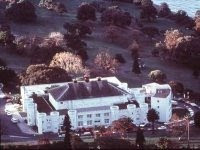
Sydney Conservatorium - my old school
Places I've lived: Auckland, NZ

Places I've Lived: Mount Gambier

Blue Lake
Places I've lived: Adelaide, SA

Places I've Lived: Perth by Day

From Kings Park
Places I've lived: High View, WV

Places I've lived: Lynton, Devon, UK

Places I've lived: Braemar, Scotland

Places I've lived: Barre, MA, USA

Places I've Lived: Perth by Night

From Kings Park
Inner Peace Blog

Awarded by Joanna Fay. Click on the image to visit her lovely website!
Versatile Blogger Award

Awarded by Kim Falconer. Click on the pic to check out her Quantum Astrology blog!
Fabulous Blog Award

Awarded by Kathryn Warner. Click on the pic to check out her Edward II blog!
Sunday, 21 August 2011
Cousin Pheobe and the Fire of London
 Sunday, August 21, 2011 |
  Posted by
Satima Flavell
Posted by
Satima Flavell

None of my direct ancestors, as far as I know, was affected by the fire, but some distant cousins quickly got in touch with family in Yorkshire. A letter written by Phoebe LISTER (née HEMINGWAY) of Halifax to her son Samuel of Upper Brea, Yorkshire, passed on the news that her cousins were safe. Phoebe (1608-1695) was my third cousin – eleven times removed!
Her letter, which is in the archives at Wakefield, is transcribed below:
Samuel,
I need not acquaint you with the lamentable accident that hath befallen London. I know you have heard of it and indeed it is a most heavy judgement not only upon them but upon the whole land. John received a letter this day from my cousin Thomas*. He saith that the Lord hath dealt most grievously with them. Though their house be burnt yet much of their best goods is safe. Thomas Dickenson hath writ to Mr Palin that he is now reduced to the same condition he was at first. Whereas he was able to relieve others he fears that he shall now need relief. I suppose you have a great loss with the rest at Blackwell Hall but we must be content to submit to the wise providence of God and as we have had a hand in the sin that hath brought this judgement so let us be content to submit to the punishment. I would not have you discouraged but trust in the Lord. He hath bidden us cast our cares upon him and he will certainly provide for his in the worst of times. He knows how to bring good out of these sad providences. I have not yet heard anything of Jeremy**; whether he be alive or no. Remember my love to Mary and to all our friends at Shibden Hall and Lower Brea.
Your loving mother
Phebe Lister
Write whether my bridle came home with the horse or no.
*Possibly her cousin Thomas LISTER, who was also her brother-in-law. They liked to keep things in the family in those days!
**Possibly another cousin, Jeremy HEMINGWAY.
PS - I do wish I knew the story of that horse and bridle!
 Labels:

Sunday, 17 July 2011
Yoda lives - in English
Sunday, July 17, 2011 |
Posted by
Satima Flavell
This post is really about substantive verbs, sometimes called "linking verbs". The verb “to be” is sometimes called The Substantive Verb, and some people just call it a substantive, not a verb at all. Be is not the only verb in this category, though. There are several others, notably become, feel, go, remain, stay, stand.
A substantive verb does not have an object. You can turn the sentence back-to-front, Yoda-like, and it will still have the same meaning, although it will probably read like something from a nineteenth century poem or novel if you do.
Look at these examples:
The air sits heavy in monsoon season: if we invert it we get “Heavy sits the air in monsoon season”
Uneasy lies the head that wears a crown: inverted: The head that wears a crown lies uneasy.
John became a doctor - A doctor John became
The grass remains dry - Dry remains the grass
She felt unhappy - Unhappy she felt
The woman went crazy - Crazy went the woman
The athlete will become a coach – A coach the athlete will become.
He remained a lawyer – A lawyer he remained
Mary stays at home – At home stays Mary
Bill stood still – Still stood Bill
These sound rather poetic, don’t they – or maybe rather like Yoda on a bad day – but we do sometimes use this form of expression, even in speech: for instance “He always wanted to be a farmer, and a farmer he became”.
A substantive verb does not have an object. You can turn the sentence back-to-front, Yoda-like, and it will still have the same meaning, although it will probably read like something from a nineteenth century poem or novel if you do.
Look at these examples:
The air sits heavy in monsoon season: if we invert it we get “Heavy sits the air in monsoon season”
Uneasy lies the head that wears a crown: inverted: The head that wears a crown lies uneasy.
John became a doctor - A doctor John became
The grass remains dry - Dry remains the grass
She felt unhappy - Unhappy she felt
The woman went crazy - Crazy went the woman
The athlete will become a coach – A coach the athlete will become.
He remained a lawyer – A lawyer he remained
Mary stays at home – At home stays Mary
Bill stood still – Still stood Bill
These sound rather poetic, don’t they – or maybe rather like Yoda on a bad day – but we do sometimes use this form of expression, even in speech: for instance “He always wanted to be a farmer, and a farmer he became”.
Sunday, 3 July 2011
Yeomen of Yorkshire
Sunday, July 03, 2011 |
Posted by
Satima Flavell
Because a lot of my friends are more interested in family history (and history generally) than in writing, editing and reviewing, I thought I might start to add the odd snippet of family history to this blog. I’ve been very lucky – I’ve been able to discover my ancestors on several lines for many generations back.
My maternal grandmother, Frances HINCHCLIFFE, was born in Liversedge, in Yorkshire’s Calder Valley, where her ancestors had lived for hundreds of years. Frances’s maternal grandmother was called Edna HEMINGWAY. There have been Hemingways around Halifax for at least 600 years, ever since the time surnames as such were coming into common use. The name originated near Halifax: one possible derivation is that it means “Heming’s Way” and was, perhaps, a place name in Viking times – Heming was the name of several Viking heroes, including a king of the ancient kingdom of East Anglia.
We can identify a Henry HEMINGWAY, born about 1410, probably the father of a Richard and a Robert: it seems likely that we are descended from Henry through Robert. The family quickly proliferated in the area, many members becoming prominent landowners. Two of the Hemingway properties were called Shibden Mill and the Walterclough.
Hemingways intermarried with other notable yeoman families including the Sutherlands, Crowthers, Drakes, Reyners and Listers – all still common names in the area.. Through such marriages, the Hemingways improved their status and wealth, and were instrumental in the founding of local charities.
Although it is not possible to be absolutely certain of the relationships amongst the various Hemingway lineages in those early days, I can positively identify one Thomas HEMINGWAY, my 11xgreat-grandfather, who died at the Walterclough on the 23 October 1579. His son John, my 10xgreat-grandfather, left a will, which, unusually for the time, directed that all the children were to have a share in his property. John describes himself as a “yoeman”, and gives directions for the payment of his debts and funeral expenses. “I will and devise” (he continues) “to the said John Hemingway” (his eldest son) “Arthure, Michael, Abraham, Richard, Marie and Anne, my children, all that messuage and tenement, houses, lands etc in Southowram which I, the said testor, occupied in the lifetime of Thomas Hemingway, my late father, deceased, and also one close of land and pasture called Jony Ridinge in Southowram - - - for the term of 21 years at the yearly rent of 8s”. He decreed that his wife (the former Agnes Mawde, whom he had married on 26 October 1557) and all the children except Grace, his oldest daughter, who was already married, should be joint executors of the will. To Grace he left 6s.8d., provided her husband, John Wilkinson, release to the executors “all manner of demands to my goods”. John must have been on his deathbed when the will was made, as it is dated 1 October 1587, and John was buried on the 5th. The will was proved on 15 December in the same year.
I am descended from Richard, John’s youngest child, who was only ten years old at the death of his father. He grew up to marry Frances ARCHER in 1604, having moved to Dewsbury along with an eponymous younger cousin once removed. It is possible that, together with quite a few other citizens of Halifax, the two Richards moved to Dewsbury to escape the plague, which was apparently rampant in the Halifax area during the closing years of the sixteenth century.
But after the cousins left, the Hemingway name continued to flourish around Halifax. Some of their doings make interesting reading! For example, Richard’s cousin Edward, who owned the Shibden Mill property at that time, shows up in the Wakefield Manor Court Rolls as follows:
Wakefield-- At the great Court held there 29th April 1614: We payne Edwarde Hemyngwaye, of Sibden Milne, that he shall att or before the feast of St. Michaell next, take awaye, pull, and caste downe one greate dame of water, newlie erected in August last, demmed over all the whole broke and hyeway att Damhead, to the great daunger of drowninge both men abd cattell, and to the annoyance of all passengers, and especially of the Inhabitants of Northowran, in payne, xxxxix.s.xd.
A funny corollary to this tale: when my second husband and I were farming in Tantanoola, South Australia, one of the local farmers did exactly the same thing as Edward – he dammed a roadside ditch, which flooded the nearby road. His neighbours were up in arms, of course, and he was fined heavily, just as Edward was all those centuries ago!
Another distant cousin, Mathew Hemingway, is found in the West Riding Session Rolls (1602 to 1611) in this wise:
fforsomuch as ther hath bene divers orders made in the Court for the educating of a base Child begotten by Mathew Hemyngwey on the body of Dionis Savile, all which orders are now determined & for that Henry Savile father of the said Dionise, in respecte of his povertie craveth further allowance until the next Sessions for the relief therof: Yt is therefore ordered that the Towneshipp of Southowram wher the said Child was borne shall pay iiijd. & Richard hemyngwey ffather of the said Mathew ijd. weekely until the next Sessions towards the education of the said Child, And that in the meane tyme the said Dionise shalbe whipped for her offence.
Poor old Denise! It would be nice to think that Richard gave Mathew a thrashing as well, but I don't suppose he did! The sixpence a week, however, (four pence from the township and tuppence from Richard, father of young Mathew) would have at least given Denise and her “base child” a decent living in those days.
Meantime, the two Richards had settled down in Dewsbury and founded lineages which contributed much to the development of that town over the ensuing centuries. Another time, I’ll tell you what became of them, and give you some insights into the lifestyle of our “yoeman” ancestors.
I am indebted to many other researchers for much of the above material. They are too numerous to mention, but all of us owe a debt to researchers of earlier generations, notably Henry Hemingway, surgeon and antiquarian of Dewsbury (1790-1875) and John Leonard Noades Hemingway of Southport, Lancashire (1884-1955).
My maternal grandmother, Frances HINCHCLIFFE, was born in Liversedge, in Yorkshire’s Calder Valley, where her ancestors had lived for hundreds of years. Frances’s maternal grandmother was called Edna HEMINGWAY. There have been Hemingways around Halifax for at least 600 years, ever since the time surnames as such were coming into common use. The name originated near Halifax: one possible derivation is that it means “Heming’s Way” and was, perhaps, a place name in Viking times – Heming was the name of several Viking heroes, including a king of the ancient kingdom of East Anglia.
We can identify a Henry HEMINGWAY, born about 1410, probably the father of a Richard and a Robert: it seems likely that we are descended from Henry through Robert. The family quickly proliferated in the area, many members becoming prominent landowners. Two of the Hemingway properties were called Shibden Mill and the Walterclough.
Hemingways intermarried with other notable yeoman families including the Sutherlands, Crowthers, Drakes, Reyners and Listers – all still common names in the area.. Through such marriages, the Hemingways improved their status and wealth, and were instrumental in the founding of local charities.
Although it is not possible to be absolutely certain of the relationships amongst the various Hemingway lineages in those early days, I can positively identify one Thomas HEMINGWAY, my 11xgreat-grandfather, who died at the Walterclough on the 23 October 1579. His son John, my 10xgreat-grandfather, left a will, which, unusually for the time, directed that all the children were to have a share in his property. John describes himself as a “yoeman”, and gives directions for the payment of his debts and funeral expenses. “I will and devise” (he continues) “to the said John Hemingway” (his eldest son) “Arthure, Michael, Abraham, Richard, Marie and Anne, my children, all that messuage and tenement, houses, lands etc in Southowram which I, the said testor, occupied in the lifetime of Thomas Hemingway, my late father, deceased, and also one close of land and pasture called Jony Ridinge in Southowram - - - for the term of 21 years at the yearly rent of 8s”. He decreed that his wife (the former Agnes Mawde, whom he had married on 26 October 1557) and all the children except Grace, his oldest daughter, who was already married, should be joint executors of the will. To Grace he left 6s.8d., provided her husband, John Wilkinson, release to the executors “all manner of demands to my goods”. John must have been on his deathbed when the will was made, as it is dated 1 October 1587, and John was buried on the 5th. The will was proved on 15 December in the same year.
I am descended from Richard, John’s youngest child, who was only ten years old at the death of his father. He grew up to marry Frances ARCHER in 1604, having moved to Dewsbury along with an eponymous younger cousin once removed. It is possible that, together with quite a few other citizens of Halifax, the two Richards moved to Dewsbury to escape the plague, which was apparently rampant in the Halifax area during the closing years of the sixteenth century.
But after the cousins left, the Hemingway name continued to flourish around Halifax. Some of their doings make interesting reading! For example, Richard’s cousin Edward, who owned the Shibden Mill property at that time, shows up in the Wakefield Manor Court Rolls as follows:
Wakefield-- At the great Court held there 29th April 1614: We payne Edwarde Hemyngwaye, of Sibden Milne, that he shall att or before the feast of St. Michaell next, take awaye, pull, and caste downe one greate dame of water, newlie erected in August last, demmed over all the whole broke and hyeway att Damhead, to the great daunger of drowninge both men abd cattell, and to the annoyance of all passengers, and especially of the Inhabitants of Northowran, in payne, xxxxix.s.xd.
A funny corollary to this tale: when my second husband and I were farming in Tantanoola, South Australia, one of the local farmers did exactly the same thing as Edward – he dammed a roadside ditch, which flooded the nearby road. His neighbours were up in arms, of course, and he was fined heavily, just as Edward was all those centuries ago!
Another distant cousin, Mathew Hemingway, is found in the West Riding Session Rolls (1602 to 1611) in this wise:
fforsomuch as ther hath bene divers orders made in the Court for the educating of a base Child begotten by Mathew Hemyngwey on the body of Dionis Savile, all which orders are now determined & for that Henry Savile father of the said Dionise, in respecte of his povertie craveth further allowance until the next Sessions for the relief therof: Yt is therefore ordered that the Towneshipp of Southowram wher the said Child was borne shall pay iiijd. & Richard hemyngwey ffather of the said Mathew ijd. weekely until the next Sessions towards the education of the said Child, And that in the meane tyme the said Dionise shalbe whipped for her offence.
Poor old Denise! It would be nice to think that Richard gave Mathew a thrashing as well, but I don't suppose he did! The sixpence a week, however, (four pence from the township and tuppence from Richard, father of young Mathew) would have at least given Denise and her “base child” a decent living in those days.
Meantime, the two Richards had settled down in Dewsbury and founded lineages which contributed much to the development of that town over the ensuing centuries. Another time, I’ll tell you what became of them, and give you some insights into the lifestyle of our “yoeman” ancestors.
I am indebted to many other researchers for much of the above material. They are too numerous to mention, but all of us owe a debt to researchers of earlier generations, notably Henry Hemingway, surgeon and antiquarian of Dewsbury (1790-1875) and John Leonard Noades Hemingway of Southport, Lancashire (1884-1955).
Tuesday, 14 June 2011
Back on the reviewing trail
Tuesday, June 14, 2011 |
Posted by
Satima Flavell

Since I've been on the pension there has been no money for such frivolities as theatre tickets, so when a friend recently pointed me in the direction of ArtsHub the lure of free tickets led me to investigate.
Artshub is a kind of clearing house for all matters pertaining to the arts. It is a very comprehensive site, and well patronised. Their articles and reviews are of a high standard. So I thought, "Why not", and asked to be added to their list of reviewers. Now, for the first time in years I am going to the theatre again!
I've reviewed three shows so far, two of them marginally related to matters Shakespearean, and the third a wonderful dance performance by Daryl Brandwood, a fellow WAAPA graduate. I hadn't seen Daryl dance for about fifteen years, so it was a joy to watch the show, Helix.
And the two Shakespearean ones were very, very funny. You can read my reviews of all three shows if you're interested:
The Enchanters
Helix
The Complete Works of Shakespeare (Abridged)
While it's fun to be reviewing again, I feel a bit uncomfortable about the fact that I am doing it gratis - apart from the free tickets, that is! When I was writing for print journals, I would be paid anything up to about $350 for an article. But web sites simply can't afford to pay people. The Specusphere, for example, is run completely by volunteers, and, in fact, our editor-in-chief has to cough up the necessary to have the site on line at all. We tried taking advertising, but it brought in little or nothing. What's more we had no control over the content, and some of it was dodgy, to say the least. (Be published today! It will only cost you an arm and leg and last year's income...)
I suspect this is another sign of the amateurisation of so many things that seems to be a result of the internet. Maybe it is not such a bad thing - it means everyone's voice can be raised.
But in the cacophony, who is listening?
Sunday, 5 June 2011
Common misuses - confusing words
Sunday, June 05, 2011 |
Posted by
Satima Flavell
Some words have two negative forms, which can be confusing. Two such words are "satisfied" and "interested". Both have two negative forms: one starting with dis- and one starting with un-. These negatives, in both cases, have very different meanings.
 Dissatisfied/unsatisfied
If a person is dissatisfied, he or she is feeling upset or disappointed in some way. For instance “Cheryl was really dissatisfied with the service at her hotel.”
But someone who is unsatisfied hasn’t had enough of something: “I was still unsatisfied after the meal.” (You might say this after going to a posh restaurant where they served you miniscule piece of salmon and an artistic trail of sauce, garnished with some unidentifiable herb.)

Disinterested/uninterested
These examples show the difference:
“We need a disinterested party to adjudicate the competition” (i.e. someone who has no vested interest in the outcome. A parent of one of the competitors would not be disinterested!)
He or she might, however, be uninterested. E.g. “Our daughter likes to compete in gymnastics competitions but her father is totally uninterested.” (In the vernacular, he couldn’t give a stuff about gymnastic competitions even if his daughter is competing!
In neither case are the two negative forms interchangeable, because each has its own clearly defined meaning.
 Dissatisfied/unsatisfied
 If a person is dissatisfied, he or she is feeling upset or disappointed in some way. For instance “Cheryl was really dissatisfied with the service at her hotel.”
But someone who is unsatisfied hasn’t had enough of something: “I was still unsatisfied after the meal.” (You might say this after going to a posh restaurant where they served you miniscule piece of salmon and an artistic trail of sauce, garnished with some unidentifiable herb.)

Disinterested/uninterested
These examples show the difference:
“We need a disinterested party to adjudicate the competition” (i.e. someone who has no vested interest in the outcome. A parent of one of the competitors would not be disinterested!)
He or she might, however, be uninterested. E.g. “Our daughter likes to compete in gymnastics competitions but her father is totally uninterested.” (In the vernacular, he couldn’t give a stuff about gymnastic competitions even if his daughter is competing!
In neither case are the two negative forms interchangeable, because each has its own clearly defined meaning.
Subscribe to:
Posts (Atom)
