About Me

- Satima Flavell
- Perth, Western Australia, Australia
- I am based in Perth, Western Australia. You might enjoy my books - The Dagger of Dresnia, the first book of the Talismans Trilogy, is available at all good online book shops as is Book two, The Cloak of Challiver. Book three, The Seer of Syland, is in preparation. I trained in piano and singing at the NSW Conservatorium of Music. I also trained in dance (Scully-Borovansky, WAAPA) and drama (NIDA). Since 1987 I have been writing reviews of performances in all genres for a variety of publications, including Music Maker, ArtsWest, Dance Australia, The Australian and others. Now semi-retired, I still write occasionally for the ArtsHub website.
The Dagger of Dresnia

The Cloak of Challiver, Book two of The Talismans

Available as an e-book on Amazon and other online booksellers.
Mythic Resonance

Mythic Resonance

My Blog List
-
Medieval Clues Point to Lost Viking Battlefield - Medieval accounts may help identify Castle Hill in Devon as the long-lost site of the Battle of Cynuit, where Anglo-Saxon forces defeated a Viking army in ...2 hours ago
-
Linda Kass - Linda Kass began her career as a magazine journalist and correspondent for regional and national publications. Along with her forthcoming novel, World News...
 3 hours ago
 -
7 Elements of an Enduring Tale - Sometimes, while sharing a memory with my husband of twenty-six years, I’ll interrupt myself to say, “But of course you’ve heard this before.” To that he...8 hours ago
-
Deleting the past and reminiscing about change - My gmail accounts are too full and I’m running out of space. I can’t just do a global delete on terms like Twitter because random stuff gets pulled in. Som...16 hours ago
-
Deleting the past and reminiscing about change - My gmail accounts are too full and I’m running out of space. I can’t just do a global delete on terms like Twitter because random stuff gets pulled in. Som...16 hours ago
-
Giving Misfits Market A Try - In recent weeks (probably months, if we’re being honest), I have felt stuck in a rut when it came to groceries. I had no ideas, and frankly no motivation, ...1 day ago
-
Sci-Fi Romance, a KDD, & More - *Give Me Butterflies* * Give Me Butterflies by Jillian Meadows $2.99! This is a contemporary romance and the first book in a series. I also really like t...1 day ago
-
Rewind Posts – Wilder Zoo Series… - I love this series and still need to get a hold of the latest edition. Book Review-Neeka and the Missing Key (Wilder Zoo, #1) 11/08/2025jillsmithEdit”Book ...1 day ago
-
Situs Slot Gacor 4d Terbaru Review - situs dayak777 adalah pengembang game yang menawarkan game slot online. Ini juga menyediakan layanan pelanggan. Slot Gacor 4D terbaru merupakan permainan...1 day ago
-
Gender Justice in these times - [image: Large rounded boulder balanced on a rocky ridge overlooking a vast arid desert landscape under clear sky] Gender Justice in these times Teaching, ...3 days ago
-
5 Ways to Hook Your Readers - *By Janice Hardy* *It doesn't matter how you hook your reader, as long as you hook them.* "You need a strong hook" is advice you hear a lot in writing, a...
 5 days ago
 -
Oz Comic-Con Sydney September 12 and 13 - Sydney friends! I’m honoured to be a guest again at Oz Comic-Con in your fine city in September. I hope to see you there. All the details at ozcomiccon.c...6 days ago
-
Revolution! non-fiction for 8-12 year-olds by Joan Lennon - Like many of us, I grew up in a time of protest. In Canada, we marched against the war in Vietnam (I carried a placard with the catchy slogan END CANADA’S ...6 days ago
-
An Aspect Of The Eternal Champion Ian Likes: The History Of The Runestaff by Michael Moorcock - Duke Dorian Hawkmoon von Koln is a nobleman of Germania, a land recently invaded and taken over by the masked armies of Granbretan. In exchange for his lif...1 week ago
-
How Intercut Can Help Tell Your Story In Just 8 pictures - All About Intercut Whether you’re writing a screenplay or a novel, intercut can help you tell your story. An intercut is a storytelling technique used to...2 weeks ago
-
Just Been To See…The Odyssey - I’ve just come home from my local cinema, where I have seen the new Christopher Nolan film, The Odyssey. Just saying, I read the poem when I was fifte...3 weeks ago
-
Showcase Your Gymnastics Club with Professional Photography - Every gymnastics club has athletes whose dedication, skill, and passion deserve to be celebrated. Whether you’re looking to attract new members, acknowledg...4 weeks ago
-
Bavarian Counts in the Netherlands, and the Story of Jacoba of Bavaria-Holland - Oops, it has happened again. I could not find a lot more information about the Keukenhof Park beyond what I posted in the introductory post about my tour t...
 1 month ago
 -
Staerstone Book Launch - Staerstone was launched at an amazing event hosted by Core Climbing, with the main launch nestled in a whole-day climbing competition sponsored by Open Pro...2 months ago
-
The Sociopathic Origins of Religion - You’ve all seen variations on this: how ‘Prehistoric Man’ looked up at the stars, asking: “What are they? What causes them to move?” Then a bit later: “Why...4 months ago
-
AI and Creative Professions - I've been wrestling with this for a while, and I am aware that the ambiguity in this post is palpable. AI isn't going anywhere, and I find it amazingly use...5 months ago
-
2025 in Review: Books Read and Stories Published - I read less this year due to a combination of work, prioritising exercise and my health, family commitments and various other distractions. Reading wise,...
 5 months ago
 -
Thank you - It’s been a while since I've posted anything anywhere, but I didn't want to let any more time go by without thanking everyone for all your kind messages ...6 months ago
-
Bhante Rahula travels to India and Sri Lanka in January 2026 - Hi Friends, Bhante Rahula will lead a Year End Retreat at the Lion of Wisdom Meditation Center near Damascus Maryland from December 26th, 2025 through J...8 months ago
-
A Very Small Essay (1) - One of the lifeguards at our community centre pool, who I’d estimate to be in his mid-twenties, sometimes joins in with our aquafit class from the pool dec...8 months ago
-
Guy finally receives his PhD… - I finally got to wear a silly outfit and receive my PhD on Thursday 4th September 2025 at Curtin University. This wouldn’t have happened without the effort...11 months ago
-
Joon, Big Red and the Unicorn – a picture book - Joon is a keeper in the Timeless Forest… Joon is a keeper in the Timeless Forest, tending to all the trees and plants. When a fire threatens everything t...1 year ago
-
This feed has moved and will be deleted soon. Please update your subscription now. - The publisher is using a new address for their RSS feed. Please update your feed reader to use this new URL: *https://problogger.com/feed/*1 year ago
-
A Little Piece of Alternative History - Elizabeth, Duchess of Norfolk, is a good height for a woman, but not tall – only her headdress make her seem so. As a recent widow, she is clad entir...1 year ago
-
-
Happy Public Domain Day 2025, the end of copyright for 1929 works - This is my annual reminder that January 1st is Public Domain Day, and this year copyright has ended for books, movies, and music first published in the U.S...1 year ago
-
Titles - This is a bit of a technical post, provoked by reading a certain novel. In England, pre-Tudors, there was only ever one Prince. The Prince of Wales, when...1 year ago
-
About Holly - There is no way to soften the blow of this and Mom never liked euphemisms, so I’m just going to speak plainly. Mom died due to complications from cancer on...1 year ago
-
WRAP UP OF HORRORFEST POST, OCTOBER. - Hi all! Thank you so much for posting to WEP's Horrorfest in October. I'm sure everyone enjoyed reading the entries. So good to see so many of the 'oldi...
 1 year ago
 -
A personal thought on the passing of publishing legend Tom McCormack - The passing of publishing giant Tom McCormack makes me recall the interaction he had with my father, Leonard Shatzkin, from the very beginning of Tom’s p...2 years ago
-
Henry of Lancaster and His Children - The close bonds which Edward II's cousin Henry of Lancaster, earl of Lancaster and Leicester, forged with his children have fascinated me for a long time...2 years ago
-
Questions from year 9 students - Recently – actually, not very recently but I somehow forgot to write this sooner – I did what has become an annual online Q&A with the Year 9 girls at Bedf...2 years ago
-
Flogometer 1180 for Christian—will you be moved to turn the page? - Submissions sought. Get fresh eyes on your opening page. Submission directions below. The Flogometer challenge: can you craft a first page that compels me ...3 years ago
-
Storny Weather - I've just been out fixing up the damage from last night's storm. This is pretty much the first time I've been able to spend much time outside and do any...3 years ago
-
another review for the Christmas Maze - *The Christmas Maze by Danny Fahey – a Review by David Collis* Why do we seek to be good, to make the world a better place? Why do we seek to be ethi...3 years ago
-
Publishing Contracts 101: Beware Internal Contradications - It should probably go without saying that you don't want your publishing contract to include clauses that contradict one another. Beyond any potential l...
 4 years ago
 -
Non-Binary Authors To Read: July 2021 - Non-Binary Authors To Read is a regular column from A.C. Wise highlighting non-binary authors of speculative fiction and recommending a starting place fo...5 years ago
-
-
Grants for Writers Masterclass Online - Grants For Writers Masterclass Online Winner of 6 grants, author Karen Tyrrell shares her secrets to Grant Writing for Australian writers and authors. ...6 years ago
-
UPDATE ON WORK IN PROGRESS... - *THE FUGITIVE QUEEN * *(title may change!)* The initial draft of this novel has been finished at slightly under 150,000 words, so not quite as long as the...6 years ago
-
Productivity - If you're looking for a post on how to be more productive in your writing, this is not it. However, if you're looking for a discussion of how we conceptual...
 6 years ago
 -
HOW TO UPGRADE YOUR LIFE - Stories end. New stories begin. It's fascinating -- the great and small adventures of every day. Honor the place where you're rooted. What stories are f...
 6 years ago
 -
Geoffrey Chaucer - [image: Geoffrey Chaucer] Geoffrey Chaucer *Geoffrey Chaucer* turned into born in 1343, the son of John and Agnes (de Copton) Chaucer. Chaucer was descen...
 6 years ago
 -
#332 - Question: I wrote LOST IN LA as a retelling of Pretty Woman with “modern” social issues, but I don’t know whether to focus on the characters, the fake rel...6 years ago
-
Travelin' Man: a new Song & Music-Video from me - There's also a bit of my tongue-in-cheek, philosophy for living in the lyrics - *life should be about the journey, never about arriving. * It's also on Y...6 years ago
-
NaNoWriMo 2019 - November 1, or the start of NaNoWriMo or National Novel Writing Month is just around the corner. Basically, NaNoWriMo is about writing a 50K work novel i...6 years ago
-
Day 1: Harlequin Presentation - Sue Brockton – Publishing director Jo Mackay – head of local fiction, HQ, Mira, Escape Kita Kemp – Publisher Mills and Boon (ANZ) Nicola Caws – Editor...6 years ago
-
#Mayflower400: They that in Ships unto the Sea down go - *Music for the Mayflower* *A guest post by Tamsin Lewis * I direct the early music group Passamezzo [www.passamezzo.co.uk], an established ensemble kno...
 6 years ago
 -
Book review: The Heat, by Sean O’Leary - Jake works nights as a security guard / receptionist at a budget Darwin motel. The job suits him: he has an aptitude for smelling out potential trouble, an...6 years ago
-
Portrait of a first generation freed African American family - Sanford Huggins (c.1844–1889) and Mary Ellen Pryor (c.1851–1889), his wife, passed the early years of their lives in Woodford County, Kentucky, and later...6 years ago
-
Review of Bell's Much Ado about Nothing - Bell Shakespeare's *Much Ado About Nothing* 2019-07-07 reviewed by Frances, our president. A group from the Shakespeare Club went last week to see the B...6 years ago
-
The Girl from the Sea launches: 31 July 2019 - Some of you will already know that my new novella, The Girl from the Sea, is launching on July 31. This book is the prequel to Children of the Shaman an...
 7 years ago
 -
Story Goal, Story Question, and the Protagonist’s Inner Need (Story Structure Part 1) - This is the first article in a series exploring the elements of story structure. Part 1 looks beyond the topics of three-act and mythic structure to a revi...7 years ago
-
Assassin’s Apprentice Read Along - This month, in preparation for the October release of the Illustrated 25th Anniversary edition of Assassin’s Apprentice, with interior art by Magali Villan...7 years ago
-
The Scarred King by Rose Foreman - "From the moment he could walk, Bowmark has trained for a fight to the death. The Disc awaits him: a giant bronze platform suspended over a river of l...
 7 years ago
 -
Gratitude, therefore God? - I recently saw a video where a prominent TV personality was interviewing another TV personality who is a self-proclaimed atheist. The interviewer explained...7 years ago
-
It's the End of the (Fringe) World As We Know It... - I didn't get to the Fringe World Awards because I was volunteering at another venue at the time, which is also the reason I saw almost none of the shows th...7 years ago
-
A Movie That No Writer Should See Alone - Really. REALLY. Trust me on this. particularly since this film, ‘Can you ever forgive me?’, is based on a ‘True story’ – and too many writers will see too...7 years ago
-
Catching up on books I've read - Recently I've been looking at some of the books I've enjoyed over the past year or so – and in the process, it's made me realise just how many I've read! M...
 7 years ago
 -
The November Tour Press Release - *Peter Grant is coming to a bookshop near you. * Meet Ben Aaronovitch on his epic tour of Great Britain to celebrate the publication of his upcoming, new ...7 years ago
-
Review: Red Harvest - [image: Red Harvest] Red Harvest by Dashiell Hammett My rating: 5 of 5 stars An absolute classic featuring the most literate and technically clever of the...8 years ago
-
New story at Giganotosaurus - “The Wanderers” – the furry fantasy I wrote for my kids about a couple of fox people who go off in search of the end of the earth (and then have to find th...8 years ago
-
First comes painting, Then comes sketching - While enjoying my new acrylics hobby, I started a painting and decided I wanted to include a dragon statue in one of them. There was, though, a hurdle I ha...
 9 years ago
 -
More Cabinet of Oddities News - Back in 2015, I was lucky enough to be part of an amazing collaborative event put together by the talented Dr. Laura E. Goodin. The Cabinet of Oddities, a ...9 years ago
-
The One and the Many – every Sunday - My first serious girlfriend came from good Roman Catholic stock. Having tried (and failed) to be raised as a Christian child and finding nothing but lifele...9 years ago
-
A Shameless Plug Ian Likes: Bibliorati.com - A little-known fact is that I once had a gig reviewing books for five years. It was for a now-defunct website known as The Specusphere. It was awesome fun:...9 years ago
-
10 New Youtube Videos for Medieval Lovers - Volume 2 - We found 10 more new videos on Youtube about the Middle Ages. *Rediscovered: Medieval Books at Birkbeck * This video introduces University of London - Birk...
 9 years ago
 -
2016 Wildflower Calendar – Long List - This is the ‘long list’ for a potential 2017 Wildflower Calendar. They are pictures from suburban Perth, in conservation areas, parks and verge gardens. ...9 years ago
-
And Father Dragon said "let there be a planet...." - *Lo and behold, Dragon made a planet!!* Oh, I'm so very proud of myself so forgive me if I brag a little bit - way too much. I'm in the process of learn...
 9 years ago
 -
The Stars Askew - release imminent - Pre-order at Booktopia Just a short post to let you know that I am still alive and writing poetry over at the poetry blog. I also wanted to mention that...
 10 years ago
 -
Open Data Barometer 3rd edition results - The World Wide Web Foundation has issued the results of the third edition of its Open Data Barometer report. The report surveys open data preparedness acro...10 years ago
-
The Tame Animals of Saturn - It's done. It's in the world! Often, the journey to publication is itself worthy of a book - though it'd be a tiresome book indeed. Still, I'm happy. I co...
 10 years ago
 -
Children learning English as a second language with dyslexia. Lese-rechtschreibeschwache Schüler/innen und Englisch in der Schule. - *"Legasthenie/LRS und Englisch als Fremdsprache* Lese-rechtschreibschwache Schülerinnen und Schüler bekommen in der Regel auch Schwierigkeiten in Englis...10 years ago
-
Prompts, Anyone? - I'm a great fan of writing to triggers or prompts so when I was delighted came across something useful on poet Katy Evans-Bush's blog, *Baroque in Hackney....12 years ago
-
Cherries In The Snow - This recipe is delicious and can also be made as a diet dessert by using fat and/or sugar free ingredients. It’s delicious and guests will think it took ...13 years ago
-
Al Milgrom’s connection to “Iron Man” - Via the Ann Arbor online newspaper - I felt it was worth repeating as a great example of Marvel doing the right thing by a former employee and without the ...
 16 years ago


Places I've lived: Manchester, UK

Places I've lived: Gippsland, Australia

Places I've lived: Geelong, Australia

Places I've lived: Tamworth, NSW

Places I've Lived - Sydney
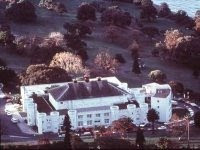
Sydney Conservatorium - my old school
Places I've lived: Auckland, NZ

Places I've Lived: Mount Gambier
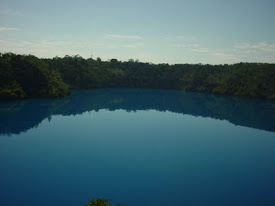
Blue Lake
Places I've lived: Adelaide, SA

Places I've Lived: Perth by Day

From Kings Park
Places I've lived: High View, WV

Places I've lived: Lynton, Devon, UK

Places I've lived: Braemar, Scotland

Places I've lived: Barre, MA, USA

Places I've Lived: Perth by Night

From Kings Park
Inner Peace Blog

Awarded by Joanna Fay. Click on the image to visit her lovely website!
Versatile Blogger Award

Awarded by Kim Falconer. Click on the pic to check out her Quantum Astrology blog!
Fabulous Blog Award

Awarded by Kathryn Warner. Click on the pic to check out her Edward II blog!
What is Success?
 Thursday, July 29, 2010 |
  Posted by
Satima Flavell
Posted by
Satima Flavell
Another post copied over from my old WordPress blog.
Over at her Year in America blog, my friend Fiona Leonard posed the question, “If you knew you could not fail, what would you do?”
I thought for quite a while about this before posting a comment, trying to identify how I define success and what anchors me in my undertakings. I came to the conclusion that it’s not the lure of success that motivates me, but my passion for the thing I’m doing.
I’ve had many interests over the course of my life: in fact, in a post about a year ago I described myself as being “artistically promiscuous” as a girl, since I loved so many things. I studied piano, singing, speech and drama and several forms of dance as well as a full trencher of school subjects and all the peripherals that go with being a music student – theory, harmony, aural training, history and form of music…my days were full from wake-up time at 6.00am until I collapsed into bed at about 9.30pm. I loved all those activities (or at least most of them, most of the time!) and did not want to give any of them up.
Until, of course, they became too difficult. This happened first with piano. I was a student at Sydney Conservatorium, and I was well aware that although I had above average ability in music, I was never going to be much better at it than I was then. It had become a hard grind. I pushed myself through the required two hours of practice each day, but each session was a struggle. My teacher, Raymond Fischer, told me I was at least three years away from being ready to sit even the simplest diploma exam, and I realised I just didn’t have the enthusiasm to last the distance. Possibly, with a lot of effort, I could have done what my parents hoped and expected I would do – go on to Teachers’ College and become a specialist music teacher in a high school. But the prospect of having to face four or five classes a day for the rest of my life, trying to interest a mob of teenagers in a subject that had already lost its juice for me, was utterly unthinkable.
After a year of Arts at Sydney University, I took a year off study to work in the public service and make a rather unfortunate early marriage. It didn’t take long for me to realise that working in an office environment was not my thing, either, and in 1962 I entered the National Institute of Dramatic Art to try my hand at acting. However, during that year I had my first baby and in those days there were no creches at universities, and as I couldn’t find suitable child care, I had to give up my scholarship and quit the course. I was sad, but not devastated, because at heart I’d already realised that this was not my path, either. I loved Shakespeare, but opportunities for specialist Shakesperean actors in Australia were virtually nil at that time, and the thought of spending my time preparing for auditions for TV commercials didn’t exactly fill me with enthusiasm. Several of my fellow students did indeed become professional actors — two of them, John Bell and Anna Volska, even became specialist Shakespereans! — but many more became bartenders, teachers and insurance agents.
I continued to be involved in amateur theatre and to teach dance for another twenty years, while rearing my five children. Along the way I furthered an interest in astrology that had started in my teens, and tried my hand at farming, even gaining a Certificate in Rural Studies to give myself a theoretical base for milking cows, drenching sheep and mucking out pig pens. Actually this was one of the happiest times of my life in many ways, and not the least happy-making part was watching my children growing up close to nature, seeing first-hand the cycles of life that as urban dwellers we see only dimly, as when someone has a baby or an elderly relative dies. In farm animals these cycles play themselves out far more quickly.
Dance was the one thing that never lost its appeal for me, despite my short legs and hockey-player’s build that rendered me unsuited to classical ballet. In my forties I returned to study at the West Australian Academy of Performing Arts, where I completed an Associate Diploma in Performing Arts (Dance) with the intention of “updating my expertise” so that I could catch up with the latest doings in the dance world, especially in teaching. My forty-odd-year-old body complained terribly and it took three years for me to complete the two year course, but complete it I did, and I was quite proud when I walked across the platform to receive my scroll. Concurrently, I’d started a BA in Religious Studies, which I loved. I complemented it by converting my Associate Diploma to a Dance minor, and also started another BA in Languages. This was in those heady days of the 1980s when all tertiary education was free, so I was merrily undertaking units in French, Italian, English Literature, Linguistics, Psychology and Journalism. However, when I was part-way through this second BA, my second marrriage broke down and fees for university courses came back, so I could not afford to finish it, much less go on to do the masters in Religious Studies that I’d hoped to do. Of course, none of those transcripts actually qualified me to do anything, and I was getting older and becoming less and less employable in a country that has always valued youth above almost everything else. So I turned to my other interests to put bread on the table, and these are the things I still do today – writing, editing, astrology and meditation. And I still love all of them.
Writing fiction, however, is just as heartbreaking as music, dance and acting. The chances of any individual “succeeding” at it are very low indeed. For every thousand manuscripts that are started by hopeful would-be authors, only one or two, at best, will eventually be published by one of the major commercial publishing houses. I frequently become discouraged, and talking to my fellow writers, I realise most of them do, too.
Nevertheless, I will keep up the battle until writing loses its juice for me. And when might that be? If my past experience is any guide, it will be when I know that I’ve reached the limits of my ability, which to me isn’t failure; it’s just a fact of life. I have the good fortune to have better-than-average talents in a lot of directions, but I have never proved to be outstanding at any of them.

But is this a bad thing?
I think not. If it were, I wouldn’t have had the chance to do so many wonderful things because I would have spent my life focussing on the prospect of success in just one of the things I love. I worship all the muses, and while, perhaps, none of them loves me quite as much as she loves her dedicated votaries who have just one talent in abundance, I can nonetheless bathe in all their sacred pools and come away refreshed. And that may be the best gift of all.
 Labels:

The promiscuous artist
Sunday, August 30, 2009 |
Posted by
Satima Flavell
I’ve loved stories ever since I began to understand English, and as English is my mother tongue that was a while ago! I was lucky in that being the youngest of four sisters, I had lots of stories read to me, and by the time I was three I could read my favourites to myself, largely because I knew them by heart. Gradually the squiggles on the page started to make sense. What liberation, to find that I no longer need rely on my elders to read to me!
When I was four, I bullied my family into taking part in a dramatisation of Oliver Twist's meeting with Fagin. My older sisters had just seen the film and on hearing about it I immediately wanted to be Oliver, and the only way I could be Oliver was by collecting a company and rewriting the script. My father had to be Fagin, of course, and my sisters the other urchins. My mother was an audience of one. (I was lucky. Being the youngest by a lot of years meant I got indulged a fair bit.)
For a long time I wasn't sure whether I was an actor or a writer. I continued to be interested in stage and film, but at the same time, I lived a double life, in which I was not me, but a girl named Jill who had more adventures than anyone else in the world. The yarns I spun in my daydreams came out in pictures that I drew, because I was too young to write. I got right into Jill’s character and started to think of her/me in the third person, which is a worry. I wonder if this tendency to dissociate is common among writers?
My pictures often involved dramatisations of stories I heard, translated to the stage. A year or two later, when I could sort-of-nearly-almost-write (apart from a dyslexic misunderstanding of the difference between d and b) I discovered Enid Blyton. I immediately wanted to be the author of stories like those, and told everyone I wanted to be a Children's Authoress.
But then one day I went with my sister Anne to visit her friend Maureen. Now Maureen had a younger sister, Jacqueline, who was learning ballet and tap dancing. World War II had just ended and clothing was still rationed, but Maureen’s mother had cut down one of her old evening gowns to make a costume for Jacqueline. To my satin-deprived eyes it looked fit for a princess in one of my stories, and I was immediately hooked. I wanted to be a dancer, too.
Unfortunately, my family was not theatrically inclined, so I was not allowed to take lessons like Jacqueline. Even so, the Sadlers Wells (later the Royal Ballet) company was a shining light of beauty and glamour in the shabbiness of a war-torn country, and my sisters had several books about ballet. They and their friends would argue among themselves about who was the most beautiful, Margot Fonteyn or Moira Shearer. I spent hours poring over those books and eagerly thumbing through magazines for pictures of my idols. But it was only when I was eleven that I finally went to classes, which I paid for myself out of my pocket money, forgoing the weekly matinee at the cinema to do so. Mother was willing to pay for me to learn piano, but not dancing.
 When I was fourteen I struck a deal with Mother. She paid for me to have four dance classes a week on condition that I also studied Speech and Drama. (She was a Yorkshire woman but I had been born in Manchester. We were by this time living in Australia, and my polyglot accent grated on Mother’s ears.) I was a pupil at the Conservatorium High School in Sydney. Fellow students included future internationally known artists such as Roger Woodward and Charmian Gadd, who threw all their energies into their musical education. Not me. Then, as now, I loved too many things. I was artistically promiscuous. So my days were very full indeed – Piano, Singing, Speech and Drama, Ballet, Character Dancing, Modern Dance – as well as normal school lessons. Oh, did I mention Theory, Harmony, Aural Training, History and Form of Music…Ye gods, these days it exhausts me to think about the schedule. Some nights I would get home at about 9.00pm and go almost immediately to bed, only to get up at 6.00am to catch a train at 7.05. During the hour long journey to the city from Liverpool, then an outer suburb of Sydney, I did my homework.
I started to help with children’s ballet classes at a local dancing school, and later I taught on my own account. My story telling now went into choreography rather than pictures. I still read voraciously, but I did not write fiction. Although I used to win prizes for poetry and prose, my prose was all descriptive. The stories I dreamed up were simple things that translated better into dance than the written word. There's more than one way to spin a yarn.
I only went back to writing fiction when I was in my fifties, after I'd given up dancing and acting. But that’s a tale for another post.
Favoured Music
Monday, January 12, 2009 |
Posted by
Satima Flavell
This "material" was a list of favourite pieces of music ranging from pops to classics. I started writing down all my best loved titles, but when I got to over thirty I realised I had an unmanageable mess. How could I classify a list that contains such diverse items as El Condor Pasa, Atom Heart Mother, Brahms's Violin Concerto in D and Fields of Gold? I stayed up until 2.00am on Monday morning, listening to extracts from my favourites in various arrangements, trying to sort them out into a top ten or even a top twenty and couldn't. In the end I gave up went to bed, disgruntled.
But the project has haunted my mind ever since, and although I'm no closer to sorting out that messy catalogue of musical favourites, I do know that my four top faves never change. The rest of the never-ending list varies according to my mood, but the top four remain the top four and have for years. Decades, even.
And what are these four super-faves? Why, they are Pachelbel's Canon in D; The Grand Pas de Deux from Tchaikovsky's Nutcracker, the British folksong Greensleeves (in just about any version) and - wait for it - Unchained Melody.
I've always wondered why this song bore such a strange name, and the very comprehensive Wikipedia article cleared up the mystery. "Unchained" was the name of the film in which the melody first appeared in 1955. The music was by Alex North and the lyrics by Hy Zaret. It's been recorded hundreds of times, but never better, I think, than the original version by baritone Todd Duncan, which I fell in love with when I was twelve years old - because it's a damned good tune.
Tunes, dear friends, are what grab me. I love a good vocal melody that you can hum, whistle, extemporise on and generally muck about with and still have a perfectly good tune when you've finished. Short of being tone deaf and gravel-throated, you can't spoil a good tune. (Well, some jazz musos can, but they generally don't play music for the tune; in fact, some of them just can't wait to get rid of it.)
A good tune is a simple thing, made more beautiful, for sure, by harmony, rhythm or words - but it doesn't rely on these things to carry it along. Music that relies on anything but a good melody as its mainstay either bores or irritates me. Gimme the tune, man, just gimme the tune.
So you will not be surprised when I tell you that the Long List contains a lot of folk music, or pieces based on folk music such as Ralph Vaughan-Williams's Fantasia on Greensleeves and Variations on Dives and Lazarus. Medieval and early Baroque loom large, too: little gems such as Manfredina, which dates from the C14, or snatches of plainsong such as the evocative Hodie that Benjamin Britten grabbed for his Ceremony of Carols have truly lovely melodies, for all their simplicity. Religious music that grew out of this early tradition, such as the magnificent masses of Palestrina, are well up the list, too. Popular music that draws on the folk tradition fits in well here: things like Sting's fabulous Fields of Gold. (Sting plays a mean lute as well, as his recent album of John Dowland pieces demonstrates. Again, simple, sing-able tunes.)
Another place to look for good tunes is the theatre. Opera and ballet abound in them: so do musicals. When we think of Cats, do we think of the costumes and lighting and the acrobatics of the performers - or do we remember the grungy little grey cat standing in the lamplight singing "Memory"? "One Fine Day" pretty much sums up Madam Butterfly and "In the Depths of the Temple" does the same for The Pearl Fishers. Bizet, Verdi, Puccini - fine tunesmiths, all of them, as were the best ballet composers including Tchaikovsky himself, the melody king.
A lot of this music is, of course, hackneyed. It has been transposed, transcribed and transfigured until musical purists shudder to hear it - but Manfredina played on a mouth organ or mixed by midi still remains Manfredina. You just can't keep a good tune down.
A Farewell Concert
Sunday, November 23, 2008 |
Posted by
Satima Flavell
Why am I sad? After all, I'm only going for three months. All being well, lots of house-sitting will turn up and I'll be able to stay in Perth for much of next year, as I have this. But I've lived longer in Perth than anywhere else, and it's come to feel like home. I've lived in various parts of Australia, England, Scotland, New Zealand and the USA, but no one city has ever held me for twenty-odd years, as Perth has done. So leaving even for three months is a wrench.
I cannot complain about the quality of goodbyes. I've caught up with several friends this week and yesterday a few visitors dropped in to wish me happy trails. But perhaps the most noteworthy of all was my own personal concert by Andre Rieu and his cast of thousands. This house is opposite the Subiaco Oval, home, as it states proudly on the billboards, of the West Coast Eagles and various other sporting teams. But last night the oval was transformed into an amphitheatre for Rieu's only Perth concert.
The build-up started at about 11.00am with the arrival of the sound people. They fiddled with the volume and quality, on and off, for several hours, giving the neighbourhood a tantalising taste of the program. Snippets of Scotland the Brave blended into Trumpet Voluntary and Bolero with bit of Puccini thrown in for good measure. About 5.00pm they got serious and we actually heard a couple of numbers right through. Then from 7.30pm onwards the musicians were almost in competition with the large and enthusiastic audience. In fact, it was hard to judge which party was making the most noise. And the wee small hours seemed to be devoted to striking the set. They did whatever they were doing reasonably quietly, but still...
Not that the concert was unwelcome noise as far as I'm concerned. I have very plebeian tastes when it comes to music - I love all those hackneyed old tunes, even when they've been transcribed for combinations of instruments and voices far removed from the composers' intentions. So I had great fun singing along while playing Scrabble with Facebook friends. It was just like having my own farewell concert. But anyone who doesn't like classical music or is a purist about its performance would have been running for the earplugs.
I was lucky this time: it was my kind of music. But should local councils be allowed to rent space to events that are almost certain to annoy a considerable number of residents, not just for the duration of a football match, but for the better part of 24 hours? I don't know, but I'm sure glad it wasn't a dance party or death metal or a weird modern opera!
Back to the packing. I'll talk to you again next week, from South Australia!
Test Junkie, me
Thursday, October 30, 2008 |
Posted by
Satima Flavell
Your result for What's your key signature?...
D Minor

Congratulations, I guess. You’re D Minor, the key that F Major turns to when its lover dumps it. This key is downright depressing, but not in a loud way. This is more the “brooding as you slowly cut yourself in the corner” type of depressing. A member of the totally-real band Spinal tap once said that when D minor begins, “everyone instantly starts weeping." It’s an easy key to play for many instruments, and is quite a nice key for slow jazz ballads, as if you didn’t have enough of the blues.
So yeah, you’re D Minor, but you probably don’t care. In fact, you were probably expecting this when you started the damn quiz. Pessimism isn’t always the answer, friend!
SONG EXAMPLE: So What? By Miles Davis (OK, I know it’s actually in D’s Dorian mode, but close the hell enough.)
INTERESTING TIDBIT:
* This key is actually fairly easy to rock in if you’re in drop D, but you rarely hear any super punk death metal in D Minor. Odd.
A new canine friend
Tuesday, October 07, 2008 |
Posted by
Satima Flavell
 My friend Ellen returned from Europe last Wednesday, full of the wonders of the Hermitage, the Kremlin and the Louvre. After touring in the UK, France and Spain, she joined a vast gathering of choristers from all over the world to take part in two performances of Verdi's Requiem, one each in St Petersburg and Moscow. Quite the trip of a lifetime, and I am looking forward to seeing all her photos and memorabilia. She brought me a lovely gift: a CD called We Sing to You, which features Anima, a choral group associated with of one of the six churches that stand within the grounds of the Kremlin. The music soars to heaven, carrying the listener with it, and I know I shall have many hours of listening pleasure from it. You can learn more about Anima here.
Once Ellen was home and settled, I moved to Sara's house for the weekend, waiting for her "mum" to return, and then I moved on to the home of e-buddy Anudhara, who occasionally blogs at More Notes from the Edge Anudhara has a delightful home in a southern suburb of Perth, wa-ay down south of my familiar territory of the inner northern suburbs. She has a lovely garden here and a friendly, lively companion in the person of Freddie, a dear little bitza whose ancestors obviously included a lineage of West Highland terriers. Freddie and I will have fun together for the next ten days while Anudhara visits family living even farther down south. Four hours drive farther, in fact, which takes you to about as far south as you can go without donning wetsuit and goggles.
You will (I hope) be pleased to know that I have only another ten scenes to write and the WIP will come to its final full stop. Since I started Robert Olen Butler's regimen of getting up early and writing before breakfast while I'm still in the "dream space", I have written over 40,000ww. True, that's an average of only 900ww words a day, but seeing as I only wrote about 40,000 words in the whole year before that, it's obviously a vast improvement! My new housesit is in quite an isolated area as far as public transport goes, so I intend to do my own personal ten day retreat while I’m here. So, a scene a day for ten days and I should be able to tell you that the wretched WIP is finished. It's only taken two and half years! I shall have to learn to write books much faster than that, given that I am already 65 years old and have formulated the ambition of having at least one trilogy published before I succumb to the dementia that unfortunately afflicts my family.
Two of the scenes are going to take a lot of work, and I'll cover my back by admitting that I possibly won't get these finished in the ten days. One of my characters is a young man who has two relationships, one after the other. The first is with a woman who ensorcels, uses and controls him. When he finally sees through her wiles, he moves on and quite by accident falls in with a young woman whose only earlier sexual experience was a rape. They spend one night together in which they meet as equals in their vulnerability and need for healing. I want to use these two sex scenes to show the growth that takes place in the young man's journey to maturity: a darned big ask for a writer almost totally inexperienced in writing sex scenes! Writing buddy Laney Cairo has been kind enough to give me some pointers so I hope I can do justice to her tuition.
Reading-wise, I'm still on with Marcus Herniman's The Siege of Arrandin. This man's world-building is truly remarkable in its inventiveness and attention to detail. These very strengths make it a slow read, and it's getting close to the next deadline for The Specusphere. I'll probably have to set Mr Herniman aside for a week or two and read at least one of the three books I've been intending to review. Too many fine writers – and far too little time!
How much is too much?
Sunday, August 10, 2008 |
Posted by
Satima Flavell
I must be odd. I don't read fantasy for the magic, but for the characters. My premise is "What if there were a world just like ours but with different races of people, some of whom could do magic and some of whom couldn't?" My primary interest is not in the magic per se, but in its effects on human relationships, so I don't often show magic going on, but assume it as a "given" for my invented world. The reader often sees the results of magic, but not its performance.
Some readers, however, read fantasy primarily for the magic. I found this out when I was a member of Online Writers Workshop, an online critiquing group for speculative fiction writers. It was apparent from the comments of several OWW critters that I don't show nearly enough magic for some people's taste. As a result of those critiques, I've started to include a lot more of the actual workings in my books. But how much is too much? While I'm a firm believer in giving the public what it wants, I feel the gratuitous depiction of any one thing impinges on whatever modicum of artistic integrity a work might possess.
Gee, does that last line sound pretentious, or what? Nevertheless, I put it to you that it's possible to use magic gratuitously, just as it's possible to overdo sex or violence. Do many people really like to read about magic even when it has little bearing on the plot and does nothing to show character development?
Some fantasies I've read go way overboard with magic. That's way overboard for my preferences, of course: as with all things, everyone has the right to draw their own line in the sand with regard to what constitutes "too much". One person's erotica is another person's pornography. One person's vivid description of violence is another person's horror. Where do you draw the line, magically speaking? Post a comment and let me know.
I'm about to start a new house-sitting gig, this time for my friend Ellen, who is off to Russia to take part in an international choral festival. Choirs from all over the world are getting together to sing Verdi's Requiem in St Petersburg and Moscow. What a wonderful experience that will be for the performers! As always, when my friends go away, I wish I could go, too! BTW, Juliet has blogged her marvellous Baltic experience at Writer Unboxed. It was obviously a trip full of contrasts, from the joy of a Latvian Folk Festival to the darkly emotional experience of WWII concentration camps. Russia and the Baltic are not common destinations for Aussie tourists, so I love to get reports of such expeditions.
No dogs and cats at Ellen's place: just five chooks. (Chickens or hens to those of you who don't live in the Land of Oz!) I haven't looked after poultry for well over twenty years, so wish me luck!

