About Me

- Satima Flavell
- Perth, Western Australia, Australia
- I am based in Perth, Western Australia. You might enjoy my books - The Dagger of Dresnia, the first book of the Talismans Trilogy, is available at all good online book shops as is Book two, The Cloak of Challiver. Book three, The Seer of Syland, is in preparation. I trained in piano and singing at the NSW Conservatorium of Music. I also trained in dance (Scully-Borovansky, WAAPA) and drama (NIDA). Since 1987 I have been writing reviews of performances in all genres for a variety of publications, including Music Maker, ArtsWest, Dance Australia, The Australian and others. Now semi-retired, I still write occasionally for the ArtsHub website.
The Dagger of Dresnia

The Cloak of Challiver, Book two of The Talismans

Available as an e-book on Amazon and other online booksellers.
Mythic Resonance

Mythic Resonance

My Blog List
-
740. A Study in Sparkling with Jodi McAlister - By listener request! My guest today is author and professor Jodi McAlister. You might remember Jodi from her appearance in episode 626 when we talked about...49 minutes ago
-
An Ordinary War, by Sue Purkiss - I have recently published - with *Writers Review Publishing* - a book which has been a very long time in the making. It's a novel, not a factual accou...
 1 hour ago
 -
How Beer Came to Medieval England - Dutch immigrants brought hopped beer to medieval England in the 14th century, gradually transforming English brewing and drinking habits.6 hours ago
-
The Big Idea: Jonathan Maberry - Where does the soul go when the body perishes? In Jonathan Maberry’s new novel, they get implanted into robot mechs to fight in an alien war. Is this the b...11 hours ago
-
Elizabeth Noel - Elizabeth Noel has called many places home, including the United Kingdom, the United Arab Emirates, Singapore, Australia, and New Zealand. She holds an MEd...
 15 hours ago
 -
More Michael Gerard Bauer books… - Continuing from yesterday, I’ve read several more of MGB’s books. These are different but equally entertaining as his Ishmael series. The Running Man Micha...16 hours ago
-
Our Literary Skeletons: Sunk Costs or Secret Sparks? - Most of us have one at least one. Tucked in the back of the hanging file drawer, its pages slipping from the wide rubber bands that bind it, curling in o...19 hours ago
-
Bidding, forbidding, an enigmatic root, and two questions - [image: Hands clasped in prayer holding wooden rosary beads with a small crucifix.] Bidding, forbidding, an enigmatic root, and two questions Older dictio...1 day ago
-
Warisan Bola Agen - Mereka yang ingin bermain di agen bola warisan sbobet 88 akan dapat melakukannya jika mereka meluangkan waktu untuk memahami beberapa aturan yang terliba...3 days ago
-
Home News - On Saturday I attended Once Upon a Fairytale event in Campbelltown for the first time ever. It was a huge event–so many authors. I decided to go full fairy...4 days ago
-
Home News - On Saturday I attended Once Upon a Fairytale event in Campbelltown for the first time ever. It was a huge event–so many authors. I decided to go full fairy...4 days ago
-
5 Important But Basic Things You Need To Know About Your Characters - All About Your Characters Characters are all-important in your spec screenplay or unpublished novel. Good characterisation feels authentic, layered and r...4 days ago
-
The Literary Tour Guide: How Much Do You Need to Describe Your Setting? - *By Janice Hardy* * Description is a blessing and a curse. * Setting the scene is vital to help readers immerse themselves in your story world, but too m...
 5 days ago
 -
Wibbly-Wobbly, Timey-Wimey Stuff Ian Likes: Doctor Who And The Terror Of The Autons by Terrance Dicks - First Broadcast: 2nd January 1971 – 23rd January 1971 First Published: 15th May 1975 For all of its faults – UNIT dating; the Doctor’s age; when did Mel fi...6 days ago
-
On Re Reading Two Comfort Novels By Controversial Authors - I’m reading a lot of books at present, but re reading two comfort novels in ebook. Both are by authors who are controversial at the moment, for differen...1 week ago
-
Supanova Brisbane upcoming - Exciting news is: I’ll be heading to Supanova in Brisbane from 7-9 November 2026, so come along and get a signed copy of Staerstone, if you can. I would lo...
 1 week ago
 -
💜 Goodbye Milano — A Celebration of Some Very Special Leotards! ✨ - Some leotards deserve a proper farewell… and I think Milano Pro Sport’s beautiful designs are definitely among them! With Milano Pro Sport closing its door...2 weeks ago
-
Newsletter 24th September 2026 - Hello fiends. It‘s about that time again, where I realise it’s been quite a while since the last missive and feel like I should communicate again. I soun...3 weeks ago
-
Cliffs, Waterfalls, and Hidden Caves – The Lysefjord in Norway - As mentioned in my post about Iceland, we crossed the northern Atlantic ahead of a nasty storm upon return (there was a fair bit of wind nevertheless, but ...
 3 weeks ago
 -
Latest story: 'Departures' in Penumbric August 2k26 Issue 2 Journeys - My latest story 'Departures' is out in *Penumbric August 2k26 Issue 2,* aptly titled *Journeys. * Jeff Georgeson, the editor of *Penumbric, *has arranged...2 months ago
-
The Sociopathic Origins of Religion - You’ve all seen variations on this: how ‘Prehistoric Man’ looked up at the stars, asking: “What are they? What causes them to move?” Then a bit later: “Why...6 months ago
-
AI and Creative Professions - I've been wrestling with this for a while, and I am aware that the ambiguity in this post is palpable. AI isn't going anywhere, and I find it amazingly use...7 months ago
-
Thank you - It’s been a while since I've posted anything anywhere, but I didn't want to let any more time go by without thanking everyone for all your kind messages ...8 months ago
-
Bhante Rahula travels to India and Sri Lanka in January 2026 - Hi Friends, Bhante Rahula will lead a Year End Retreat at the Lion of Wisdom Meditation Center near Damascus Maryland from December 26th, 2025 through J...10 months ago
-
A Very Small Essay (1) - One of the lifeguards at our community centre pool, who I’d estimate to be in his mid-twenties, sometimes joins in with our aquafit class from the pool dec...10 months ago
-
Guy finally receives his PhD… - I finally got to wear a silly outfit and receive my PhD on Thursday 4th September 2025 at Curtin University. This wouldn’t have happened without the effort...1 year ago
-
Joon, Big Red and the Unicorn – a picture book - Joon is a keeper in the Timeless Forest… Joon is a keeper in the Timeless Forest, tending to all the trees and plants. When a fire threatens everything t...1 year ago
-
This feed has moved and will be deleted soon. Please update your subscription now. - The publisher is using a new address for their RSS feed. Please update your feed reader to use this new URL: *https://problogger.com/feed/*1 year ago
-
A Little Piece of Alternative History - Elizabeth, Duchess of Norfolk, is a good height for a woman, but not tall – only her headdress make her seem so. As a recent widow, she is clad entir...1 year ago
-
-
Happy Public Domain Day 2025, the end of copyright for 1929 works - This is my annual reminder that January 1st is Public Domain Day, and this year copyright has ended for books, movies, and music first published in the U.S...1 year ago
-
Titles - This is a bit of a technical post, provoked by reading a certain novel. In England, pre-Tudors, there was only ever one Prince. The Prince of Wales, when...1 year ago
-
About Holly - There is no way to soften the blow of this and Mom never liked euphemisms, so I’m just going to speak plainly. Mom died due to complications from cancer on...1 year ago
-
WRAP UP OF HORRORFEST POST, OCTOBER. - Hi all! Thank you so much for posting to WEP's Horrorfest in October. I'm sure everyone enjoyed reading the entries. So good to see so many of the 'oldi...
 1 year ago
 -
A personal thought on the passing of publishing legend Tom McCormack - The passing of publishing giant Tom McCormack makes me recall the interaction he had with my father, Leonard Shatzkin, from the very beginning of Tom’s p...2 years ago
-
Henry of Lancaster and His Children - The close bonds which Edward II's cousin Henry of Lancaster, earl of Lancaster and Leicester, forged with his children have fascinated me for a long time...2 years ago
-
Questions from year 9 students - Recently – actually, not very recently but I somehow forgot to write this sooner – I did what has become an annual online Q&A with the Year 9 girls at Bedf...2 years ago
-
Flogometer 1180 for Christian—will you be moved to turn the page? - Submissions sought. Get fresh eyes on your opening page. Submission directions below. The Flogometer challenge: can you craft a first page that compels me ...3 years ago
-
Storny Weather - I've just been out fixing up the damage from last night's storm. This is pretty much the first time I've been able to spend much time outside and do any...3 years ago
-
another review for the Christmas Maze - *The Christmas Maze by Danny Fahey – a Review by David Collis* Why do we seek to be good, to make the world a better place? Why do we seek to be ethi...3 years ago
-
Publishing Contracts 101: Beware Internal Contradications - It should probably go without saying that you don't want your publishing contract to include clauses that contradict one another. Beyond any potential l...
 4 years ago
 -
Non-Binary Authors To Read: July 2021 - Non-Binary Authors To Read is a regular column from A.C. Wise highlighting non-binary authors of speculative fiction and recommending a starting place fo...5 years ago
-
-
Grants for Writers Masterclass Online - Grants For Writers Masterclass Online Winner of 6 grants, author Karen Tyrrell shares her secrets to Grant Writing for Australian writers and authors. ...6 years ago
-
UPDATE ON WORK IN PROGRESS... - *THE FUGITIVE QUEEN * *(title may change!)* The initial draft of this novel has been finished at slightly under 150,000 words, so not quite as long as the...6 years ago
-
Productivity - If you're looking for a post on how to be more productive in your writing, this is not it. However, if you're looking for a discussion of how we conceptual...
 6 years ago
 -
HOW TO UPGRADE YOUR LIFE - Stories end. New stories begin. It's fascinating -- the great and small adventures of every day. Honor the place where you're rooted. What stories are f...
 6 years ago
 -
Geoffrey Chaucer - [image: Geoffrey Chaucer] Geoffrey Chaucer *Geoffrey Chaucer* turned into born in 1343, the son of John and Agnes (de Copton) Chaucer. Chaucer was descen...
 6 years ago
 -
#332 - Question: I wrote LOST IN LA as a retelling of Pretty Woman with “modern” social issues, but I don’t know whether to focus on the characters, the fake rel...6 years ago
-
Travelin' Man: a new Song & Music-Video from me - There's also a bit of my tongue-in-cheek, philosophy for living in the lyrics - *life should be about the journey, never about arriving. * It's also on Y...6 years ago
-
NaNoWriMo 2019 - November 1, or the start of NaNoWriMo or National Novel Writing Month is just around the corner. Basically, NaNoWriMo is about writing a 50K work novel i...6 years ago
-
Day 1: Harlequin Presentation - Sue Brockton – Publishing director Jo Mackay – head of local fiction, HQ, Mira, Escape Kita Kemp – Publisher Mills and Boon (ANZ) Nicola Caws – Editor...7 years ago
-
#Mayflower400: They that in Ships unto the Sea down go - *Music for the Mayflower* *A guest post by Tamsin Lewis * I direct the early music group Passamezzo [www.passamezzo.co.uk], an established ensemble kno...
 7 years ago
 -
Book review: The Heat, by Sean O’Leary - Jake works nights as a security guard / receptionist at a budget Darwin motel. The job suits him: he has an aptitude for smelling out potential trouble, an...7 years ago
-
Portrait of a first generation freed African American family - Sanford Huggins (c.1844–1889) and Mary Ellen Pryor (c.1851–1889), his wife, passed the early years of their lives in Woodford County, Kentucky, and later...7 years ago
-
Review of Bell's Much Ado about Nothing - Bell Shakespeare's *Much Ado About Nothing* 2019-07-07 reviewed by Frances, our president. A group from the Shakespeare Club went last week to see the B...7 years ago
-
The Girl from the Sea launches: 31 July 2019 - Some of you will already know that my new novella, The Girl from the Sea, is launching on July 31. This book is the prequel to Children of the Shaman an...
 7 years ago
 -
Story Goal, Story Question, and the Protagonist’s Inner Need (Story Structure Part 1) - This is the first article in a series exploring the elements of story structure. Part 1 looks beyond the topics of three-act and mythic structure to a revi...7 years ago
-
Assassin’s Apprentice Read Along - This month, in preparation for the October release of the Illustrated 25th Anniversary edition of Assassin’s Apprentice, with interior art by Magali Villan...7 years ago
-
The Scarred King by Rose Foreman - "From the moment he could walk, Bowmark has trained for a fight to the death. The Disc awaits him: a giant bronze platform suspended over a river of l...
 7 years ago
 -
Gratitude, therefore God? - I recently saw a video where a prominent TV personality was interviewing another TV personality who is a self-proclaimed atheist. The interviewer explained...7 years ago
-
It's the End of the (Fringe) World As We Know It... - I didn't get to the Fringe World Awards because I was volunteering at another venue at the time, which is also the reason I saw almost none of the shows th...7 years ago
-
A Movie That No Writer Should See Alone - Really. REALLY. Trust me on this. particularly since this film, ‘Can you ever forgive me?’, is based on a ‘True story’ – and too many writers will see too...7 years ago
-
Catching up on books I've read - Recently I've been looking at some of the books I've enjoyed over the past year or so – and in the process, it's made me realise just how many I've read! M...
 8 years ago
 -
The November Tour Press Release - *Peter Grant is coming to a bookshop near you. * Meet Ben Aaronovitch on his epic tour of Great Britain to celebrate the publication of his upcoming, new ...8 years ago
-
Review: Red Harvest - [image: Red Harvest] Red Harvest by Dashiell Hammett My rating: 5 of 5 stars An absolute classic featuring the most literate and technically clever of the...8 years ago
-
New story at Giganotosaurus - “The Wanderers” – the furry fantasy I wrote for my kids about a couple of fox people who go off in search of the end of the earth (and then have to find th...9 years ago
-
First comes painting, Then comes sketching - While enjoying my new acrylics hobby, I started a painting and decided I wanted to include a dragon statue in one of them. There was, though, a hurdle I ha...
 9 years ago
 -
More Cabinet of Oddities News - Back in 2015, I was lucky enough to be part of an amazing collaborative event put together by the talented Dr. Laura E. Goodin. The Cabinet of Oddities, a ...9 years ago
-
The One and the Many – every Sunday - My first serious girlfriend came from good Roman Catholic stock. Having tried (and failed) to be raised as a Christian child and finding nothing but lifele...9 years ago
-
A Shameless Plug Ian Likes: Bibliorati.com - A little-known fact is that I once had a gig reviewing books for five years. It was for a now-defunct website known as The Specusphere. It was awesome fun:...9 years ago
-
10 New Youtube Videos for Medieval Lovers - Volume 2 - We found 10 more new videos on Youtube about the Middle Ages. *Rediscovered: Medieval Books at Birkbeck * This video introduces University of London - Birk...
 9 years ago
 -
2016 Wildflower Calendar – Long List - This is the ‘long list’ for a potential 2017 Wildflower Calendar. They are pictures from suburban Perth, in conservation areas, parks and verge gardens. ...9 years ago
-
And Father Dragon said "let there be a planet...." - *Lo and behold, Dragon made a planet!!* Oh, I'm so very proud of myself so forgive me if I brag a little bit - way too much. I'm in the process of learn...
 10 years ago
 -
The Stars Askew - release imminent - Pre-order at Booktopia Just a short post to let you know that I am still alive and writing poetry over at the poetry blog. I also wanted to mention that...
 10 years ago
 -
Open Data Barometer 3rd edition results - The World Wide Web Foundation has issued the results of the third edition of its Open Data Barometer report. The report surveys open data preparedness acro...10 years ago
-
The Tame Animals of Saturn - It's done. It's in the world! Often, the journey to publication is itself worthy of a book - though it'd be a tiresome book indeed. Still, I'm happy. I co...
 10 years ago
 -
Children learning English as a second language with dyslexia. Lese-rechtschreibeschwache Schüler/innen und Englisch in der Schule. - *"Legasthenie/LRS und Englisch als Fremdsprache* Lese-rechtschreibschwache Schülerinnen und Schüler bekommen in der Regel auch Schwierigkeiten in Englis...10 years ago
-
Prompts, Anyone? - I'm a great fan of writing to triggers or prompts so when I was delighted came across something useful on poet Katy Evans-Bush's blog, *Baroque in Hackney....12 years ago
-
Cherries In The Snow - This recipe is delicious and can also be made as a diet dessert by using fat and/or sugar free ingredients. It’s delicious and guests will think it took ...14 years ago
-
Al Milgrom’s connection to “Iron Man” - Via the Ann Arbor online newspaper - I felt it was worth repeating as a great example of Marvel doing the right thing by a former employee and without the ...
 16 years ago


Places I've lived: Manchester, UK

Places I've lived: Gippsland, Australia

Places I've lived: Geelong, Australia

Places I've lived: Tamworth, NSW

Places I've Lived - Sydney
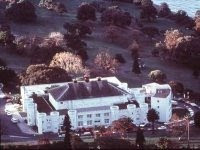
Sydney Conservatorium - my old school
Places I've lived: Auckland, NZ

Places I've Lived: Mount Gambier
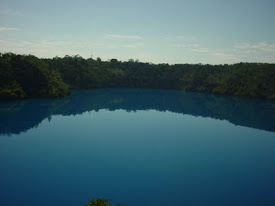
Blue Lake
Places I've lived: Adelaide, SA

Places I've Lived: Perth by Day

From Kings Park
Places I've lived: High View, WV

Places I've lived: Lynton, Devon, UK

Places I've lived: Braemar, Scotland

Places I've lived: Barre, MA, USA

Places I've Lived: Perth by Night

From Kings Park
Inner Peace Blog

Awarded by Joanna Fay. Click on the image to visit her lovely website!
Versatile Blogger Award

Awarded by Kim Falconer. Click on the pic to check out her Quantum Astrology blog!
Fabulous Blog Award

Awarded by Kathryn Warner. Click on the pic to check out her Edward II blog!
Fifteen Novellists
 Saturday, October 30, 2010 |
  Posted by
Satima Flavell
Posted by
Satima Flavell
You don’t have to list your authors chronologically, of course – you can organise your collection however you choose!
I had to leave one author off because he would have been one too many, but let me acknowledge the debt I owe to A.A.Milne, whose Winnie-the-Pooh books formed the basis of my library between the ages of two and six!:-)
1. Enid Blyton: Part of the fabric of my childhood! Between the ages of 6 and 13, I read and re read the Famous Five and the Adventure Series until the covers were falling off!
2. Rudyard Kipling: Likewise, The Jungle Book and Just So Stories were favourites that I read again and again.
3. J.R.R. Tolkien: In grade two our teacher read The Hobbit aloud. It terrified me! I first read LOTR in my teens and have owned several copies since. Don’t tell anyone, but I liked the films better!
4. Arthur Ransome’s Swallows and Amazons series was much loved, too, although I don’t think I ever owned all of them.
5. Rosemary Sutcliff: I first read The Eagle of the Ninth when I was eleven and have re-read it many times since, along with Sutcliff’s other lovely historicals. I’ve never succeeded in collecting the complete set, however.
6. Elizabeth Goudge: An historical writer with an eye for the mythical and mystical who was my favourite author when I was a teenager. I would like to read her books again. (On the to-do list!)
7. Daphne du Maurier: I read her avidly in my teens, too, but have never re-read her work. I should, because she must have had an influence on my own writing!
8. Anya Seton: Another historical author whose work I relished as a teenager, especially, of course, her famous Katherine.
9. P.G. Wodehouse: another author I should re-read. I spent many happy hours in my teens rolling with laughter over his stories.
10. L. Sprague de Camp and Fletcher Pratt: As with Wodehouse, it was their humour, typified by The Incomplete Enchanter and The Castle of Iron, that hooked me. Later, I came to prefer Douglas Adams and Terry Pratchett, but de Camp and Pratt showed me that humour in speculative fiction is not only possible, but great fun.
11. A. Bertram Chandler: The first Australian SF author I read. My favourite was False Fatherland, which won Chandler one of his several Ditmars.
12. Isaac Asimov, Robert Heinlein and Arthur C. Clarke: I’m cheating by lumping the “Big Three” together. As for many fans of my generation, these guys were the saints of SF and their work was Holy Writ.
13. Mary Stewart: The first historical fantasy author I read. I re-read The Crystal Cave every few years and still love it.
14. Anne McCaffrey and Roger Zelazny: Another cheat, because I discovered these authors about the same time, and different though they are from each other, they have both influenced my own writing. The first two books about the Pern Dragon riders and the first five books of the Amber series are still among my favourite re-reads.
15. Ursula K. Leguin: The Left Hand of Darkness is one of my favourite books of all time in any genre.
So, take the meme and run with it, if you like. Let me know when your list is up because I’d love to read it!
 Labels:

What is Success?
Thursday, July 29, 2010 |
Posted by
Satima Flavell
Another post copied over from my old WordPress blog.
Over at her Year in America blog, my friend Fiona Leonard posed the question, “If you knew you could not fail, what would you do?”
I thought for quite a while about this before posting a comment, trying to identify how I define success and what anchors me in my undertakings. I came to the conclusion that it’s not the lure of success that motivates me, but my passion for the thing I’m doing.
I’ve had many interests over the course of my life: in fact, in a post about a year ago I described myself as being “artistically promiscuous” as a girl, since I loved so many things. I studied piano, singing, speech and drama and several forms of dance as well as a full trencher of school subjects and all the peripherals that go with being a music student – theory, harmony, aural training, history and form of music…my days were full from wake-up time at 6.00am until I collapsed into bed at about 9.30pm. I loved all those activities (or at least most of them, most of the time!) and did not want to give any of them up.
Until, of course, they became too difficult. This happened first with piano. I was a student at Sydney Conservatorium, and I was well aware that although I had above average ability in music, I was never going to be much better at it than I was then. It had become a hard grind. I pushed myself through the required two hours of practice each day, but each session was a struggle. My teacher, Raymond Fischer, told me I was at least three years away from being ready to sit even the simplest diploma exam, and I realised I just didn’t have the enthusiasm to last the distance. Possibly, with a lot of effort, I could have done what my parents hoped and expected I would do – go on to Teachers’ College and become a specialist music teacher in a high school. But the prospect of having to face four or five classes a day for the rest of my life, trying to interest a mob of teenagers in a subject that had already lost its juice for me, was utterly unthinkable.
After a year of Arts at Sydney University, I took a year off study to work in the public service and make a rather unfortunate early marriage. It didn’t take long for me to realise that working in an office environment was not my thing, either, and in 1962 I entered the National Institute of Dramatic Art to try my hand at acting. However, during that year I had my first baby and in those days there were no creches at universities, and as I couldn’t find suitable child care, I had to give up my scholarship and quit the course. I was sad, but not devastated, because at heart I’d already realised that this was not my path, either. I loved Shakespeare, but opportunities for specialist Shakesperean actors in Australia were virtually nil at that time, and the thought of spending my time preparing for auditions for TV commercials didn’t exactly fill me with enthusiasm. Several of my fellow students did indeed become professional actors — two of them, John Bell and Anna Volska, even became specialist Shakespereans! — but many more became bartenders, teachers and insurance agents.
I continued to be involved in amateur theatre and to teach dance for another twenty years, while rearing my five children. Along the way I furthered an interest in astrology that had started in my teens, and tried my hand at farming, even gaining a Certificate in Rural Studies to give myself a theoretical base for milking cows, drenching sheep and mucking out pig pens. Actually this was one of the happiest times of my life in many ways, and not the least happy-making part was watching my children growing up close to nature, seeing first-hand the cycles of life that as urban dwellers we see only dimly, as when someone has a baby or an elderly relative dies. In farm animals these cycles play themselves out far more quickly.
Dance was the one thing that never lost its appeal for me, despite my short legs and hockey-player’s build that rendered me unsuited to classical ballet. In my forties I returned to study at the West Australian Academy of Performing Arts, where I completed an Associate Diploma in Performing Arts (Dance) with the intention of “updating my expertise” so that I could catch up with the latest doings in the dance world, especially in teaching. My forty-odd-year-old body complained terribly and it took three years for me to complete the two year course, but complete it I did, and I was quite proud when I walked across the platform to receive my scroll. Concurrently, I’d started a BA in Religious Studies, which I loved. I complemented it by converting my Associate Diploma to a Dance minor, and also started another BA in Languages. This was in those heady days of the 1980s when all tertiary education was free, so I was merrily undertaking units in French, Italian, English Literature, Linguistics, Psychology and Journalism. However, when I was part-way through this second BA, my second marrriage broke down and fees for university courses came back, so I could not afford to finish it, much less go on to do the masters in Religious Studies that I’d hoped to do. Of course, none of those transcripts actually qualified me to do anything, and I was getting older and becoming less and less employable in a country that has always valued youth above almost everything else. So I turned to my other interests to put bread on the table, and these are the things I still do today – writing, editing, astrology and meditation. And I still love all of them.
Writing fiction, however, is just as heartbreaking as music, dance and acting. The chances of any individual “succeeding” at it are very low indeed. For every thousand manuscripts that are started by hopeful would-be authors, only one or two, at best, will eventually be published by one of the major commercial publishing houses. I frequently become discouraged, and talking to my fellow writers, I realise most of them do, too.
Nevertheless, I will keep up the battle until writing loses its juice for me. And when might that be? If my past experience is any guide, it will be when I know that I’ve reached the limits of my ability, which to me isn’t failure; it’s just a fact of life. I have the good fortune to have better-than-average talents in a lot of directions, but I have never proved to be outstanding at any of them.

But is this a bad thing?
I think not. If it were, I wouldn’t have had the chance to do so many wonderful things because I would have spent my life focussing on the prospect of success in just one of the things I love. I worship all the muses, and while, perhaps, none of them loves me quite as much as she loves her dedicated votaries who have just one talent in abundance, I can nonetheless bathe in all their sacred pools and come away refreshed. And that may be the best gift of all.
Once I thought I'd like to be an editor
Wednesday, July 28, 2010 |
Posted by
Satima Flavell
Here's another post recycled from my old WordPress blog.
As I wrote the title to this post, I thought it sounded vaguely familiar. Then I remembered a silly little song my father taught me when I was five years old, which began, “Once I thought I’d like to be a cricketer”. I can still remember the words, so just for fun I put them up here.
But this post is not about cricketers, but editors. How does one become an editor?
I suppose it’s not unlike the way one becomes a cricketer or anything else: you watch other people doing it, then maybe you get someone to teach you a few things, and from then on its practice, practice, practice. That’s certainly the way I learnt, but that was twenty years ago. Things are a bit different now, in that there are tertiary courses devoted to editing and publishing and the Institute of Professional Editors has set up a qualifying examination. But a lot of people, even today, just fall into it, as I did.
I was at Edith Cowan University and had just started to write for Music Maker Magazine, in which I had my own column. Fellow students, therefore, thought I might be some kind of expert and they would often ask me to check their work for spelling and grammatical errors before they passed it in. I soon realised I was, in fact, not bad at copyediting. After all, I come from a generation that had the Rules drummed into them from an early age. It horrified me a bit to realise that in my French classes there were young people fresh out of school who literally did not know a noun from a verb. The lecturer was in despair. ‘How can I teach them French grammar,’ she asked, ‘when they don’t even know the rules in English?’ I sympathised completely, and I felt sorry for the students, who had never had chance to learn the beautiful intricacies of our language.
If our own young people cannot understand English grammar, what hope does a foreigner have? So when a few years later a student from Nepal asked me to help him learn to speak and write better English, I was happy to help. Jaganath (who has since become a friend) somehow persuaded his university that they should pay for his English lessons. The university responded by sending me more students, and it didn’t take me long to realise that they didn’t want conversation practice nearly as much as they wanted help with their assignments.
In some countries, styles of writing differ considerably from the linear point-to-point-to-conclusion logic that we are used to in English. Rather, scholars there prefer a rather more circuitous approach. This difference puzzles a lot of students for whom English is not their mother tongue.
What’s more, academic English, especially in the sciences, still prefers a formal style with a preponderance of Latinate words rather than plain Saxon-based ones. Formal written English is almost a different language. Naturally, lot of students, not all of them foreign, find this really confusing. Formal English uses Latinate words for historical reasons – after the Norman invasion of 1066, the ruling classes, who made and enforced the laws, for several centuries did not speak the same language as the predominately Anglo-Celtic people they had conquered. When I explain this to students it’s a joy to see comprehension dawn in their eyes, and some of them get the hang of the different “feel” of the two forms of English very quickly.
And so it was that I fell into editing quite by chance. As more and more students were awarded their degrees, so my confidence grew. By this time I had become interested in writing fiction, and other writers would ask me to critique their work. At first, I would only copyedit their offerings, but here, too, I gradually became bolder and more confident and as my expertise grew I took on more and more complex editing jobs and felt I could charge a reasonable fee for my work.
If you feel drawn to editing and would like to learn more, find your state’s society of editors (There’s a list on the Society of Editors WA website.) If you live outside Australia, try an internet search for society+editors+Antarctica, or whatever other country you live in. The internet is full of wonders and you’re sure to turn up something!
Of course, if you’re young enough to want to make this your career, you can enrol in a formal course either in journalism or editing and publishing. But a lot of freelance editors are older people like me, who learnt formal English in school and who may have some journalistic or teaching experience; who have read widely and taken appropriate workshops when they’ve had the opportunity, and who are willing to go on learning.
There’s room for all kinds of editors. Few freelancers make a full living from their editing activities, but that’s not a bad thing. Many people today depend on a portfolio of skills for their livelihood . If you love language and enjoy helping people, why not make editing one of yours?
Genealogy in a multicultural world
Monday, July 26, 2010 |
Posted by
Satima Flavell
When I was a child, ethnicity was a relatively simple matter. England was full of English people, Chinese people lived in China and in the south sea islands there were people who wore grass skirts and possibly ate missionaries. Of course, it wasn't really quite as simple as that, but that was how it appeared to me at three or four years of age.
I remember Mother calling me to the window one day, saying, "Look, there's a Chinaman!" I leaned over the windowsill and gazed down at the street below, but all I could see was the back of the man's head as he hurried along like everyone else in the bustling crowd, heading for a bus stop, his workplace or the shops. (I should explain that we were between houses and at this stage were living in a flat over a butcher's shop. It was at 26 King St, Stretford, Manchester, if you'd care to consult Google Earth!)
My illusions were shattered! The man wasn't even wearing a long robe like the mandarins in my picture book.
The world was already changing. The end of World War II left millions of people displaced, and they often ended up somewhere far from their place of birth. Other emigrations involved young women from Japan and Germany who had married soldiers from the UK, America, Australia and other countries. My own eldest sister married a refugee from Serbia and our house was often filled with his friends, many of whom spoke little or no English. And when we emigrated to Australia in 1952, we already found the beginnings of a multicultural society.
It was largely European multiculturalism, of course, for at that time the White Australia policy was in force. It suited the authorities to forget the Aboriginal people their ancestors had displaced, the Chinese adventurers who had settled here during the Gold Rush of the mid-C19, the Kanakas from the south seas islands who had been kidnapped and brought to Queensland as slave labour, the Afghan camel-drivers of Australia's Red Heart and the Japanese divers who worked in Broome's pearling industry. No, Australia was White, and White it was going to stay.
But Australia was flourishing and people all over the world were on the move. Laws had to change to bring in much-needed labour. Young people of the developed nations discovered the joys of travel, and many of them brought home foreign partners or settled in other countries. Students began to attend universities in lands other than their own, and by the 1960s countries that had been reasonably homogeneous, population-wise, found themselves turning into melting pots. Multiculturalism had arrived.
Now we have second and third generations of children whose parents or grandparents came from other lands. In some families, the immigration took place long ago, as in the the case of the Chinese gold-diggers' descendants. Some time ago, I met a girl from Broome whose four grandparents were Japanese, Aboriginal, Afghan and Irish. She was, I might add, extraordinarily attractive!
Two of my children descend from a part-African slave trader from Jamaica, who brought his family to Australia in the mid C19 when that terrible trade failed. Two more of my children are part-German. I have nieces and nephews of two generations who are part-Serbian, part-Greek or part-Polish, and step-grandchildren who are part-Italian.
All this has made for some interesting research in my family tree! I have not attempted to follow the Italian, Serbian, Greek and Polish laterals, leaving those for closer relatives to investigate, but I have found out a great deal about the ex-pat Jamaican line and that of my German children. Family historians are incredibly generous in sharing their research, and in fact my German cousin-by-marriage, Elfriede, came to visit me with her husband, who is Indian, a few years ago and I was fortunate enough to visit their lovely home in the Rhine Valley in 2006.
The ever-increasing mixture of nationalities must surely strengthen the gene pool, although it might create problems for genetically-based medicine in the future. Already we occasionally hear of someone who cannot find a tissue match because of their unusual bloodlines. But as genealogists, we face our own challenges. We are very lucky today in having access to so much information from all over the world. Not all of it is readily accessible, but even so, many of us can trace our ancestry back for at least a couple of centuries if we are determined enough. But who knows how long this happy state of affairs will continue? Borders alter, governments fall, mass migrations of people can happen almost overnight, especially in the event of war or natural disaster. All these things can mean gaps in the records. Anyone with any sense of history, anyone with any feeling of family pride, anyone with any sense of curiousity and wonder, wants to know about their ancestry. It is of vital importance, therefore, that this lucky generation of family historians should collect and preserve all the records they can for their multicultural, multi-coloured descendants! Write down everything you can remember of the stories your parents and grandparents told you about life in the old country, and their difficulties in learning to live in a new culture. Don't throw out those old photos, documents and letters Opa Jan, Aunt Mary, Uncle Ngobo or Cousin Takeko left in the garage. Rather, preserve them in archival quality folders and albums. Your great-grandchildren may well thank you for it.
Reality Check - So you want to be a writer?
Monday, December 01, 2008 |
Posted by
Satima Flavell
* Age when I decided I wanted to be a writer: 8
* Age when I "wrote" my first story: 5 (A play ripped off from Oliver Twist, as I remember! I made my entire family take part, but reserved the lead for myself.)
* Age when I first had something published: 7 (A poem called "Dolly's Lullaby" in what was then the Manchester Guardian.)
* Age when I next had something published: 11 (Numerous poems and descriptive pieces over two or three years in something called "Chucklers' Weekly". Yes, really! I got paid a pound a time!)
* Age when I got my hands on a typewriter: 21 (An Oliver, manual and sort-of portable. My daughter still has it!)
* Age when I landed a paid magazine column: 45 (In the now defunct "Music Maker", later "ArtsWest". I didn't kill it: in fact, it died when I left. The editor said he was unable to find a decent dance columnist, despite trying out several. Then another writer also left and the mag folded. Sad.)
* Age when I wrote my first novel: 53. I'm a slow starter.
* Age when I wrote my first short story: 58. I don't believe in rushing things.
* Age when I first submitted a short story for professional publication: 58
* Age when I sold my first short story: It depends what you mean by "sold" - so far, paying markets have seemed strangely resistant to my charisma. Non-paying ones seem slightly more appreciative.
* Thickness of file of rejection slips prior to first story sale: Unless you count FTL (for-the-love) pubs, that file's still in the fattening pen.
* Age when I first came close to selling a novel: Close? Not within scent of it yet!
* Age when that first book deal imploded (prior to publication): Heaven forbid that it ever happen!
* Age when I killed my first market: 59 - I submitted my first novel to an e-publisher and they went broke the next week. I've never sent it out again for fear of destroying the entire industry.
* Age when I first sold a non-fiction book: I haven't written any. (Addendum: I haven't written any for sale to publishers. I have actually written several family histories, for my own family and for paying clients. Do they count as "sales"?)
* Age when I first wrote a saleable novel: HAH!
* Age when that novel was published: I'll let you know...
* Age when the second saleable novel finally sold: Ditto
* Age when the second saleable novel came out: Hey, lemme get the first one out already!
* Age when the third saleable novel came out: Ditto
* Age when the fourth saleable novel came out: Give over, will you?
* Age when I first won an award: LOL
* Age when I finally shut down the day-job and became a full-time novelist: 59
* Age when the money coming in exceeded my previous salary: HEH!
* Age when I returned to the day-job because of publisher implosion: I'm too old for that to happen, goddess be thanked.
* Age now: 65
* Number of books/poems/articles sold: Not sure. No novels or paid shorts, but probably several hundred articles, a few poems and a smattering of family histories.
* Number of titles in print: 0
* Number of titles fallen out of print: 5 or 6 - all family histories.
Hmm. Maybe I should take up golf.
The original author says: if you write professionally, feel free to post your own equivalent of this list. (Obviously you'll need to customize it to track your career path -- but you get the idea.)

