About Me

- Satima Flavell
- Perth, Western Australia, Australia
- I am based in Perth, Western Australia. You might enjoy my books - The Dagger of Dresnia, the first book of the Talismans Trilogy, is available at all good online book shops as is Book two, The Cloak of Challiver. Book three, The Seer of Syland, is in preparation. I trained in piano and singing at the NSW Conservatorium of Music. I also trained in dance (Scully-Borovansky, WAAPA) and drama (NIDA). Since 1987 I have been writing reviews of performances in all genres for a variety of publications, including Music Maker, ArtsWest, Dance Australia, The Australian and others. Now semi-retired, I still write occasionally for the ArtsHub website.
The Dagger of Dresnia

The Cloak of Challiver, Book two of The Talismans

Available as an e-book on Amazon and other online booksellers.
Mythic Resonance

Mythic Resonance
Mythic Resonance is an excellent anthology that includes my short story 'La Belle Dame', together with great stories from Alan Baxter, Donna Maree Hanson, Sue Burstynski, Nike Sulway and nine more fantastic authors! Just $US3.99 from Amazon.
Got a Kindle? Check out Mythic Resonance. 
My Blog List
-
Book Beat: Friends to Lovers, Beauty and the Beast, & More - Book Beat aims to highlight other books that we may hear about through friends, social media, or other sources. We could see a gorgeous ad! Or find a new-t...10 hours ago
-
Trying Out A New Recipe: Well Made By Kylie’s Brown Butter Banana Pudding Cupcakes - Hey everyone, are you like totally craving banana pudding right now? Well you’re in luck because today I’m bringing you a recipe for banana pudding cupcake...19 hours ago
-
D.W. Buffa - D.W. Buffa was born in San Francisco and raised in the Bay Area. After graduation from Michigan State University, he studied under Leo Strauss, Joseph Crop...
 21 hours ago
 -
Would you like to learn some Ancient Greek? by Caroline K. Mackenzie - Following the bumper box office success of Christopher Nolan’s *Odyssey* this summer, online searches for ‘Learn Ancient Greek’ have soared and students of...
 1 week ago
 -
Characterize on the Fly - When you set your characters in motion, you inspire the reader’s hope that your story will also go somewhere. Orienting us to those characters and their ...1 week ago
-
Chemical periodicity: why does the chemistry of some elements resemble the chemistry of others? - Chemical periodicity: why does the chemistry of some elements resemble the chemistry of others? Before attempting to answer the title question, we should...1 week ago
-
New Medieval Books: The Fifth Crusade - The Fifth Crusade is often overlooked, even by those who study the Crusades. This book shows why its story deserves greater attention, offering valuable in...1 week ago
-
Adding Memoirs to my to-be-read collection… - I attended a book launch for ‘Getting to Know Dad’ by Lorna Loveland, which led me to pick up these two memoirs to add to my bookshelf. copyright6Sep2026 N...1 week ago
-
Just Been To See…Hans Zimmer Vs John Williams Concert - I don’t know if I have mentioned this before, but I am a huge film music fan. At one time I could probably listen to a film tune and tell you who wrot...1 week ago
-
A Summer Cruise to Iceland and the Faroes, Part 2: Iceland - After a stopover at the Faroe Islands, the cruise continued with a tour around Iceland, including stops in various harbours and bus tours to interesting si...
 2 weeks ago
 -
Something New Is Coming: 12 Weeks of Creative Photo Sessions - Over the coming weeks, I’m opening up a whole new chapter of creative photography. With approximately 12 weeks of increased availability, I’m planning a se...2 weeks ago
-
Shh! It's a Secret: How to Raise Tension and Conflict in a Scene - *By Janice Hardy* *Tension is a valuable tool for getting readers to turn the page—no matter what genre you write in. * Conflict and tension are two thi...
 2 weeks ago
 -
The importance of maps - In today’s news, a new world map was endorsed by the UN and wow it really changes the perspective. I was really accustomed to the old map, the warped map t...2 weeks ago
-
The importance of maps - In today’s news, a new world map was endorsed by the UN and wow it really changes the perspective. I was really accustomed to the old map, the warped map t...2 weeks ago
-
Want Better Story Feedback? 7 Ways to Improve Your Screenplay Or Novel – Fast - Stop Wasting Money on Coverage! My job is quite literally giving story feedback. I spend a lot of time working with writers. This means giving my thought...2 weeks ago
-
Lokasi Slot Online - Lokasi slot online http://milamhealth.com/ adalah cara yang bagus untuk bersenang-senang dan memenangkan uang nyata tanpa meninggalkan kenyamanan rumah A...2 weeks ago
-
Wibbly-Wobbly, Timey-Wimey Stuff Ian Likes: Doctor Who And The Abominable Snowmen by Terrance Dicks - Doctor Who And The Abominable Snowmen First Broadcast: 30th September 1967 – 4th November 1967 First Published: 21st November 1974 The Abominable Snowmen s...3 weeks ago
-
Latest story: 'Departures' in Penumbric August 2k26 Issue 2 Journeys - My latest story 'Departures' is out in *Penumbric August 2k26 Issue 2,* aptly titled *Journeys. * Jeff Georgeson, the editor of *Penumbric, *has arranged...5 weeks ago
-
Oz Comic-Con Sydney September 12 and 13 - Sydney friends! I’m honoured to be a guest again at Oz Comic-Con in your fine city in September. I hope to see you there. All the details at ozcomiccon.c...1 month ago
-
Staerstone Book Launch - Staerstone was launched at an amazing event hosted by Core Climbing, with the main launch nestled in a whole-day climbing competition sponsored by Open Pro...3 months ago
-
The Sociopathic Origins of Religion - You’ve all seen variations on this: how ‘Prehistoric Man’ looked up at the stars, asking: “What are they? What causes them to move?” Then a bit later: “Why...5 months ago
-
AI and Creative Professions - I've been wrestling with this for a while, and I am aware that the ambiguity in this post is palpable. AI isn't going anywhere, and I find it amazingly use...6 months ago
-
Thank you - It’s been a while since I've posted anything anywhere, but I didn't want to let any more time go by without thanking everyone for all your kind messages ...7 months ago
-
Bhante Rahula travels to India and Sri Lanka in January 2026 - Hi Friends, Bhante Rahula will lead a Year End Retreat at the Lion of Wisdom Meditation Center near Damascus Maryland from December 26th, 2025 through J...9 months ago
-
A Very Small Essay (1) - One of the lifeguards at our community centre pool, who I’d estimate to be in his mid-twenties, sometimes joins in with our aquafit class from the pool dec...9 months ago
-
Guy finally receives his PhD… - I finally got to wear a silly outfit and receive my PhD on Thursday 4th September 2025 at Curtin University. This wouldn’t have happened without the effort...1 year ago
-
Joon, Big Red and the Unicorn – a picture book - Joon is a keeper in the Timeless Forest… Joon is a keeper in the Timeless Forest, tending to all the trees and plants. When a fire threatens everything t...1 year ago
-
This feed has moved and will be deleted soon. Please update your subscription now. - The publisher is using a new address for their RSS feed. Please update your feed reader to use this new URL: *https://problogger.com/feed/*1 year ago
-
A Little Piece of Alternative History - Elizabeth, Duchess of Norfolk, is a good height for a woman, but not tall – only her headdress make her seem so. As a recent widow, she is clad entir...1 year ago
-
-
Happy Public Domain Day 2025, the end of copyright for 1929 works - This is my annual reminder that January 1st is Public Domain Day, and this year copyright has ended for books, movies, and music first published in the U.S...1 year ago
-
Titles - This is a bit of a technical post, provoked by reading a certain novel. In England, pre-Tudors, there was only ever one Prince. The Prince of Wales, when...1 year ago
-
About Holly - There is no way to soften the blow of this and Mom never liked euphemisms, so I’m just going to speak plainly. Mom died due to complications from cancer on...1 year ago
-
WRAP UP OF HORRORFEST POST, OCTOBER. - Hi all! Thank you so much for posting to WEP's Horrorfest in October. I'm sure everyone enjoyed reading the entries. So good to see so many of the 'oldi...
 1 year ago
 -
A personal thought on the passing of publishing legend Tom McCormack - The passing of publishing giant Tom McCormack makes me recall the interaction he had with my father, Leonard Shatzkin, from the very beginning of Tom’s p...2 years ago
-
Henry of Lancaster and His Children - The close bonds which Edward II's cousin Henry of Lancaster, earl of Lancaster and Leicester, forged with his children have fascinated me for a long time...2 years ago
-
Questions from year 9 students - Recently – actually, not very recently but I somehow forgot to write this sooner – I did what has become an annual online Q&A with the Year 9 girls at Bedf...2 years ago
-
Flogometer 1180 for Christian—will you be moved to turn the page? - Submissions sought. Get fresh eyes on your opening page. Submission directions below. The Flogometer challenge: can you craft a first page that compels me ...3 years ago
-
Storny Weather - I've just been out fixing up the damage from last night's storm. This is pretty much the first time I've been able to spend much time outside and do any...3 years ago
-
another review for the Christmas Maze - *The Christmas Maze by Danny Fahey – a Review by David Collis* Why do we seek to be good, to make the world a better place? Why do we seek to be ethi...3 years ago
-
Publishing Contracts 101: Beware Internal Contradications - It should probably go without saying that you don't want your publishing contract to include clauses that contradict one another. Beyond any potential l...
 4 years ago
 -
Non-Binary Authors To Read: July 2021 - Non-Binary Authors To Read is a regular column from A.C. Wise highlighting non-binary authors of speculative fiction and recommending a starting place fo...5 years ago
-
-
Grants for Writers Masterclass Online - Grants For Writers Masterclass Online Winner of 6 grants, author Karen Tyrrell shares her secrets to Grant Writing for Australian writers and authors. ...6 years ago
-
UPDATE ON WORK IN PROGRESS... - *THE FUGITIVE QUEEN * *(title may change!)* The initial draft of this novel has been finished at slightly under 150,000 words, so not quite as long as the...6 years ago
-
Productivity - If you're looking for a post on how to be more productive in your writing, this is not it. However, if you're looking for a discussion of how we conceptual...
 6 years ago
 -
HOW TO UPGRADE YOUR LIFE - Stories end. New stories begin. It's fascinating -- the great and small adventures of every day. Honor the place where you're rooted. What stories are f...
 6 years ago
 -
Geoffrey Chaucer - [image: Geoffrey Chaucer] Geoffrey Chaucer *Geoffrey Chaucer* turned into born in 1343, the son of John and Agnes (de Copton) Chaucer. Chaucer was descen...
 6 years ago
 -
#332 - Question: I wrote LOST IN LA as a retelling of Pretty Woman with “modern” social issues, but I don’t know whether to focus on the characters, the fake rel...6 years ago
-
Travelin' Man: a new Song & Music-Video from me - There's also a bit of my tongue-in-cheek, philosophy for living in the lyrics - *life should be about the journey, never about arriving. * It's also on Y...6 years ago
-
NaNoWriMo 2019 - November 1, or the start of NaNoWriMo or National Novel Writing Month is just around the corner. Basically, NaNoWriMo is about writing a 50K work novel i...6 years ago
-
Day 1: Harlequin Presentation - Sue Brockton – Publishing director Jo Mackay – head of local fiction, HQ, Mira, Escape Kita Kemp – Publisher Mills and Boon (ANZ) Nicola Caws – Editor...6 years ago
-
#Mayflower400: They that in Ships unto the Sea down go - *Music for the Mayflower* *A guest post by Tamsin Lewis * I direct the early music group Passamezzo [www.passamezzo.co.uk], an established ensemble kno...
 6 years ago
 -
Book review: The Heat, by Sean O’Leary - Jake works nights as a security guard / receptionist at a budget Darwin motel. The job suits him: he has an aptitude for smelling out potential trouble, an...7 years ago
-
Portrait of a first generation freed African American family - Sanford Huggins (c.1844–1889) and Mary Ellen Pryor (c.1851–1889), his wife, passed the early years of their lives in Woodford County, Kentucky, and later...7 years ago
-
Review of Bell's Much Ado about Nothing - Bell Shakespeare's *Much Ado About Nothing* 2019-07-07 reviewed by Frances, our president. A group from the Shakespeare Club went last week to see the B...7 years ago
-
The Girl from the Sea launches: 31 July 2019 - Some of you will already know that my new novella, The Girl from the Sea, is launching on July 31. This book is the prequel to Children of the Shaman an...
 7 years ago
 -
Story Goal, Story Question, and the Protagonist’s Inner Need (Story Structure Part 1) - This is the first article in a series exploring the elements of story structure. Part 1 looks beyond the topics of three-act and mythic structure to a revi...7 years ago
-
Assassin’s Apprentice Read Along - This month, in preparation for the October release of the Illustrated 25th Anniversary edition of Assassin’s Apprentice, with interior art by Magali Villan...7 years ago
-
The Scarred King by Rose Foreman - "From the moment he could walk, Bowmark has trained for a fight to the death. The Disc awaits him: a giant bronze platform suspended over a river of l...
 7 years ago
 -
Gratitude, therefore God? - I recently saw a video where a prominent TV personality was interviewing another TV personality who is a self-proclaimed atheist. The interviewer explained...7 years ago
-
It's the End of the (Fringe) World As We Know It... - I didn't get to the Fringe World Awards because I was volunteering at another venue at the time, which is also the reason I saw almost none of the shows th...7 years ago
-
A Movie That No Writer Should See Alone - Really. REALLY. Trust me on this. particularly since this film, ‘Can you ever forgive me?’, is based on a ‘True story’ – and too many writers will see too...7 years ago
-
Catching up on books I've read - Recently I've been looking at some of the books I've enjoyed over the past year or so – and in the process, it's made me realise just how many I've read! M...
 7 years ago
 -
The November Tour Press Release - *Peter Grant is coming to a bookshop near you. * Meet Ben Aaronovitch on his epic tour of Great Britain to celebrate the publication of his upcoming, new ...8 years ago
-
Review: Red Harvest - [image: Red Harvest] Red Harvest by Dashiell Hammett My rating: 5 of 5 stars An absolute classic featuring the most literate and technically clever of the...8 years ago
-
New story at Giganotosaurus - “The Wanderers” – the furry fantasy I wrote for my kids about a couple of fox people who go off in search of the end of the earth (and then have to find th...9 years ago
-
First comes painting, Then comes sketching - While enjoying my new acrylics hobby, I started a painting and decided I wanted to include a dragon statue in one of them. There was, though, a hurdle I ha...
 9 years ago
 -
More Cabinet of Oddities News - Back in 2015, I was lucky enough to be part of an amazing collaborative event put together by the talented Dr. Laura E. Goodin. The Cabinet of Oddities, a ...9 years ago
-
The One and the Many – every Sunday - My first serious girlfriend came from good Roman Catholic stock. Having tried (and failed) to be raised as a Christian child and finding nothing but lifele...9 years ago
-
A Shameless Plug Ian Likes: Bibliorati.com - A little-known fact is that I once had a gig reviewing books for five years. It was for a now-defunct website known as The Specusphere. It was awesome fun:...9 years ago
-
10 New Youtube Videos for Medieval Lovers - Volume 2 - We found 10 more new videos on Youtube about the Middle Ages. *Rediscovered: Medieval Books at Birkbeck * This video introduces University of London - Birk...
 9 years ago
 -
2016 Wildflower Calendar – Long List - This is the ‘long list’ for a potential 2017 Wildflower Calendar. They are pictures from suburban Perth, in conservation areas, parks and verge gardens. ...9 years ago
-
And Father Dragon said "let there be a planet...." - *Lo and behold, Dragon made a planet!!* Oh, I'm so very proud of myself so forgive me if I brag a little bit - way too much. I'm in the process of learn...
 10 years ago
 -
The Stars Askew - release imminent - Pre-order at Booktopia Just a short post to let you know that I am still alive and writing poetry over at the poetry blog. I also wanted to mention that...
 10 years ago
 -
Open Data Barometer 3rd edition results - The World Wide Web Foundation has issued the results of the third edition of its Open Data Barometer report. The report surveys open data preparedness acro...10 years ago
-
The Tame Animals of Saturn - It's done. It's in the world! Often, the journey to publication is itself worthy of a book - though it'd be a tiresome book indeed. Still, I'm happy. I co...
 10 years ago
 -
Children learning English as a second language with dyslexia. Lese-rechtschreibeschwache Schüler/innen und Englisch in der Schule. - *"Legasthenie/LRS und Englisch als Fremdsprache* Lese-rechtschreibschwache Schülerinnen und Schüler bekommen in der Regel auch Schwierigkeiten in Englis...10 years ago
-
Prompts, Anyone? - I'm a great fan of writing to triggers or prompts so when I was delighted came across something useful on poet Katy Evans-Bush's blog, *Baroque in Hackney....12 years ago
-
Cherries In The Snow - This recipe is delicious and can also be made as a diet dessert by using fat and/or sugar free ingredients. It’s delicious and guests will think it took ...13 years ago
-
Al Milgrom’s connection to “Iron Man” - Via the Ann Arbor online newspaper - I felt it was worth repeating as a great example of Marvel doing the right thing by a former employee and without the ...
 16 years ago


Places I've lived: Manchester, UK

Places I've lived: Gippsland, Australia

Places I've lived: Geelong, Australia

Places I've lived: Tamworth, NSW

Places I've Lived - Sydney
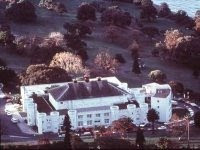
Sydney Conservatorium - my old school
Places I've lived: Auckland, NZ

Places I've Lived: Mount Gambier
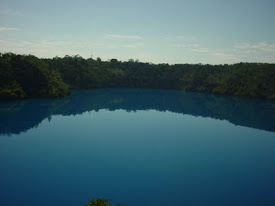
Blue Lake
Places I've lived: Adelaide, SA

Places I've Lived: Perth by Day

From Kings Park
Places I've lived: High View, WV

Places I've lived: Lynton, Devon, UK

Places I've lived: Braemar, Scotland

Places I've lived: Barre, MA, USA

Places I've Lived: Perth by Night

From Kings Park
Inner Peace Blog

Awarded by Joanna Fay. Click on the image to visit her lovely website!
Versatile Blogger Award

Awarded by Kim Falconer. Click on the pic to check out her Quantum Astrology blog!
Fabulous Blog Award

Awarded by Kathryn Warner. Click on the pic to check out her Edward II blog!
Showing posts with label history. Show all posts
Showing posts with label history. Show all posts
Monday, 26 July 2010
Genealogy in a multicultural world
 Monday, July 26, 2010 |
  Posted by
Satima Flavell
Posted by
Satima Flavell
This is another post that I've copied over from my old WordPress blog.
When I was a child, ethnicity was a relatively simple matter. England was full of English people, Chinese people lived in China and in the south sea islands there were people who wore grass skirts and possibly ate missionaries. Of course, it wasn't really quite as simple as that, but that was how it appeared to me at three or four years of age.
I remember Mother calling me to the window one day, saying, "Look, there's a Chinaman!" I leaned over the windowsill and gazed down at the street below, but all I could see was the back of the man's head as he hurried along like everyone else in the bustling crowd, heading for a bus stop, his workplace or the shops. (I should explain that we were between houses and at this stage were living in a flat over a butcher's shop. It was at 26 King St, Stretford, Manchester, if you'd care to consult Google Earth!)
My illusions were shattered! The man wasn't even wearing a long robe like the mandarins in my picture book.
The world was already changing. The end of World War II left millions of people displaced, and they often ended up somewhere far from their place of birth. Other emigrations involved young women from Japan and Germany who had married soldiers from the UK, America, Australia and other countries. My own eldest sister married a refugee from Serbia and our house was often filled with his friends, many of whom spoke little or no English. And when we emigrated to Australia in 1952, we already found the beginnings of a multicultural society.
It was largely European multiculturalism, of course, for at that time the White Australia policy was in force. It suited the authorities to forget the Aboriginal people their ancestors had displaced, the Chinese adventurers who had settled here during the Gold Rush of the mid-C19, the Kanakas from the south seas islands who had been kidnapped and brought to Queensland as slave labour, the Afghan camel-drivers of Australia's Red Heart and the Japanese divers who worked in Broome's pearling industry. No, Australia was White, and White it was going to stay.
But Australia was flourishing and people all over the world were on the move. Laws had to change to bring in much-needed labour. Young people of the developed nations discovered the joys of travel, and many of them brought home foreign partners or settled in other countries. Students began to attend universities in lands other than their own, and by the 1960s countries that had been reasonably homogeneous, population-wise, found themselves turning into melting pots. Multiculturalism had arrived.
Now we have second and third generations of children whose parents or grandparents came from other lands. In some families, the immigration took place long ago, as in the the case of the Chinese gold-diggers' descendants. Some time ago, I met a girl from Broome whose four grandparents were Japanese, Aboriginal, Afghan and Irish. She was, I might add, extraordinarily attractive!
Two of my children descend from a part-African slave trader from Jamaica, who brought his family to Australia in the mid C19 when that terrible trade failed. Two more of my children are part-German. I have nieces and nephews of two generations who are part-Serbian, part-Greek or part-Polish, and step-grandchildren who are part-Italian.
All this has made for some interesting research in my family tree! I have not attempted to follow the Italian, Serbian, Greek and Polish laterals, leaving those for closer relatives to investigate, but I have found out a great deal about the ex-pat Jamaican line and that of my German children. Family historians are incredibly generous in sharing their research, and in fact my German cousin-by-marriage, Elfriede, came to visit me with her husband, who is Indian, a few years ago and I was fortunate enough to visit their lovely home in the Rhine Valley in 2006.
The ever-increasing mixture of nationalities must surely strengthen the gene pool, although it might create problems for genetically-based medicine in the future. Already we occasionally hear of someone who cannot find a tissue match because of their unusual bloodlines. But as genealogists, we face our own challenges. We are very lucky today in having access to so much information from all over the world. Not all of it is readily accessible, but even so, many of us can trace our ancestry back for at least a couple of centuries if we are determined enough. But who knows how long this happy state of affairs will continue? Borders alter, governments fall, mass migrations of people can happen almost overnight, especially in the event of war or natural disaster. All these things can mean gaps in the records. Anyone with any sense of history, anyone with any feeling of family pride, anyone with any sense of curiousity and wonder, wants to know about their ancestry. It is of vital importance, therefore, that this lucky generation of family historians should collect and preserve all the records they can for their multicultural, multi-coloured descendants! Write down everything you can remember of the stories your parents and grandparents told you about life in the old country, and their difficulties in learning to live in a new culture. Don't throw out those old photos, documents and letters Opa Jan, Aunt Mary, Uncle Ngobo or Cousin Takeko left in the garage. Rather, preserve them in archival quality folders and albums. Your great-grandchildren may well thank you for it.
When I was a child, ethnicity was a relatively simple matter. England was full of English people, Chinese people lived in China and in the south sea islands there were people who wore grass skirts and possibly ate missionaries. Of course, it wasn't really quite as simple as that, but that was how it appeared to me at three or four years of age.
I remember Mother calling me to the window one day, saying, "Look, there's a Chinaman!" I leaned over the windowsill and gazed down at the street below, but all I could see was the back of the man's head as he hurried along like everyone else in the bustling crowd, heading for a bus stop, his workplace or the shops. (I should explain that we were between houses and at this stage were living in a flat over a butcher's shop. It was at 26 King St, Stretford, Manchester, if you'd care to consult Google Earth!)
My illusions were shattered! The man wasn't even wearing a long robe like the mandarins in my picture book.
The world was already changing. The end of World War II left millions of people displaced, and they often ended up somewhere far from their place of birth. Other emigrations involved young women from Japan and Germany who had married soldiers from the UK, America, Australia and other countries. My own eldest sister married a refugee from Serbia and our house was often filled with his friends, many of whom spoke little or no English. And when we emigrated to Australia in 1952, we already found the beginnings of a multicultural society.
It was largely European multiculturalism, of course, for at that time the White Australia policy was in force. It suited the authorities to forget the Aboriginal people their ancestors had displaced, the Chinese adventurers who had settled here during the Gold Rush of the mid-C19, the Kanakas from the south seas islands who had been kidnapped and brought to Queensland as slave labour, the Afghan camel-drivers of Australia's Red Heart and the Japanese divers who worked in Broome's pearling industry. No, Australia was White, and White it was going to stay.
But Australia was flourishing and people all over the world were on the move. Laws had to change to bring in much-needed labour. Young people of the developed nations discovered the joys of travel, and many of them brought home foreign partners or settled in other countries. Students began to attend universities in lands other than their own, and by the 1960s countries that had been reasonably homogeneous, population-wise, found themselves turning into melting pots. Multiculturalism had arrived.
Now we have second and third generations of children whose parents or grandparents came from other lands. In some families, the immigration took place long ago, as in the the case of the Chinese gold-diggers' descendants. Some time ago, I met a girl from Broome whose four grandparents were Japanese, Aboriginal, Afghan and Irish. She was, I might add, extraordinarily attractive!
Two of my children descend from a part-African slave trader from Jamaica, who brought his family to Australia in the mid C19 when that terrible trade failed. Two more of my children are part-German. I have nieces and nephews of two generations who are part-Serbian, part-Greek or part-Polish, and step-grandchildren who are part-Italian.
All this has made for some interesting research in my family tree! I have not attempted to follow the Italian, Serbian, Greek and Polish laterals, leaving those for closer relatives to investigate, but I have found out a great deal about the ex-pat Jamaican line and that of my German children. Family historians are incredibly generous in sharing their research, and in fact my German cousin-by-marriage, Elfriede, came to visit me with her husband, who is Indian, a few years ago and I was fortunate enough to visit their lovely home in the Rhine Valley in 2006.
The ever-increasing mixture of nationalities must surely strengthen the gene pool, although it might create problems for genetically-based medicine in the future. Already we occasionally hear of someone who cannot find a tissue match because of their unusual bloodlines. But as genealogists, we face our own challenges. We are very lucky today in having access to so much information from all over the world. Not all of it is readily accessible, but even so, many of us can trace our ancestry back for at least a couple of centuries if we are determined enough. But who knows how long this happy state of affairs will continue? Borders alter, governments fall, mass migrations of people can happen almost overnight, especially in the event of war or natural disaster. All these things can mean gaps in the records. Anyone with any sense of history, anyone with any feeling of family pride, anyone with any sense of curiousity and wonder, wants to know about their ancestry. It is of vital importance, therefore, that this lucky generation of family historians should collect and preserve all the records they can for their multicultural, multi-coloured descendants! Write down everything you can remember of the stories your parents and grandparents told you about life in the old country, and their difficulties in learning to live in a new culture. Don't throw out those old photos, documents and letters Opa Jan, Aunt Mary, Uncle Ngobo or Cousin Takeko left in the garage. Rather, preserve them in archival quality folders and albums. Your great-grandchildren may well thank you for it.
 Labels:

Sunday, 17 August 2008
Birthday Meme
Sunday, August 17, 2008 |
Posted by
Satima Flavell
Here’s a meme that’s going around: I pinched it from Mikandra.
To play this one, look up your birthday in Wikipedia. Pick 4 events, 3 births, 2 deaths and 1 holiday.
My birthday is 4 March, and I’ve only met a handful of other people whose birthdays fall on that day. There was a little club on ICQ, years ago. The founder said we were special “because we March Forth!” Looking at Wikipedia, I found plenty of others who march forth, so I picked events and people I felt I could relate to for various reasons, which I’ve given below to make the meme a bit more meaningful. At least, I hope it does:-).
Events
1461 - Wars of the Roses in England: Lancastrian King Henry VI is deposed by his Yorkist cousin, who then becomes King Edward IV
 Both these guys were 2nd cousins 16 times removed of mine, and Edward was stepfather to Thomas Grey, my 13th great-grandfather. His mother, Elizabeth (née Woodville, right) went to Edward to complain that she’d had no pension when her first husband, Thomas’s father John, had died in battle while fighting for Edward. Edward liked the look of Elizabeth and secretly married her. When his advisors found out there was hell to pay! And there was sadness in store for Elizabeth, for her two sons by Edward were the poor little “Princes in the Tower”, who were done to death. Let’s not go into whodunit, as it always starts arguments.
The Wars of the Roses provide an object lesson in human stupidity. Ancestors of mine—and no doubt yours, if you have any Brit in you—died on both sides of this idiotic conflict. What’s more, they did it all again in the seventeenth century when our ancestors fought over which version of the favoured Imaginary Friend of the day was the better. Sheesh!
1877 - Pyotr Ilyich Tchaikovsky's ballet Swan Lake premieres at the Bolshoi Theatre in Moscow
This beautiful fantasy story of love, betrayal and death did not find public favour at its premiere and was quickly dropped from the repertoire. It was only in 1895, when it was revived with new choreography by Marius Petipa, that it gained the popularity it enjoys to this day. Petipa is responsible for that curse of all aspiring ballerinas, the thirty-two fouettés, which he incorporated into the third act pas de deux. His ballerina, the Italian Pierina Legnani, apparently found it a simple matter to stand on one toe and whirl around on the spot thirty-two times, to the despair of every ballet student since. I could never manage more than a dozen, even on a good day.
1917 - Grand Duke Michael Alexandrovich of Russia's renunciation of the throne is made public, and Tsar Nicholas II of Russia publicly issues his abdication manifesto
We all know the tragic story of a man unable to see the writing on the wall; a man temperamentally unfit to lead yet forced to try, whose refusal to do away with autocracy led to the violent deaths of his wife and children as well as himself.
1945 - In the United Kingdom, Princess Elizabeth, later to become Queen Elizabeth II, joins the British Army as a driver
What the princess joined was actually the Auxiliary Territorial Service (ATS), which my eldest sister Erica joined a year or two earlier. In fact, she joined up soon after my birth, since she couldn’t face the thought of still another younger sister in the house! Erica saw service in Germany, near Hamburg.
Births
1188 - Blanche of Castile, wife of Louis VIII of France (d. 1252)
Louis and Blanche were 22x great-grandparents of mine and I am proud to share Blanche’s birthday. She was the strong one: Louis was a gentle person who died young, leaving Blanche to bring up their large family alone, as well as to quell a rebellion by a bunch of stroppy barons and to fend off an offensive by the English. She ruled as regent both before and after the accession of her son Louis IX (later canonised) and was respected by friend and foe alike for her diplomacy and her grasp of military strategy.
1898 - Georges Dumézil, French philologist (d. 1940)
I drew heavily on Dumézil’s work for a paper I wrote at university on Indo-European religion. I had to read the book in French because no translation was available – eek! It was one of the few papers that Martin Wiltshire, a really tough marker, ever honoured with an A grade. It’s nice to feel appreciated sometimes:-).
1916 - Hans Eysenck, German-born psychologist (d. 1997)
This highly regarded psychologist was not frightened to publish his research into astrology and stand up to say that the statistical evidence spoke for itself. (H.J. Eysenck & D.K.B. Nias, Astrology: Science or Superstition? Penguin Books (1982))
Deaths
1193 - Saladin, Kurdish sultan (b. 1137)
In early primary school, this man (Ṣalāḥ ad-Dīn Yūsuf ibn Ayyūb) was held up to us as a model of chivalry, and indeed his good works are worthy of renown. Sadly, I can’t claim kinship with this one, but he should be an inspiration to us all. The following info was lifted almost wholesale from Wikipedia, partly paraphrased and edited:
Saladin’s relationship with Richard the Lionheart was one of chivalrous mutual respect as well as military rivalry. When Richard became ill with fever, Saladin offered the services of his personal physician. Saladin also sent him fresh fruit with snow, to chill the drink, as treatment. At Arsuf, when Richard lost his horse, Saladin sent him two replacements. In April 1191, a Frankish woman's three month old baby had been stolen from her camp and had been sold on the market. The Franks urged her to approach Saladin herself with her grievance. After Saladin used his own money to buy the child, "he gave it to the mother and she took it; with tears streaming down her face, and hugged it to her breast. The people were watching her and weeping and I (Ibn Shaddad) was standing amongst them. She suckled it for some time and then Saladin ordered a horse to be fetched for her and she went back to camp."
When he died on March 4, 1193 at Damascus, Saladin’s advisors found there was not enough money in his treasury to pay for his funeral. He had given most of it away in charity.
1238 - Joan of England, Queen Consort of Scotland, wife of Alexander II (b. 1210)
Few medieval women got the chance to show their metal as did Queen Blanche (above). Poor little Joan, (July 22, 1210 – March 4, 1238) daughter of King John, was much more typical. She was brought up in the court of Hugh “le Brun” de Lusignan, a much older man who had been the childhood sweetheart of her mother, Isabelle d’Angoulême. Maybe Joan was a consolation prize. However, when King John died, Isabelle decided to marry Hugh herself, so Joan was sent back to England, where a marriage to King Alexander II of Scotland was being negotiated for her. They were married on June 21, 1221, at York Minster: Alexander was 23 and Joan was 11. They had no children. On 4 March 1238, Joan died in the arms of her brother, King Henry III, at Havering-atte-Bower, a favoured hunting spot of the Plantagenets. She was buried at Tarant Crawford Abbey in Dorset.
What a sad, short, little life! I hope Joan had some good times, somewhere along the way.
Feast Day
Humbert III of Savoy
Humbert was a 24xgreat-granduncle of mine: his sister Mathilda married Affonso I of Portugal and became my 24x great-grandmother a dozen times over – and an ancestor of half the rest of the world as well:-). Humbert, however, was not nearly so prolific. He was a man who would almost certainly have preferred to be a monk, and indeed he was in and out of monasteries for most of his life – between marriages!
His first wife, Faidiva, died young and his second marriage, to Gertrude of Flanders, ended in divorce, at which point Humbert became a Carthusian monk. However, the people of Savoy begged him to marry yet again, which he reluctantly did. This third wife, Clemenza of Zähringen, gave him two daughters, and when she died Humbert attempted to return to the monastic life. However, he was prevailed upon to marry for a fourth time, and this wife, Beatrice of Viennois, produced a son, Tommaso, who would ultimately succeed him.
After all that the poor guy deserved his canonisation!
This collection of useless knowledge took me several hours to research but at least I’ve got some snippets for my family history out of it. And who knows? Maybe grist for the story mill as well.
To play this one, look up your birthday in Wikipedia. Pick 4 events, 3 births, 2 deaths and 1 holiday.
My birthday is 4 March, and I’ve only met a handful of other people whose birthdays fall on that day. There was a little club on ICQ, years ago. The founder said we were special “because we March Forth!” Looking at Wikipedia, I found plenty of others who march forth, so I picked events and people I felt I could relate to for various reasons, which I’ve given below to make the meme a bit more meaningful. At least, I hope it does:-).
Events
1461 - Wars of the Roses in England: Lancastrian King Henry VI is deposed by his Yorkist cousin, who then becomes King Edward IV
 Both these guys were 2nd cousins 16 times removed of mine, and Edward was stepfather to Thomas Grey, my 13th great-grandfather. His mother, Elizabeth (née Woodville, right) went to Edward to complain that she’d had no pension when her first husband, Thomas’s father John, had died in battle while fighting for Edward. Edward liked the look of Elizabeth and secretly married her. When his advisors found out there was hell to pay! And there was sadness in store for Elizabeth, for her two sons by Edward were the poor little “Princes in the Tower”, who were done to death. Let’s not go into whodunit, as it always starts arguments.
The Wars of the Roses provide an object lesson in human stupidity. Ancestors of mine—and no doubt yours, if you have any Brit in you—died on both sides of this idiotic conflict. What’s more, they did it all again in the seventeenth century when our ancestors fought over which version of the favoured Imaginary Friend of the day was the better. Sheesh!
1877 - Pyotr Ilyich Tchaikovsky's ballet Swan Lake premieres at the Bolshoi Theatre in Moscow
This beautiful fantasy story of love, betrayal and death did not find public favour at its premiere and was quickly dropped from the repertoire. It was only in 1895, when it was revived with new choreography by Marius Petipa, that it gained the popularity it enjoys to this day. Petipa is responsible for that curse of all aspiring ballerinas, the thirty-two fouettés, which he incorporated into the third act pas de deux. His ballerina, the Italian Pierina Legnani, apparently found it a simple matter to stand on one toe and whirl around on the spot thirty-two times, to the despair of every ballet student since. I could never manage more than a dozen, even on a good day.
1917 - Grand Duke Michael Alexandrovich of Russia's renunciation of the throne is made public, and Tsar Nicholas II of Russia publicly issues his abdication manifesto
We all know the tragic story of a man unable to see the writing on the wall; a man temperamentally unfit to lead yet forced to try, whose refusal to do away with autocracy led to the violent deaths of his wife and children as well as himself.
1945 - In the United Kingdom, Princess Elizabeth, later to become Queen Elizabeth II, joins the British Army as a driver
What the princess joined was actually the Auxiliary Territorial Service (ATS), which my eldest sister Erica joined a year or two earlier. In fact, she joined up soon after my birth, since she couldn’t face the thought of still another younger sister in the house! Erica saw service in Germany, near Hamburg.
Births
1188 - Blanche of Castile, wife of Louis VIII of France (d. 1252)
Louis and Blanche were 22x great-grandparents of mine and I am proud to share Blanche’s birthday. She was the strong one: Louis was a gentle person who died young, leaving Blanche to bring up their large family alone, as well as to quell a rebellion by a bunch of stroppy barons and to fend off an offensive by the English. She ruled as regent both before and after the accession of her son Louis IX (later canonised) and was respected by friend and foe alike for her diplomacy and her grasp of military strategy.
1898 - Georges Dumézil, French philologist (d. 1940)
I drew heavily on Dumézil’s work for a paper I wrote at university on Indo-European religion. I had to read the book in French because no translation was available – eek! It was one of the few papers that Martin Wiltshire, a really tough marker, ever honoured with an A grade. It’s nice to feel appreciated sometimes:-).
1916 - Hans Eysenck, German-born psychologist (d. 1997)
This highly regarded psychologist was not frightened to publish his research into astrology and stand up to say that the statistical evidence spoke for itself. (H.J. Eysenck & D.K.B. Nias, Astrology: Science or Superstition? Penguin Books (1982))
Deaths
1193 - Saladin, Kurdish sultan (b. 1137)
In early primary school, this man (Ṣalāḥ ad-Dīn Yūsuf ibn Ayyūb) was held up to us as a model of chivalry, and indeed his good works are worthy of renown. Sadly, I can’t claim kinship with this one, but he should be an inspiration to us all. The following info was lifted almost wholesale from Wikipedia, partly paraphrased and edited:
Saladin’s relationship with Richard the Lionheart was one of chivalrous mutual respect as well as military rivalry. When Richard became ill with fever, Saladin offered the services of his personal physician. Saladin also sent him fresh fruit with snow, to chill the drink, as treatment. At Arsuf, when Richard lost his horse, Saladin sent him two replacements. In April 1191, a Frankish woman's three month old baby had been stolen from her camp and had been sold on the market. The Franks urged her to approach Saladin herself with her grievance. After Saladin used his own money to buy the child, "he gave it to the mother and she took it; with tears streaming down her face, and hugged it to her breast. The people were watching her and weeping and I (Ibn Shaddad) was standing amongst them. She suckled it for some time and then Saladin ordered a horse to be fetched for her and she went back to camp."
When he died on March 4, 1193 at Damascus, Saladin’s advisors found there was not enough money in his treasury to pay for his funeral. He had given most of it away in charity.
1238 - Joan of England, Queen Consort of Scotland, wife of Alexander II (b. 1210)
Few medieval women got the chance to show their metal as did Queen Blanche (above). Poor little Joan, (July 22, 1210 – March 4, 1238) daughter of King John, was much more typical. She was brought up in the court of Hugh “le Brun” de Lusignan, a much older man who had been the childhood sweetheart of her mother, Isabelle d’Angoulême. Maybe Joan was a consolation prize. However, when King John died, Isabelle decided to marry Hugh herself, so Joan was sent back to England, where a marriage to King Alexander II of Scotland was being negotiated for her. They were married on June 21, 1221, at York Minster: Alexander was 23 and Joan was 11. They had no children. On 4 March 1238, Joan died in the arms of her brother, King Henry III, at Havering-atte-Bower, a favoured hunting spot of the Plantagenets. She was buried at Tarant Crawford Abbey in Dorset.
What a sad, short, little life! I hope Joan had some good times, somewhere along the way.
Feast Day
Humbert III of Savoy
Humbert was a 24xgreat-granduncle of mine: his sister Mathilda married Affonso I of Portugal and became my 24x great-grandmother a dozen times over – and an ancestor of half the rest of the world as well:-). Humbert, however, was not nearly so prolific. He was a man who would almost certainly have preferred to be a monk, and indeed he was in and out of monasteries for most of his life – between marriages!
His first wife, Faidiva, died young and his second marriage, to Gertrude of Flanders, ended in divorce, at which point Humbert became a Carthusian monk. However, the people of Savoy begged him to marry yet again, which he reluctantly did. This third wife, Clemenza of Zähringen, gave him two daughters, and when she died Humbert attempted to return to the monastic life. However, he was prevailed upon to marry for a fourth time, and this wife, Beatrice of Viennois, produced a son, Tommaso, who would ultimately succeed him.
After all that the poor guy deserved his canonisation!
This collection of useless knowledge took me several hours to research but at least I’ve got some snippets for my family history out of it. And who knows? Maybe grist for the story mill as well.
Subscribe to:
Posts (Atom)

